A woman bishop, a president, and a solution to the migrant and refugee crisis
By Robert Fontana
You may have never knowingly met men and women who are living in the United States without documentation, but you have certainly benefited from their presence. As Episcopal bishop Mariann Edgar Budde reminded the newly elected president on inauguration day, these are…
“…the people who pick our crops and clean our office buildings, who labor in poultry farms and meat packing plants, who wash the dishes after we eat in restaurants and work the night shifts in hospitals. They may not be citizens or have the proper documentation, but the vast majority of immigrants are not criminals. They pay taxes and are good neighbors. They are faithful members of our churches and mosques, synagogues, and temples.”[1]
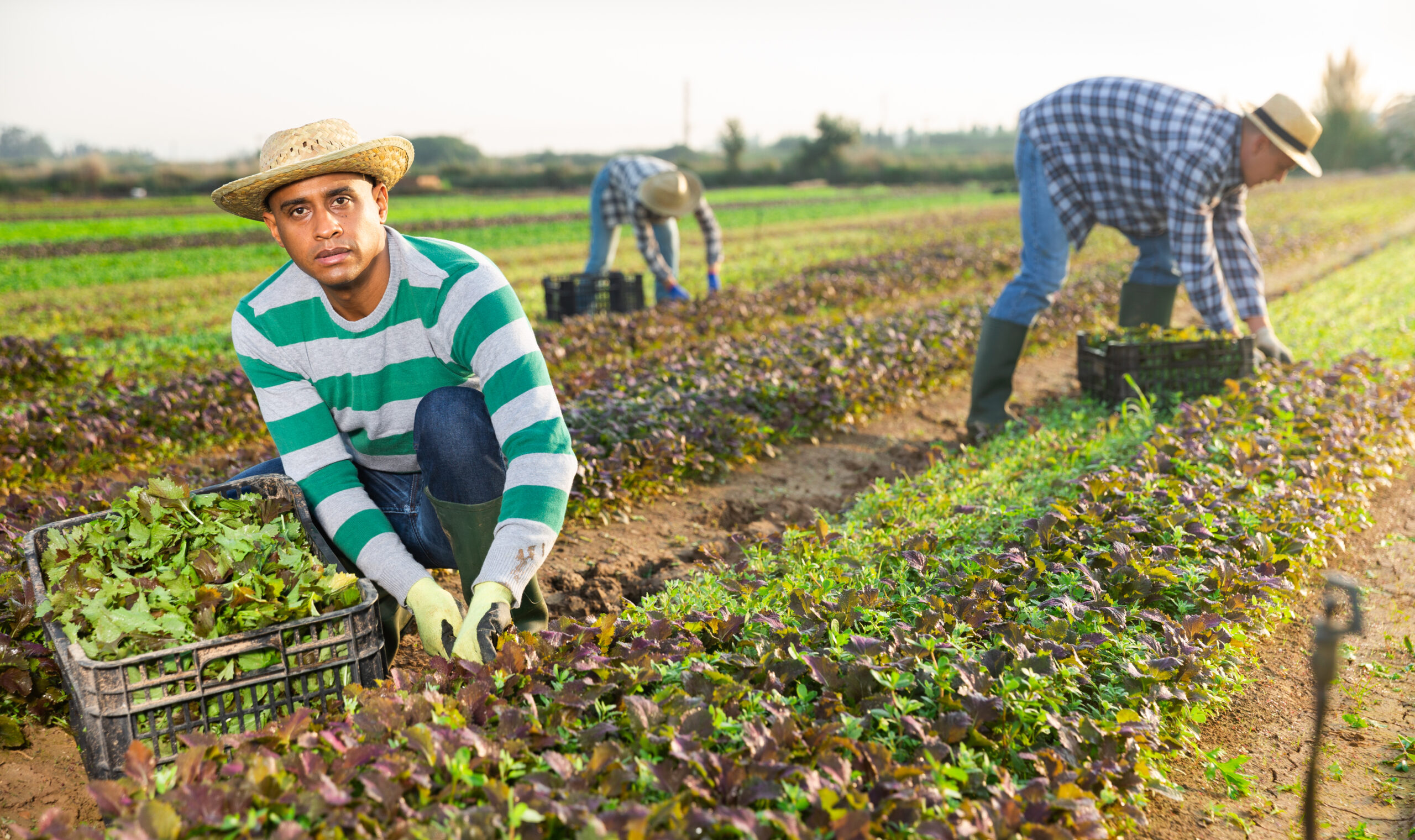
There is no accurate method for determining the precise number of people who are unauthorized immigrants. In 2022, the Office of Homeland Security estimated the number to be about 11 million.[2]
Keep in mind that the wealth of this nation is built on the backs of these hardworking, good and humble people. And the MAGA world led by Trump, many who are farmers, ranchers, contractors, hospital managers, CEOs and CFO’s of companies, and also ordinary citizens who directly benefit from the labor of migrants, have embraced the Trump scapegoating of them as “rapists, murderers, and criminals.” A few may be, but the vast majority of them are not!
(See: https://www.factcheck.org/2018/06/is-illegal-immigration-linked-to-more-or-less-crime/)
Bishop Mariann pleaded with the new President: rather than treat them as criminals, could he honor their dignity and show them mercy:
Let me make one final plea, Mr. President,…I ask you to have mercy…on those in our communities whose children fear that their parents will be taken away and that you help those who are fleeing war zones and persecution in their own lands, to find compassion and welcome here. Our God teaches us that we are to be merciful to the stranger for we were all once strangers in this land. May God grant us the strength and courage to honor the dignity of every human being, to speak the truth to one another in love, and walk humbly with each other and our God for the good of all people. The good of all people in this nation and the world.[3]

I completely agree with Bishop Mariann. However, I don’t think she went far enough. Rather than simply asking for mercy for migrants and refugees, Bishop Mariann ought to have proposed a solution that would benefit the country and probably give President Trump a new constituency of supporters: citizenship for all migrants and refugees who seek it and have no criminal record.
While in the seminary in 1976, I was part of a community of students who welcomed refugees from Vietnam, one who became my roommate. Lori and I helped resettle refugees from Cambodia in the 1980’s. The individuals we helped, and the thousands helped by non-profits across the country became good citizens, excellent employees, owners of small businesses, and taxpayers. The same happened after the passage of the Immigration and Reform Act of 1986 under President Reagan, giving men and women living in the US without documentation a path towards citizenship under certain conditions. Did some commit crimes? YES, but very few. Did most settle in, they and their children quickly integrating into American life? A resounding YES!
With Biden’s executive action on June 4, 2025, the southern border was tightened up and essentially closed. Border and migration tension have intensified under Trump. Now is the time to change direction. Stop deporting migrants and refugees who are here doing the grunt work that few native-born Americans want to do.
Lori and I and two of our daughters have worked on the border. We have seen firsthand the young, hardworking, resilient, courageous, creative, and intelligent men and women, many with their children, who have made the long journey from their home country to the USA. Their home countries are losing the best and the brightest, their greatest assets and talents, their youth, to migration.
The US is not being “overrun” by these migrants, we are benefiting from them! In giving the undocumented migrants and refugees a path to citizenship, Trump would succeed in keeping the harvest picked; the elderly and infirm well cared for; meat cut, packaged, and sent to stores; and small migrant-owned businesses continuing to serve the local community. After these welcomed migrants become citizens, they will remember at the next election which party cared for them and acted on their behalf.

Mass deportation of migrants and refugees is not the answer to their undocumented status. Citizenship is. Citizenship is in the US’s self-interest. It is also the just and Christian thing to do. It is how the Gospel mandate to welcome the stranger, feed the hungry, clothe the naked, care for the sick could be implemented nation-wide.
[1] https://carmenmccain.com/2025/01/22/transcript-of-bishop-mariann-budes-sermon-during-the-2025-us-inaugural-prayer-service/
[2] https://ohss.dhs.gov/sites/default/files/2024-06/2024_0418_ohss_estimates-of-the-unauthorized-immigrant-population-residing-in-the-united-states-january-2018%25E2%2580%2593january-2022.pdf
[3] https://carmenmccain.com/2025/01/22/transcript-of-bishop-mariann-budes-sermon-during-the-2025-us-inaugural-prayer-service/
The Lenten season that changed my life
By Robert Fontana
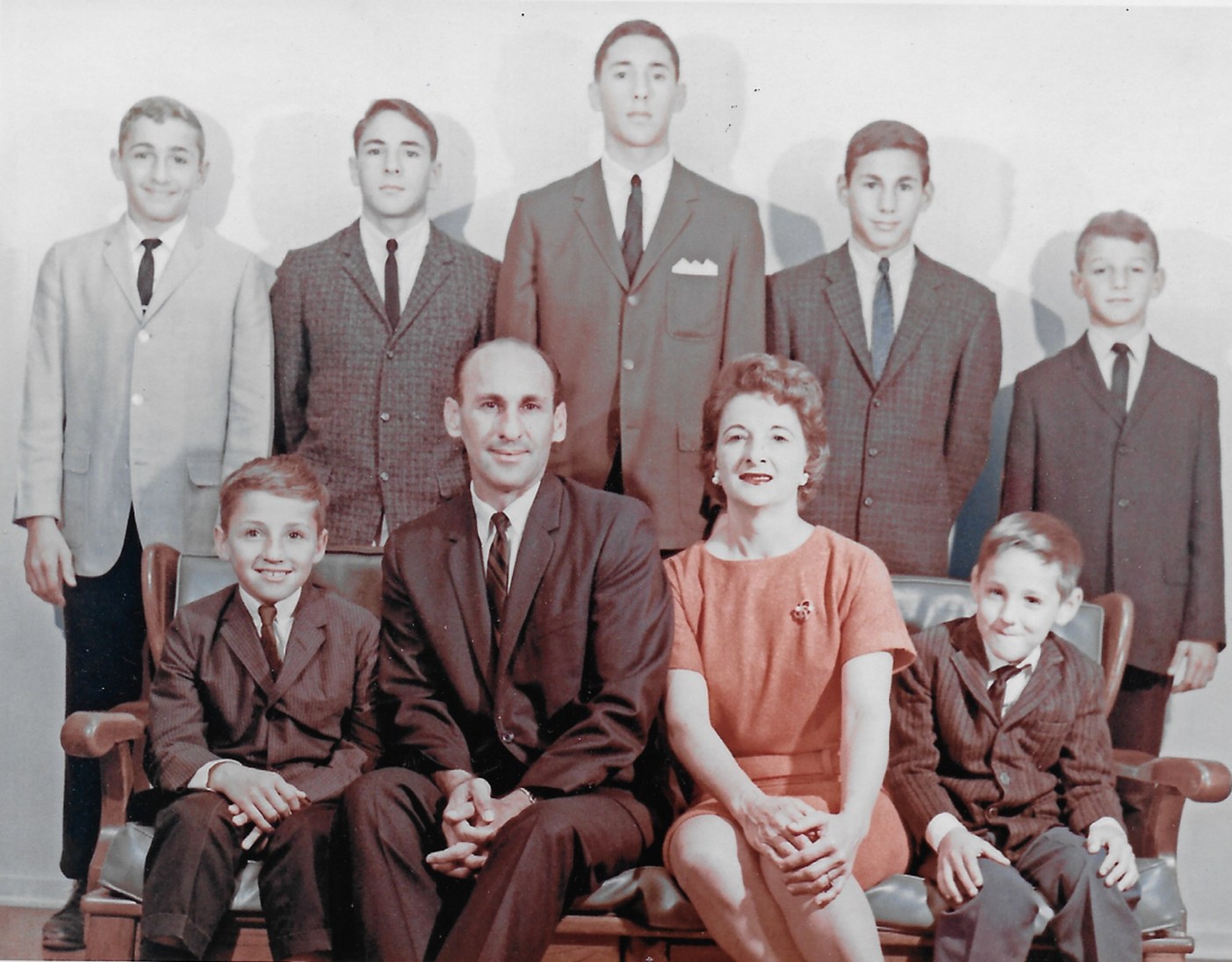
I was raised in a conventional Catholic family. Faith in God was tied to being part of a community of people that shared a culture based on specific practices: Mass on Sunday and holy days; praying the rosary, abstaining from meat on Fridays, etc. We were raised like the comedian Kathleen Madigan, who remembers how the nuns taught her,
“DON’T BOTHER JESUS! You have a guardian angel who’s with you 24/7; go to your him if you have a problem. You can turn to one of the saints; there’s one responsible for every facet of life. You can try Jesus’ mother – ask her for help. But DON’T BOTHER JESUS.”
Ok, maybe that’s a slight exaggeration.
We had a family Bible but never read it. Our only family review of Scripture was while praying the “mysteries” of the rosary which focused on Jesus’ birth, death, and resurrection. His life and teachings were assumed, I suppose, to be part of cultural Catholicism.
That all changed for my parents when, after 20 years of marriage, they weren’t getting along. Rather than going to a divorce court, they went to a Catholic Charismatic prayer meeting. Their lives were turned upside down. They met Jesus and the Holy Spirit in a surprising and beautiful way. They discovered God’s love for them and God’s will for them: to love one another. Their transformation became my transformation.
Throughout high school I struggled with all the things teenagers struggle with but what helped me to cope was daily Bible readings, prayer, and a desire to do God’s will. By the time I was a high school senior, I started hearing an inner voice that said, “Why don’t you become a priest?” I remember fighting it. “NO! I DON’T WANT THAT! I want to go to college, to watch football games, to date girls.”
God won that argument. I went to a college seminary situated on acres of pine woods north of New Orleans. It was my first experience of being in such a quiet environment with all boys and with NO GIRLS! I hated it.
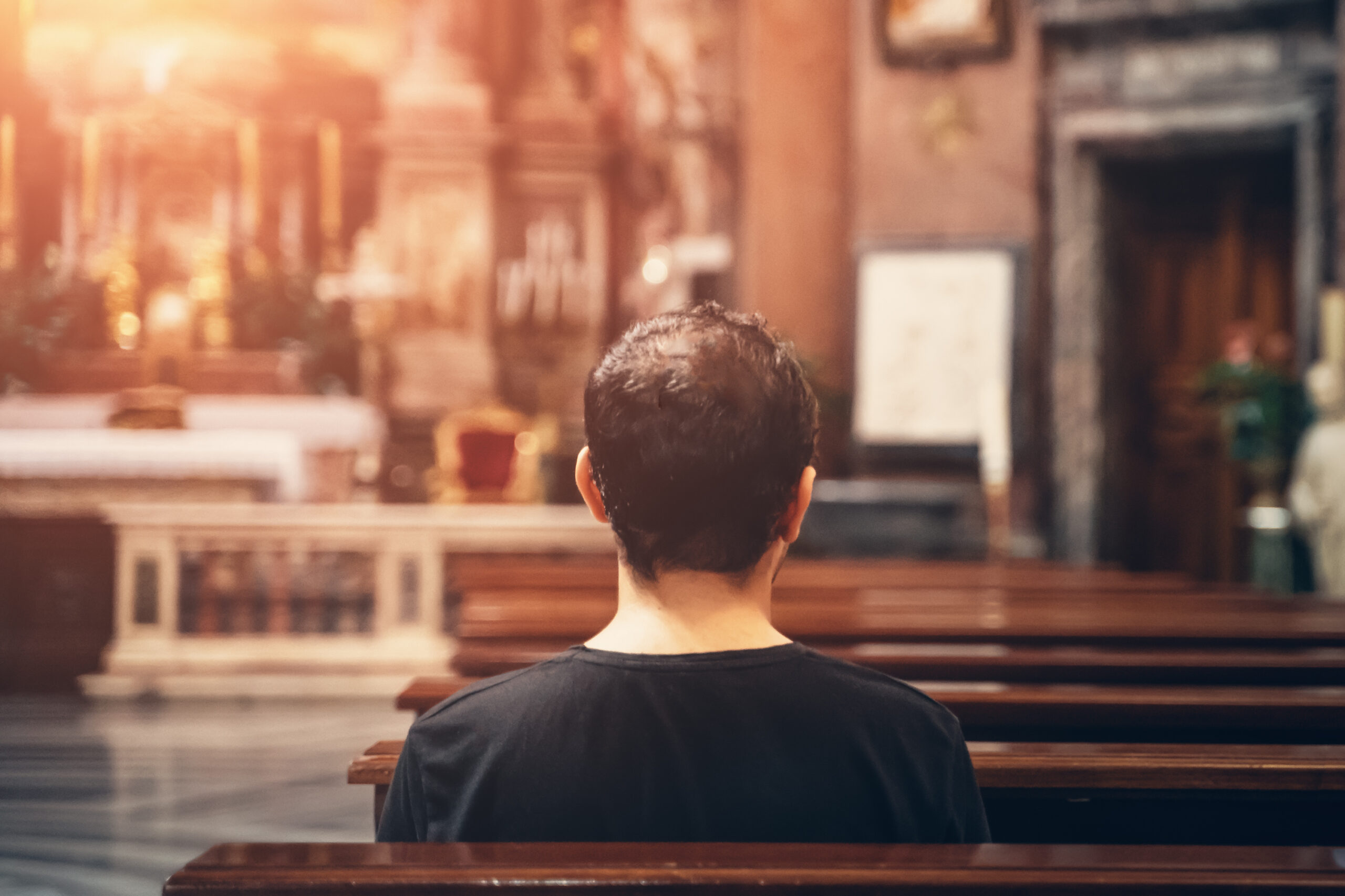
It took me a good month to transition to the rhythm of life offered by the Benedictine monks at St. Joseph Seminary. That life began with sung prayer of the Psalms at 6:15 in the morning, class beginning at 8:30 or 9 am, Mass at 11:15, more class, free time, and work study in the afternoon, evening prayer with the monks at 5:30 pm and night prayer with the seminarians at 9:30. I was being disciplined into a new way of being a Catholic follower of Jesus.
During a fall day of prayer, the retreat director, Fr. Ambrose, said something that seems simple and “duh” now, but at the time was very new to me. He suggested that we spend a lot of time outdoors and listen to “nature.” Many of my classmates laughed at his suggestion. Fr. Ambrose was a man who would not swat a mosquito sucking blood out of his arm because he wanted to learn something from the insect. Yet, for me, what he said struck me as truth.
I tried to tune in to nature during the day. The beautiful, natural surroundings touched me, had a calming effect on me. I would occasionally get up early before morning prayer and spend time alone at the nearby river.
When Lent came around the following Spring, Fr. Ambrose again gave us students a recommendation that I took to heart. He suggested that during these 40 days we remove one item from our room as an outward sign of removing an attachment in our heart that might be keeping us from loving God and loving my neighbor. That very night I resolved for Lent I would remove one item each day from my room, and I would begin each day with a half hour of silence at the river before morning prayer.
Something very profound began to happen to me. I became aware of the beauty, peace, and healing balm that nature had to offer me. By the time Holy Week came, my room was completely emptied of all items on my wall, bed, and bookshelf. My heart had become still, quieted by nature’s touch. I felt so close to God, at peace with myself and the world around me.
I learned from that Lenten journey what Moses, the prophets from the Hebrew Scriptures, Jesus, and the saints all knew from their life with God: nature is a primary place of encounter between God and humans.

In Catholic language, nature is a “Sacrament.” It is an “outward sign, something one can experience through the senses – seen, touched, and heard – instituted by God, that gives grace.” In fact, it is the original “Sacrament” upon which all other Sacraments are built. Without nature, there is no “burning bush” before Moses, no “cloud by day” leading the Hebrews from Egypt, and no Word of God becoming “flesh” in baby Jesus.
Once while praying in a nearby park whose trees and shrubs were left to grow wild and free, I felt like I was in the womb of love. I wrote a poem about my relationship with the Sacrament of Nature inspired by the words of St. Augustine and an old Catholic hymn. I share it with you below. May you take time this Lent to cultivate a deeper life with God by allowing nature that you have access to – from your garden or nearby park to a mountain stream or the vast ocean – quiet your soul and draw you into a beautiful encounter with God.
“How late have I loved thee, O Nature, ever ancient and ever new.
O Sacrament most holy, O Sacrament divine, how late have I reverenced you, bowed before your beauty, knelt before your mystery like Moses before the burning bush.
You give life and death. You water, plant seeds, grow forests, birth creatures, including me, and receive us in death.
I played in your fields, ate from your fruits, stole from your treasures, always thinking you and I are different, separate. I had forgotten that I came from you, and I will return to you. As the Scriptures write, “For you are dust, and to dust you shall return.” (Gen 3:19) Clearly, I am nature too.
Forgive me, O sacred friend, forgive me for loving you too late, way too late, and having caused you so much harm. Late have I loved thee, O Beauty ever ancient and ever new, but it is not too late for me to change.

As you begin Lent, Remember to “Bury the Alleluia”
By Robert Fontana
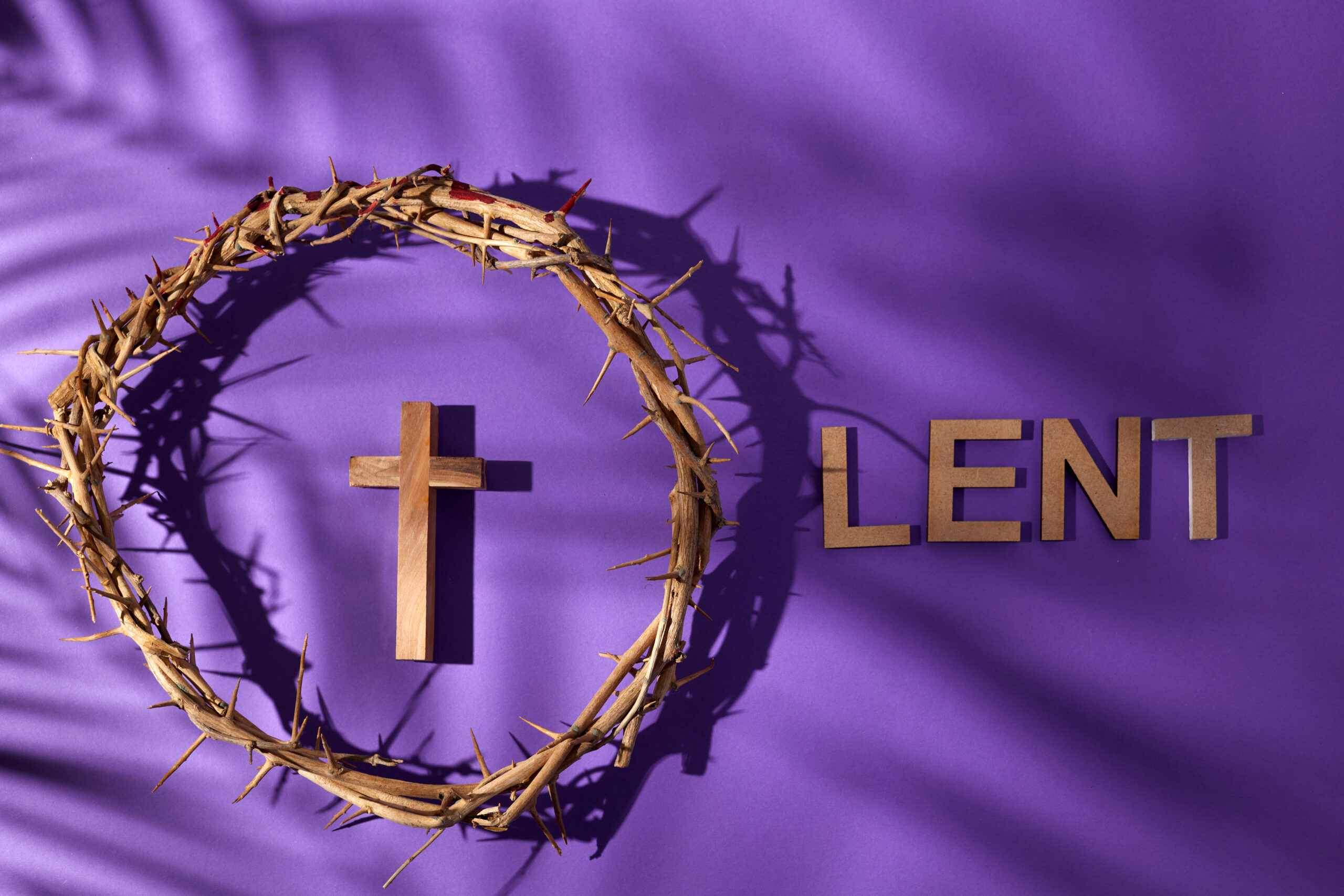
During Lent we walk with Jesus to the cross. We walk with the Messiah who had to suffer for our sake and our salvation; and we join in his work of redemptive suffering. We do penance and acts of self-denial, which train us to bear suffering for the love of God. And if we are going through a time of actual suffering because of difficult life circumstances, such as illness or confronting real evil and injustice in society, we carry the cross of that suffering because it too can become life-giving and redemptive through Christ.
Let us especially carry in our hearts the suffering people in the Ukraine, the suffering people in Gaza and Israel, the suffering people escaping violence and migrating for a safer life, the suffering people who live on our streets, the suffering people in difficult marriages and unhealthy relationships, the suffering women and couples and their unborn child in a crisis pregnancy, and…(you add your list).
Such a somber and serious season needs a party, one last “hurrah,” to help us enter into it properly. Thus in Catholic countries all over the world the season of “Carnival” and “Mardi Gras” is celebrated before Lent. A very appropriate way to bring closure to Carnival and Ordinary Time and transition into the penitential season of Lent is literally to bury the word “Alleluia.” That word, usually sung before the reading of the Gospels at Mass, is not sung during Lent. It will not be heard again until the Easter vigil when the Church celebrates the resurrection of Jesus, who is God’s “Alleluia” to the world.
So, sometime this weekend, gather with your family and friends to transition into the Lenten season and bury the “Alleluia” using the following prayer service, or something similar.

Bury the Alleluia in Preparation for Lent – A prayer service to help you and your family, prayer group, office, and/or parish prepare for Lent. You can do this any day during the week of Ash Wednesday to the first Sunday in Lent.
Materials: Take a legal size sheet of paper and, using a marker, write in large print “Alleluia.” Have other markers of different colors available. You will also need a shovel.
Leader Lent is upon us. It is the time we remember when God’s “Alleluia,” Jesus, took away the sins of the world through his death on the cross.
All Alleluia! Alleluia! Alleluia!
Leader The word “Alleluia” is a Hebrew word which means “Praise the Lord.” It is appropriate to call Jesus “God’s Alleluia” because his entire life was an act of praise and worship of God.
R1 Jesus is the word of God who is fully human and fully God.
All Alleluia! Alleluia! Alleluia!
R2 Jesus was obedient to Mary and Joseph, and from them he learned to do his Father’s will.
All Alleluia! Alleluia! Alleluia!
R3 Jesus preached the Kingdom of God. He invited women and men to repent and believe in the good news of God’s immense love breaking into human history.
All Alleluia! Alleluia! Alleluia!
R4 Jesus gathered together a community of disciples, women and men, and taught them the Beatitudes.
All Alleluia! Alleluia! Alleluia!
All Our Father…
Lent, “The White Rose,” and These Troubled Times
By Robert Fontana
I do love Lent, which begins on Ash Wednesday (March 5), but I resist it as well. Lent invites me to consider what is at the heart of being a disciple of Jesus – love of God and neighbor, especially those who are poor, marginalized, and scapegoated. I resist because, well, I don’t always want to be challenged to correct a fault or engage an issue that might take time, energy, and money.
I have also come to suspect the surface piety of Lent – adding fast days, praying the rosary every day or attending daily Mass – when it doesn’t also reach down to one’s heart. We become complicit in the sins of the culture when we just reinforce a cultural Catholicism that keeps us focused on our personal salvation (and that of our family members) but ignores the suffering of “my neighbor” in society.
Christian on the outside, but opposite on the inside. This is not new to Catholicism specifically or to Christianity in general. I’m reading the biography of the abolitionist and formerly enslaved Frederick Douglas. He writes bitingly against the slaveholders from the South who got on their knees at night in prayer, read the Scriptures daily, and faithfully attended church on Sunday. Yet these same men and women enslaved human beings, fed them starvation diets, beat them on a whim, raped the women, ignored their own children born from rape, and worked all the enslaved people, children to old people, from dawn to dusk.
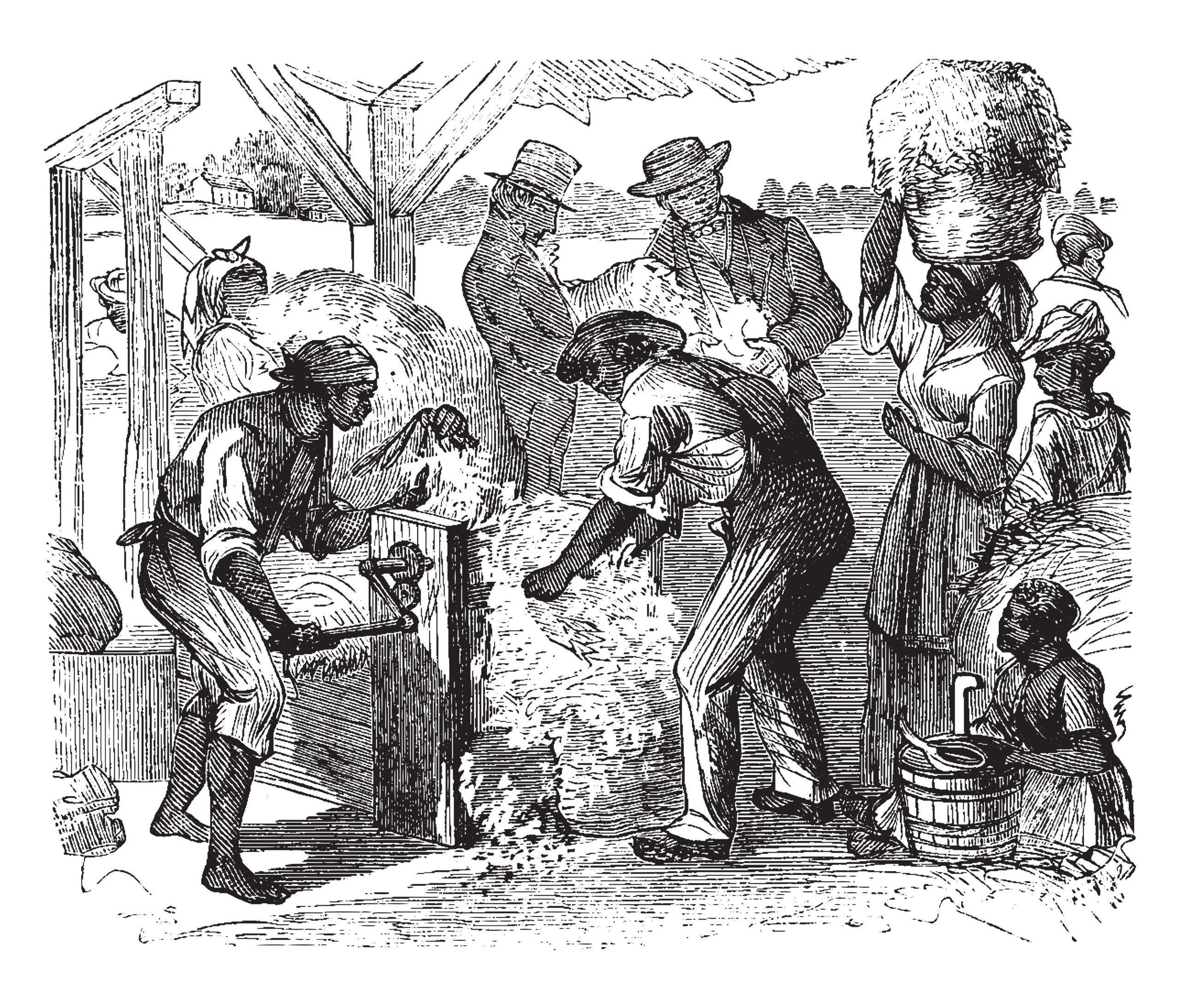
Douglas writes, “I can see no reason, but the most deceitful one, for calling the religion of this land Christianity. I look upon it as the…boldest of all frauds, and the grossest of all libels. Never was there a clearer case of ‘stealing the livery of the court of heaven to serve the devil in.’ I am filled with unutterable loathing when I contemplate the religious pomp and show, together with the horrible inconsistencies, which every where surround me.”[1]
Among these Christian slaveholders were many Catholics including Jesuits who enslaved hundreds of men, women, and children on their farms in Maryland.[2]
One of the critiques of the Catholic Church in Europe following World War II was that it was more concerned with self-preservation than about the general welfare of the people being persecuted by the Nazis, especially the Jews, but also communists, Protestant intellectuals, Roma people, and homosexuals.[3] In a sobering response to the failure of the Catholic Church to respond to the social crisis created by the Nazis, the bishops at the 2nd Vatican Council, in a deliberate effort to be faithful to the Gospel, committed the church to advocate for and stand in solidarity with suffering humanity:
The joys and the hopes, the griefs and the anxieties of the men of this age, especially those who are poor or in any way afflicted, these are the joys and hopes, the griefs and anxieties of the followers of Christ. Indeed, nothing genuinely human fails to raise an echo in their hearts.[4]
Five outstanding Nazi opponents from within Germany were university students : Hans and Sophie Scholl (brother and sister), Alexander Schmorell, Willi Graf, and Christoph Probst, led by their philosophy professor, Kurt Huber. They formed an anti-Hitler group called The White Rose, a reference to all that was beautiful, good, and Christian about their Germany before the Nazi takeover. (see https://jetsettimes.com/countries/germany/munich/the-white-rose-movement/}

“The group wrote, printed and initially distributed their pamphlets in the greater Munich region. Later on, secret carriers brought copies to other cities, mostly in the southern parts of Germany. In July, 1943, Allied planes dropped their sixth and final leaflet over Germany with the headline “The Manifesto of the Students of Munich”…They denounced the Nazi regime’s crimes and oppression, and called for resistance…they openly denounced the persecution and mass murder of the Jews.” (https://en.wikipedia.org/wiki/White Rose)
They were captured in 1943, humiliated at a public trial, and three were sentenced to death by guillotine: Hans and Sophie Scholl, and Christoph Probst. What courage!
That brings me to these “Troubled Times.” Chaos reigns from the White House. Federal workers are being fired on a whim. Federal agencies that serve the American people, from its national parks, to disease prevention, education and even Medicaid, are being undermined. Our closest neighbor nations are being threatened, American allies are being bullied, and dictators are being embraced. And tragically, men, women, and children, fleeing their home countries because of poverty and violence are scapegoated as rapists and murderers who need to be rounded up and deported. (At least the Catholic bishops have gained a spine to speak out against this travesty.)
Every Christian, Catholic and Protestant, shaped by the ethics of the prophets from the Hebrew Scriptures and by the example and teachings of Jesus, cannot help but be outraged at the injustices coming from the White House. This is not a partisan issue. Conservatives like former vice-president Mike Pence, Liz Cheney, and Adam Kinzinger, all fully committed to the president’s agenda in his first term, are severe critics in his second.
Ask yourself, is this the path that I want the United States of America to travel? Consider the courage of the Munich martyrs when they did their part to stand up to Hitler. What will you and I do to confront the areas of darkness unfolding before us now?
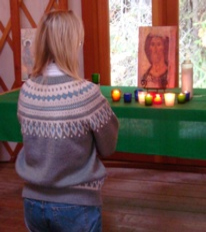
During this Lent I pray that you and I will take moments to meditate on the Scriptures especially the writings of the prophets and the four Gospels. One passage that stands out for me is Micah 6:8:
He has shown you, O mortal, what is good. And what does the Lord require of you? To act justly and to love mercy and to walk humbly with your God. (New International Version)
[1] Douglas, Narrative of the Life of Frederick Douglass, an American Slave. p. 107-108, Modern Library, NY, NY © 2000.
[2] https://en.wikipedia.org/wiki/1838_Jesuit_slave_sale
[3] https://en.wikipedia.org/wiki/Reichskonkordat
[4] Pastoral Constitution of the Church in the Modern World, Article 1
Join us this Lent for “Holy Week with Jesus and his Disciples in the Cenacle” (Ash Weds – Mar 5)
By Robert Fontana
The word “Cenacle” refers to the “Upper Room” where Jesus gave his disciples the Eucharist, washed their feet, and taught them of the Father’s love and the gift of the Holy Spirit. It is also the place where Jesus regathered the disciples following his resurrection to “breathe” on them the Holy Spirit and send them out as missionaries.
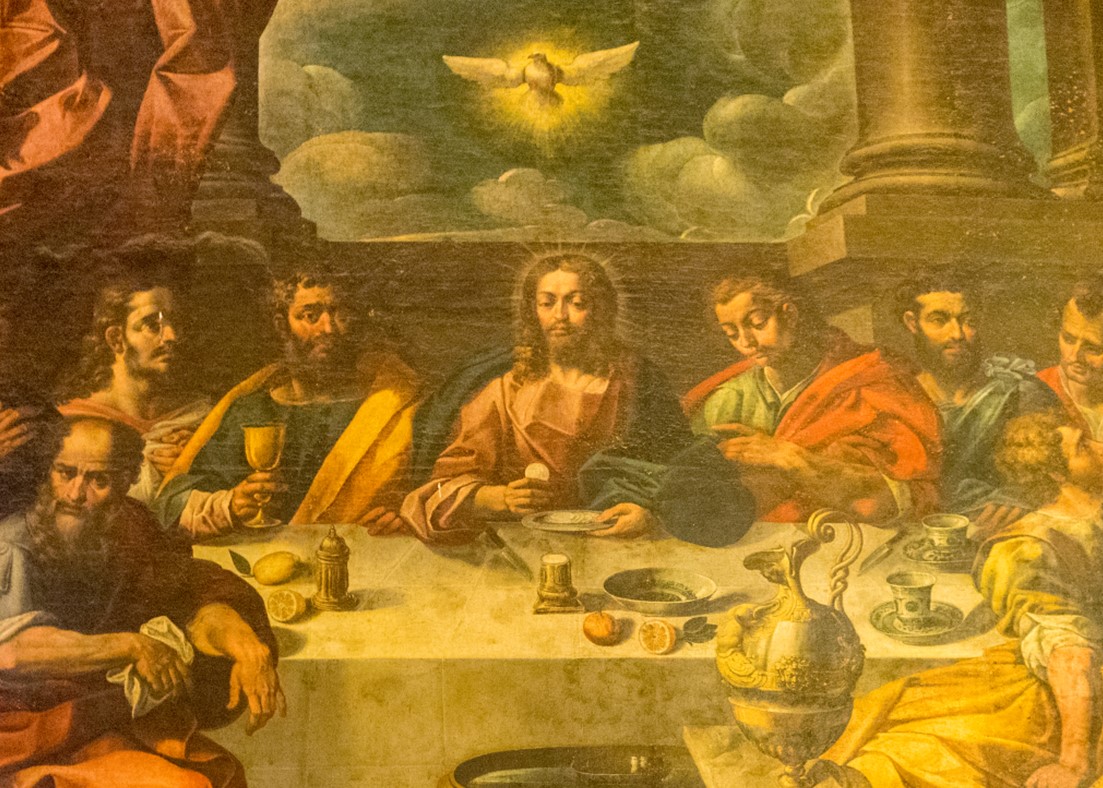
During Lent, we will be hosting a weekly small group Scripture study and faith-sharing series called Holy Week with Jesus and His Disciples in the Cenacle. It will be held at Assumption Parish. This Lenten series begins on Wednesday, March 12 (7:00 – 8:30 pm) for in-person sessions (also offered via Zoom); and will be repeated on Thursday mornings via Zoom only, beginning March 13, 9:00 – 10:30 am.
To register, or if you have any questions, write Robert and/or Lori at roblori.fontana@gmail.com. Once you have registered I will send you a pdf of the booklet that we will be using so you can print it out yourself. If you are not able to print out your copy, let us know and we will mail you one.
Here’s the introduction to the booklet.
Introduction: The Gospel of John, more than the other Gospels, tells the unique experience of the disciples of Jesus during the days before and after his death, while they were gathered in what is called in Greek the “Cenacle,” meaning the upper room. The “Cenacle” refers not only to the upper room; it refers to the community of disciples who were privileged to be with Jesus during this time.
While in the upper room, Jesus sealed his relationship with his followers, the Cenacle, by:
1) giving them the Eucharist;
2) leaving them an example of service by washing their feet;
3) revealing to them the Father’s love and the gift of the Spirit;
4) leading them to the cross;
5) and, after his death, regathering them in the Cenacle, the upper room, to mission them by breathing on them his Spirit.
These intense moments with Jesus gave the first Cenacle the core dimensions of faithful discipleship that are essential for Christians in all generations.
Fr. Thomas Judge, a Vincentian priest (1868-1933), recognized this early in the 20th Century when he began the modern Cenacle movement in the United States. It became clear to him that if the Church was going to make a difference in the lives of people, especially the immigrant poor, who were at that time coming to the United States in great numbers from Italy and Eastern Europe, it was essential for Catholics to become the Cenacle of the New Testament. He desired that every Catholic become an apostle, and he knew that would only happen if Catholics participated wholeheartedly in a Cenacle, in which the Eucharist, service, love of the Trinity, solidarity with the cross, and empowerment by the Holy Spirit were lived realities.
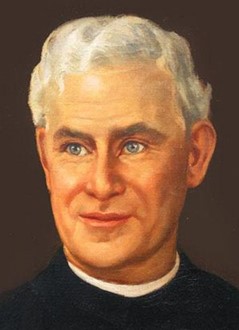
Father Judge formed Cenacles in different parishes in which he preached retreats. He taught these Cenacle missionaries to be a power for good within the providence – relationships and commitments – of their everyday lives. By instructing Cenacle associates in the lived experience of the New Testament Cenacle, Fr. Judge inspired these lay apostles to “be the Church” in their homes, neighborhoods, and workplaces. They would then come together as a Cenacle to respond to the local needs of the parish and /or civic community, especially by serving the poor.
The Cenacle Family was begun by Fr. Judge, who then recruited the assistance of Mother Boniface Keasey and Dr. Margaret Healy. This movement eventually developed into four different communities: the lay branch – the Missionary Cenacle Apostolate (MCA); the women religious – the Missionary Servants of the Most Blessed Trinity; the men religious – the Missionary Servants of the Most Holy Trinity; and laity under private vows – the Blessed Trinity Missionary Institute.
Yet each of these branches shares the same charism and mission: to help every Catholic (and Christian from any faith tradition) to become an apostle.
Lori and I were introduced to the Cenacle through the Cenacle priests serving at the campus ministry we attended while in college. Fr. Dennis Berry, ST, recognized in us the same sort of apostolic spirit that Fr. Judge sought to instill in the laity and invited us to enter the Missionary Cenacle Apostolate (MCA). We made our act of consecration in the mid 1990’s and have lived out our Catholic life as Cenacle missionaries ever since. We have been joined by friends and supporters of CLM. Together we form the Magnificat Cenacle in Seattle.
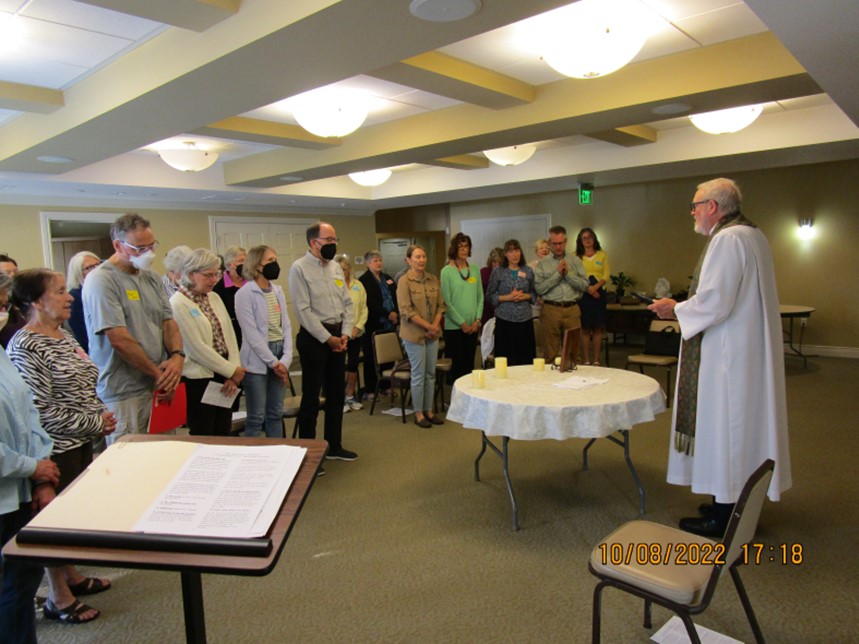
The purpose of this faith-sharing booklet is to help you reflect on the intimate and transformative experience that the original Cenacle had with Jesus during the days before and after His death. We pray that, in your own study, reflection, and prayer, you will experience similar intimacy and transformation in your life as you deepen your vocation as an apostle, also helping others to become apostles of the Father, Son, and Spirit.
Send me an email at robert@catholiclifeministries if you would like to participate.
Grieving Orca Mom, Pro-life, and the Culture War
By Robert Fontana

I often hear from my liberal friends who are Christian how confounding it is for them that conservative Christians, including Catholics (my faith tradition), support Donald Trump, whom the Christian Left considers the most un-Christian president in US history. The Christian Left does not seem to understand that they helped create the MAGA Right in which many conservative Christians find a home (and, of course, Christians on the Right do not understand that they helped create the Progressive Left).
This was vividly illustrated for me recently in a Seattle Times opinion article entitled, “How we can honor the orca Tahlequah’s grief.” The article highlights the plight of the orcas whose food source, the chinook salmon, is in decline and whose way of life in the Salish Sea (Puget Sound) is continually challenged by commercial shipping and the ever-present whale-watching tourist boats. I share the author’s concern about the stress orcas are enduring and the sad plight of this mother orca who, for the second time in the past few years, has carried her dead calf weeks after the calf’s death.
However, what struck me about the headline is the vivid reminder to Christians on the Right that their brothers and sisters on the Left care more about the plight of orcas than about the unborn. One will never see in the Seattle Times a headline grieving the loss of the unborn child through abortion. The Left insists that a woman’s right to her body is absolute. “My body, my choice.” End of discussion!
The Christian Right is equally unwilling to dialogue. “We have science on our side; human life begins at conception:” this is not simply a religious conviction, it is a scientific fact. The fetus in the womb is a baby with the inalienable right to life. Oh, and, yes, it’s your body, but you don’t have an absolute right over how you treat your body. If you are pregnant, there is a baby whose rights outweigh yours. End of discussion.

Other issues push each side further into its corner with no option for compromise, for example, racism, transgenderism, and immigration. The immovable stances fuel a culture war in a zero-sum game which creates only winners and losers. Democracy demands uncomfortable compromises so that we do not actually end up with another shooting war like the one in 1861.
Long before I joined “Braver Angels,” an organization dedicated to dialogue between the Left and the Right, I had an extended conversation with a liberal friend that convinced me that dialogue, listening for understanding, and compromise were the only paths forward to end the culture war in our church and country on abortion. Here’s what happened:
Me: Pro-choice and pro-abortion. They’re the same.
Friend: NO!! I’m pro-choice, but I’m not pro-abortion.

Me: C’mon. You constantly use the phrase “fetus” when talking about an unborn baby. You know the science of conception as well as I do. The fetus in the womb is a baby from the moment of conception. Pro-choice means abortion on demand and the death of a baby.
Friend: If you would listen to me, I’ll explain. Yes, I agree with the science, and I also admit that I refer to the baby in the womb as a fetus and not a baby. I want to honor the dignity of the woman who has a crisis pregnancy. You seem to care little about her. (Pause)
Friend: I abhor abortion. To be pro-choice means to offer her (and her husband/partner if she has one) two options for saving the baby’s life, raising the child herself or giving the child up for adoption. The third option is tragic, but it is not the government’s call to prevent should a woman with a crisis pregnancy choose it. She knows her situation.
[My friend went into detail about a young white woman from a very conservative family who was secretly dating a young black man. When her father found out about this relationship, he hit his daughter and threatened to kill the young man if she didn’t break it off. Shortly after this she learned that she was pregnant; immediately she had an abortion.] I don’t want a woman in her situation to have a back-alley abortion.
Me: No, I don’t want women to have a back-alley abortion either…I don’t think I have given enough consideration to the woman with a crisis pregnancy. So, there are two lives that must be considered, protected. Would you agree to that?
Friend: Yes, that’s why I say I am not pro-abortion. Abortion is a tragic choice especially as the fetus, the “baby” develops. Pro-choice means, in the end, the choice does rest with the mother. I will do whatever I can to help her choose life for the baby, but I will not throw a guilt trip on her either.
Me: Where do we have unity?
Friend: I suppose we can both agree that two lives must be valued and protected if possible.
Me: And I have a better understanding that pro-choice is not pro-abortion. And I also agree that the mother’s situation really needs to be honored and respected, though I do not agree with the idea that the government can not regulate abortion. (Our conversation ended peacefully there.)
We did not solve the abortion debate with this conversation. But we did stop seeing each other as adversaries on this issue. We learned from one another, which allowed each of us to soften our positions. We both changed. Our next conversation might find some common ground on the legal boundaries of abortion that either of us may not like but could live with for the sake of peaceful coexistence.
I think dialogue and a search for common ground is the only path forward for ending the culture war between the Left and the Right. What do you think?
(Please post your thoughts and comments.)
Consider Joining Braver Angels. Its mission is to bring Americans together to bridge the partisan divide and strengthen our democratic republic. Go to: braverangels.org

YEAH, A Week to Celebrate Marriage (Feb 7-14)
By Robert Fontana

NATIONAL MARRIAGE WEEK is February 7-14! I find it a little discombobulating to write about something so positive while the country dissolves into chaos over Trump’s dismantling of democracy. Still, it is NATIONAL MARRIAGE WEEK, and I’ll keep my focus on this important civic and religious institution. I’m a believer in the institution of marriage and will do whatever I can to help couples of all stripes – religious, secular, straight, gay – to succeed in marriage.
THERE ARE NO LOSERS WHEN MARRIAGE SUCCEEDS! Everybody wins, from the couple to their children, should they have some, to their extended family and friends, to the workplace, and to the civic and faith communities.
To be successful in marriage does not mean to be perfect in marriage because perfection does not exist. But success does. We know from research what a successful marriage looks like and how to achieve it. In a nutshell, couples who succeed in marriage learn how to negotiate their differences so that the marriage wins. They remain the best of friends, work as a team, communicate reasonably well, share household duties, parent the children, meet regularly for mutually satisfying intimacy, are good neighbors, mature through conflict, and forgive one another for shortcomings.
This doesn’t mean that single people can’t do the same, especially single parents as was my grandmother who raised my mom and aunt. Single parents can succeed, but it is so much harder.
This also doesn’t mean that everyone should eventually marry. However, the trend today is that most men and women are going to “hook up” with one or multiple partners, especially when they are young. Many want the mirage of freedom that comes from “friends with benefits and no commitment.” As clients of mine, both men and women, have told me, after a couple of years of living this lifestyle, they are left feeling empty, hurt, used, and alone.
What they really need to help them grow up is traditional marriage as it has come down to us over the generations with its three vows of “fidelity, love, and honor,” and a supportive community that will stand with them in good times and bad, in sickness and health.
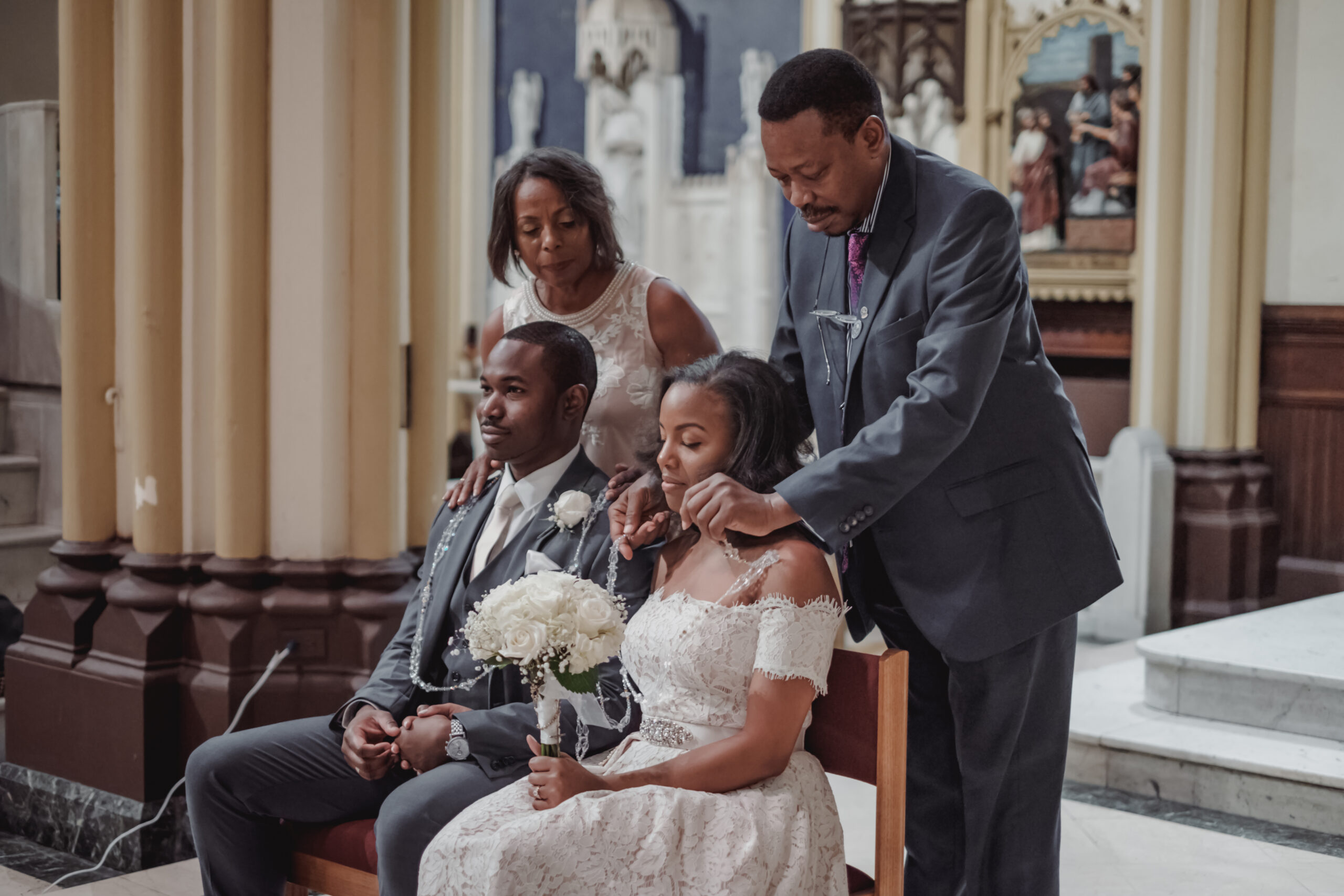
The vows provide the essential framework that disciplines spouses and fosters a mature love over a lifetime. The community of friends and family who believe in marriage offers positive examples of married life, peers and elders who share the joys and sorrows of married life, and single elders and peers who offer friendship and mutual support.
Not all marriages can be successful. Some people, for reasons stemming from childhood trauma, addiction, or irreconcilable hurt, must divorce for the sake of their sanity. But I’m convinced that most marriages can be saved and become successful if only spouses would make their marriage their primary commitment from the “get-go.” In doing so couples will take care of their relationship in the same way that they care for their garden or car or career; use whatever metaphor you like. Gardens need fertilizer, watering, and weeding; cars need gas, tune-ups, and repairs; and careers need internships, supervisors, and on-going training.
If you are married, it is important to determine how you are doing in married life. Take the quiz and find out! Indicate your level of agreement with each statement with 1=No, 5=Sometimes, and 10=Yes.
1. We approach our life together as a team.
No Sometimes Yes
1 2 3 4 5 6 7 8 9 10
2. We are aware of each other’s gifts and talents, and use them in the marriage.
No Sometimes Yes
1 2 3 4 5 6 7 8 9 10
3. Marriage has helped me to mature; it brings out the best in me.
No Sometimes Yes
1 2 3 4 5 6 7 8 9 10
4. We agree on our approach to money: saving some, meeting needs, and sharing.
No Sometimes Yes
1 2 3 4 5 6 7 8 9 10
5. We live a healthy balance of work, leisure, exercise, and sleep.
No Sometimes Yes
1 2 3 4 5 6 7 8 9 10
6. We take care of each other during illness and difficult times.
No Sometimes Yes
1 2 3 4 5 6 7 8 9 10
7. We agree on our approach to faith, family devotions, and service.
No Sometimes Yes
1 2 3 4 5 6 7 8 9 10
8. We are good friends and regularly make time for fun together.
No Sometimes Yes
1 2 3 4 5 6 7 8 9 10
9. We are very good at dealing with conflict.
No Sometimes Yes
1 2 3 4 5 6 7 8 9 10
10. I am very satisfied with our romantic, sensual life!
No Sometimes Yes
1 2 3 4 5 6 7 8 9 10
Tally individual numbers and place scores in the appropriate spaces below. Add the scores. The higher the score, the more successful the marriage. 70 + =Successful; 40-60 = needs work; 30 and under = HELP!
When I think about my marriage, I feel…____________ (select any of the feelings listed below that apply)
Positive emotions: Loved, happy, peaceful, connected, grateful, hopeful, other _______________
Difficult emotions: Uncertain, sad, hurt, restless, distant, regretful, despairing, other ___________
If you have a successful marriage or one that needs work, keep working on your marriage. Read books together, e.g. Gottman’s The Seven Principles for Making Marriage Work. You might even try the workbook Lori and I wrote, Hidden Treasure: Discovering the Amazing Gift of Your Marriage. (Both books can be ordered from your local book store.) I suggest you also attend a retreat for couples or a marriage enrichment weekend such as Marriage Encounter.
If you’re marriage needs HELP, don’t wait, contact a therapist trained in couple’s conflict right away. You will not regret turning a difficult marriage into one that fosters love and intimacy.
Spring cleaning on St. Brigid’s Day (Feb 1) and other non-essential Catholic practices that enrich faith
By Robert Fontana

St. Brigid is one of three patron saints of Ireland along with St. Patrick and St. Columban. Her feast day, February 1, also marks the first day of Spring in Ireland. A person could go all his or her life without having fun with a spring cleaning on St. Brigid’s Day, as we outline below, and still be a very fine Christian. Obviously the same is true for another unique event for Catholics coming up on March 5, Ash Wednesday. These events have some hands-on gestures and rituals that may seem odd to the casual observer. On Ash Wednesday we receive a cross of ashes on our foreheads. On the eve of St. Brigid’s Day (February 1), we use a kerchief to literally swipe our homes clean and symbolically remove it of “sin and selfishness.” Then we tie the cloth to a tree, where the spirit of St. Brigid and the Holy Spirit, come to take the sins away. These faith-based rituals can be somber, as in receiving ashes on Ash Wednesday, or fun as on St. Brigid’s Day. What they do is help us sanctify the day, making it special by allowing our entire body to participate in the meaning of the day. The actions and gestures of these events are an outward sign, a symbolic gesture, of our belief as disciples of Jesus, yet they are not essential to discipleship.
What are the essentials of being a disciple of Jesus anyway? Here are a few that come to mind: belonging to a community of faith that follows Jesus; encountering Jesus in a personal way and making a conscious decision to follow him by living out the Beatitudes; opening one’s life to the Holy Spirit; belonging to a small group where one is personally loved and held accountable as a disciple; participating in public worship and community rites; maintaining a consistent prayer life that involves the praying/studying of Scripture; engaging one’s faith within daily life; caring for the sick, elderly, poor, and for children.
These “essentials” are the “meat and potatoes” of following Jesus but, to continue the food analogy, without much seasoning or dessert. I think that it’s the addition of the non-essentials that adds spice and fun to one’s faith. For example, the liturgical year that divides up secular time into sacred seasons of Advent/Christmas, Lent, Easter/Pentecost, and Ordinary Times, is certainly not an essential feature of being a Christian. Some deeply Christian denominations function perfectly fine without a “liturgical year.” Yet we Catholics, joined by the Orthodox and mainline Protestants, find it extremely useful to organize the year around the major themes of Jesus’ life, death, and resurrection. In doing so, we think we are better able to tell the story of Jesus’ life and integrate His message in our lives today.
The “Sign of the Cross” is another non-essential and arbitrary practice that Christians do that has helped shape an identity that is deeply Christian and Catholic. In that one action, we remind ourselves of the saving work of Jesus through his death on the cross, and of our dependence on the Trinity, Father, Son, and Holy Spirit. Can a person be a good Christian and never make the “sign of the cross”? Most certainly. Some Christians bow their heads when they begin a prayer. Catholics (and Orthodox) make the “Sign of the Cross.” It summons us to quiet ourselves, and be attentive to what God is doing in the moment, whether it be followed by the blessing of a meal or the committal of a beloved family member to the grave.
I think a relationship with Mary, the mother of Jesus, especially manifested through the practice of praying the rosary, is a non-essential practice of Christian discipleship. One could go his or her entire life without ever praying to Mary, much less saying the rosary, and still be a deeply committed follower of Jesus. St. Paul makes no mention of Jesus’ mother except in one obscure text in Galatians (4:4). Certainly Paul never prayed to Mary and never thought that what she brought to the life of a disciple was important enough to write about. Protestants, taking their cue from Paul, also do not pray to Mary (or the saints) and yet are still following Jesus as committed disciples. Mary and the rosary are non-essentials to Christian discipleship. But I believe a devotion to Mary, so deeply imbedded in Catholic culture, is a wonderful gift from God that deepens faith, hope, and love.
Of course, there are many other non-essentials such as observing the feast days of saints, praying to St. Anthony for lost items, blessing pets on the feast of St. Francis, wearing religious medals and scapulars, lighting candles as a prayer offering, fasting on Wednesdays and Fridays, and “burying the Alleluia” on Mardi Gras, the Tuesday before Ash Wednesday. None of these practices is essential to Christian discipleship and, if done these are done apart from the essentials, they have little meaning. But when these rituals are done in conjunction with being an active follower of Jesus, they have the capacity to shape a Catholic Christian identity that gives a person deeper roots and brings joy and fun to the Christian life.
So add some spice to your faith life. On St. Brigid’s Day (Feb. 1), wipe your home clean of sin, and on Mardi Gras (Mar 4) bury the Alleluia (see rituals below). Then on Ash Wednesday (Mar 5), the very next day, go to the nearest Catholic Church and get your ashes.
______________________________________
St. Brigid’s Day “Spring Cleaning” (February 1)
Prayer: Saint Brigid, daughter of Ireland and lover of Jesus, draw us by your prayers into the living flame of God’s love. Help us to clean our hearts and homes of all that is selfish and self-centered. We forgive all who have hurt us and ask God to forgive our sins as well.
Pray for us, St. Brigid, that we will be attentive to the poor and spiritually abandoned, that we will practice the Beatitudes in good times and bad, and that the warmth of God’s love will animate all that we say and do.
Activity: Each member of the home takes a kerchief or handkerchief in hand and walks through the house dusting the furniture and books, and lamps, etc. singing “Alleluia, alleluia, alleluia.”
When the house has been thoroughly dusted, all go outside and tie the kerchiefs on the branches of a tree. The myth is that, on the eve of her feast day, St. Brigid, in the grace of God and the power of the Holy Spirit, travels through the land with her prayers to remove the dust and sin, and even ailments, from our lives.
Closing Prayer: St. Brigid, come this day, to our home and hearts, come by the power of God, and be our guest. And help us, dear Brigid, to wipe away the dust of “me, my, and mine” that we might love others with a selfless heart. Amen.
Our Father…
Leave the kerchiefs and handkerchiefs on the tree for a week or until Ash Wednesday.
BURY THE ALLELUIA on “Mardi Gras (Mar 4)” the day before Ash Wednesday (Mar 5)
All Alleluia! Alleluia! Alleluia!
Leader For the 40 days of Lent the Church “buries the Alleluia” by refraining from singing this sacred word in our liturgy. We do so to remember the Lord Jesus, God’s alleluia, the Lamb of God, who took the sins of the world with him to the grave so as to rob them of their power to destroy life.
What are the sins of the world today that destroy life? Say them aloud as you write them on a sheet of paper bearing the word “Alleluia.”
[After all have done so the “Alleluia” is placed in the ground and buried with dirt in the same way that Jesus who died for the sins of the world was placed in a tomb following his death.]
All Gracious God and Father, your beloved Son Jesus suffered death to give us life. Help us during this Lenten season to deny ourselves and serve others in imitation of Him who lives with you, and the Holy Spirit, one God forever and ever. Amen!
Imagine fleeing your home with children because…
by Robert Fontana
…you have learned that local thugs and gang members are targeting young girls in your neighborhood for kidnapping. The girls are given over to gang members as “wives.” Imagine also that you know from previous experience that the local police and government officials are powerless to do anything about it. What would you do? What would you do if you were poor and did not have political or family connections with resources to help you?
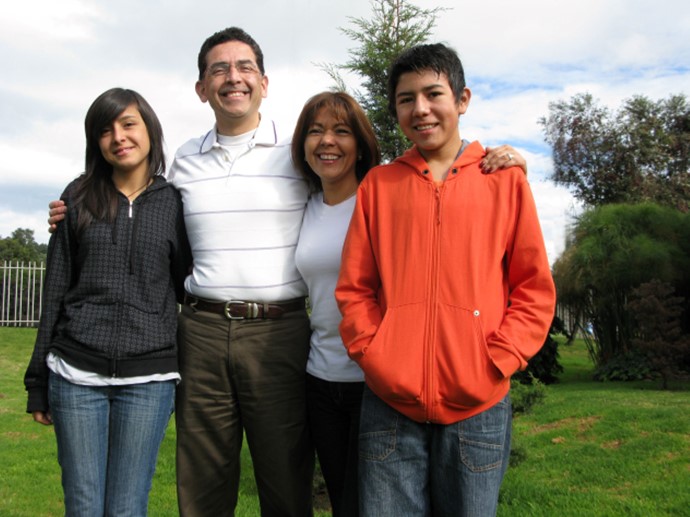
You would probably do what Juana and Jose (not their real names) from Columbia did. With their two children, a teen and a young child, they set out on the long walk to the United States, seeking asylum and a new, safe life in the U.S. You might very well do this same thing because you’d have heard through the migrant grapevine that American law states that any person who arrives onto U.S. soil and requests asylum has the right to a hearing before an immigration judge.
Any alien who is physically present in the United States or who arrives in the United States (whether or not at a designated port of arrival and including an alien who is brought to the United States after having been interdicted in international or United States waters), irrespective of such alien’s status, may apply for asylum in accordance with this section or, where applicable, section 1225(b) of this title. 8 U.S. Code § 1158 – Asylum (https://www.law.cornell.edu/uscode/text/8/1158)
Juana and Jose began their long pilgrimage in early December, 2023. Almost immediately they faced the perils of crossing the “Darien Gap,” which according to Wikipedia is “a geographic region that connects the American continents, stretching across southern Panama‘s Darién Province and the northern portion of Colombia‘s Chocó Department. Consisting of a large drainage basin, dense rainforest, and mountains, it is known for its remoteness, difficult terrain, and extreme environment, with a reputation as one of the most inhospitable regions in the world.”
The Darien Gap is not only physically challenging to cross because of its difficult terrain, it is also dangerous to cross because of snakes and other wild animals and because of the presence of gangs that prey on migrants.
Juana reported that over the three days it took them to cross through the Darien Gap they were always wet because of rainfall and having to cross rivers and streams. They were not alone. They met other people fleeing their homelands and heading towards the United States. They made it to Nicaragua, then Guatemala, and arrived in Mexico in February. They were assisted at times by churches with food and water. At other times they had to work menial jobs to earn money to buy food or a bus ticket. There were many days with little or no food or water. They slept on the side of the road, in parks, church yards, and occasionally in a hotel where they could also shower.
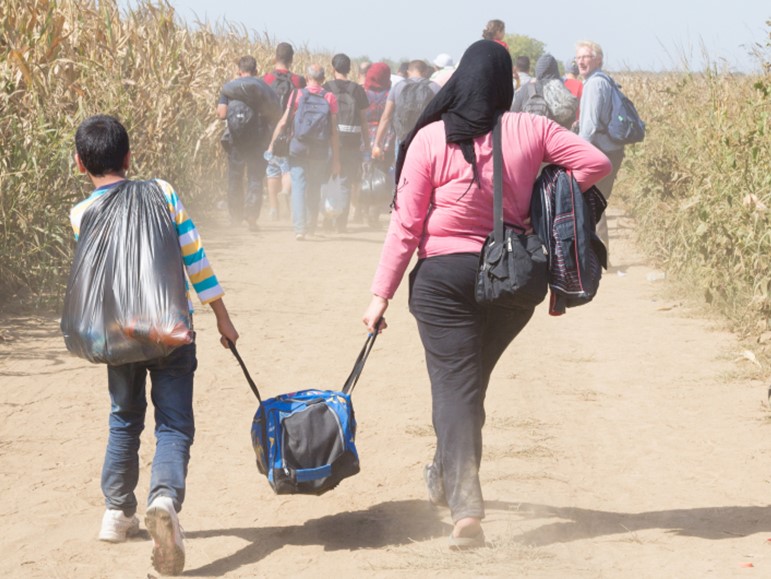
Twice, after traveling to Northern Mexico, Mexican immigration officers picked them up and returned them to southern Mexico near the Guatemalan border. Undaunted, knowing what waited for them back in Columbia, they both times began the trek north again. They did a variety of jobs to earn money to buy bus fares: washing dishes, cleaning houses and yards, waiting on tables. They were occasionally robbed but, thank God, never physically injured, though they witnessed other migrants being attacked and physically harmed.
Arriving in Mexico City a second time, they tried to apply for asylum online through a program set up by the Biden administration. They tried this online application repeatedly over a one-month period without hearing from any immigration official. Finally, Jose decided to hop on a train north to the Mexico – U.S. border, thinking he would find work in the U.S. and send money back to Juana and the children. Juana worked, earned money for bus fare, and was finally able to travel with her two children to Juarez, Mexico, across the border from El Paso, TX, in May.
She crossed into the U.S. at an immigration checkpoint and asked for asylum. Immigration officers took her and the children into custody. After conducting a background check, immigration released Juana and family to Annunciation House, a Catholic shelter system for migrants directed by Ruben Garcia. Mom and children were granted approval to have their asylum claim heard.
Lori and I arrived in El Paso in June to volunteer at Annunciation House where we met Juana and children. The family later learned that Jose was in a detention center in Houston and would probably be deported. Lori worked with the family to get immunizations and other medical care, and I worked with them to learn some English. And we all worked together with all the guests at the shelter to do laundry, mopping and cleaning, meal preparation, and dishwashing.

Juana, however, had a problem. Most families asking for asylum in the U.S. have a contact in the country, a family member or friend, who will host them as they wait for their immigration hearing. Juana’s contact had fallen through. When we left in early August, she and family were essentially stuck at the El Paso shelter. After a few more months passed, the shelter director asked if we would consider hosting the family here in Seattle. Lo and behold, our parish had a connection for a very vital need: a small studio apartment for them.
Juana and family arrived in Seattle the first week of December. Two of our daughters and a few parish families are bi-lingual, and that’s been such a blessing – to connect Juana with some Spanish-speaking families. Lori and I lean heavily on Google Translate, which works surprisingly well, though it’s slow-going. The younger child will begin Pre-K at the parish school; the teen will take the ELL course at the community college in the spring. We’ve found an English language tutor for Mom and teen. Lori is searching for a pro-bono immigration lawyer.
No one would make the journey that Juana and her family made unless the threat to their lives was very real. With honest reflection, I think you or I would have done the same thing. Please remember this family, and all migrants, in your prayers. We’ll keep you updated on their progress.
A 5 minute Christmas Homily
Dear Friends, the Christmas homily ought to be short! The meaning of the day is made abundantly clear in the carols sung, the readings proclaimed, the liturgy prayed, and the festivities in the home. The homilist need only add an exclamation point to what the Christmas liturgy shouts out with joy, that the beloved son of God was born of Mary! Here’s my Five-Minute Christmas Homily for 2022.

Robert: Merry Christmas, everyone. [Robert sings.] It’s beginning to look a lot like Christmas, everywhere you go. People are going to pray. They’re listening every day, to stories from the Bible all aglow.
Oh…wait a minute. Wrong words…how does the song go? (sing with me if you know it):
It’s beginning to look a lot like Christmas, everywhere you go. Take a look at the five and ten, it’s glistening once again with candy canes and silver lanes aglow. It’s beginning to look a lot like Christmas, toys in every store. But the prettiest sight to see is the holly that will be on your own front door.
Wow. The writer of that Christmas song sure got it wrong. Sure, candy canes and silver lanes aglow are fun, and buying toys in every store keeps the economy going but, are these the real signs of Christmas? Everybody, shout, “NO!”
All: NO!
Robert: We just need to look to the beautiful people in the Christmas story for the true signs that indicate Christmas is here. But I need your help in this Gospel reflection. When I raise my hand, would you shout out, “It’s beginning to look like Christmas!” Let’s practice. [Robert raises his hand.]
All: IT’S BEGINNING TO LOOK A LOT LIKE CHRISTMAS!
Robert: When you and I, like Mary, open our hearts to the love of God, when we say, “Yes!” to following his will for our lives, then…[ Robert raises his hand.]
All: IT’S BEGINNING TO LOOK A LOT LIKE CHRISTMAS!
Robert: When you and I, like Joseph, have the courage to stand up for what is right and protect the innocent, from babies to migrants to caring for our beautiful earth, then… [Robert raises his hand.]
All: IT’S BEGINNING TO LOOK A LOT LIKE CHRISTMAS!
Robert: When you and I who are struggling in marriage and family, love one another like Mary and Joseph, forgive each other any hurt we may have caused, and work to restore friendship and affection, then…
All: IT’S BEGINNING TO LOOK A LOT LIKE CHRISTMAS!
Robert: When you and I, like the Magi, can discern when the political powers are trying to manipulate us, and we do not play their games but instead listen to the Holy Spirit speaking to our hearts, thereby thwarting their evil machinations, then… [Robert raises his hand.]
All: IT’S BEGINNING TO LOOK A LOT LIKE CHRISTMAS!
Robert: And when you and I, like the angels in the sky, gather for worship, lift our voices to heaven to sing glory to God in the highest, listen to the Word of God, and receive the Eucharist, then… [Robert raises his hand.]
All: IT’S BEGINNING TO LOOK A LOT LIKE CHRISTMAS!
Robert: And lastly, when we make room in the “inn of our hearts” and walk with the shepherds of the world, with those hard-working laborers, with families who struggle to make ends meet; when we accompany them to Bethlehem to be with the Christ Child and Mary and Joseph, where there is neither rich nor poor, slave nor free, woman nor man, but we are all one in Christ, then… [ Robert raises his hand.]
All: IT’S BEGINNING TO LOOK A LOT LIKE CHRISTMAS!
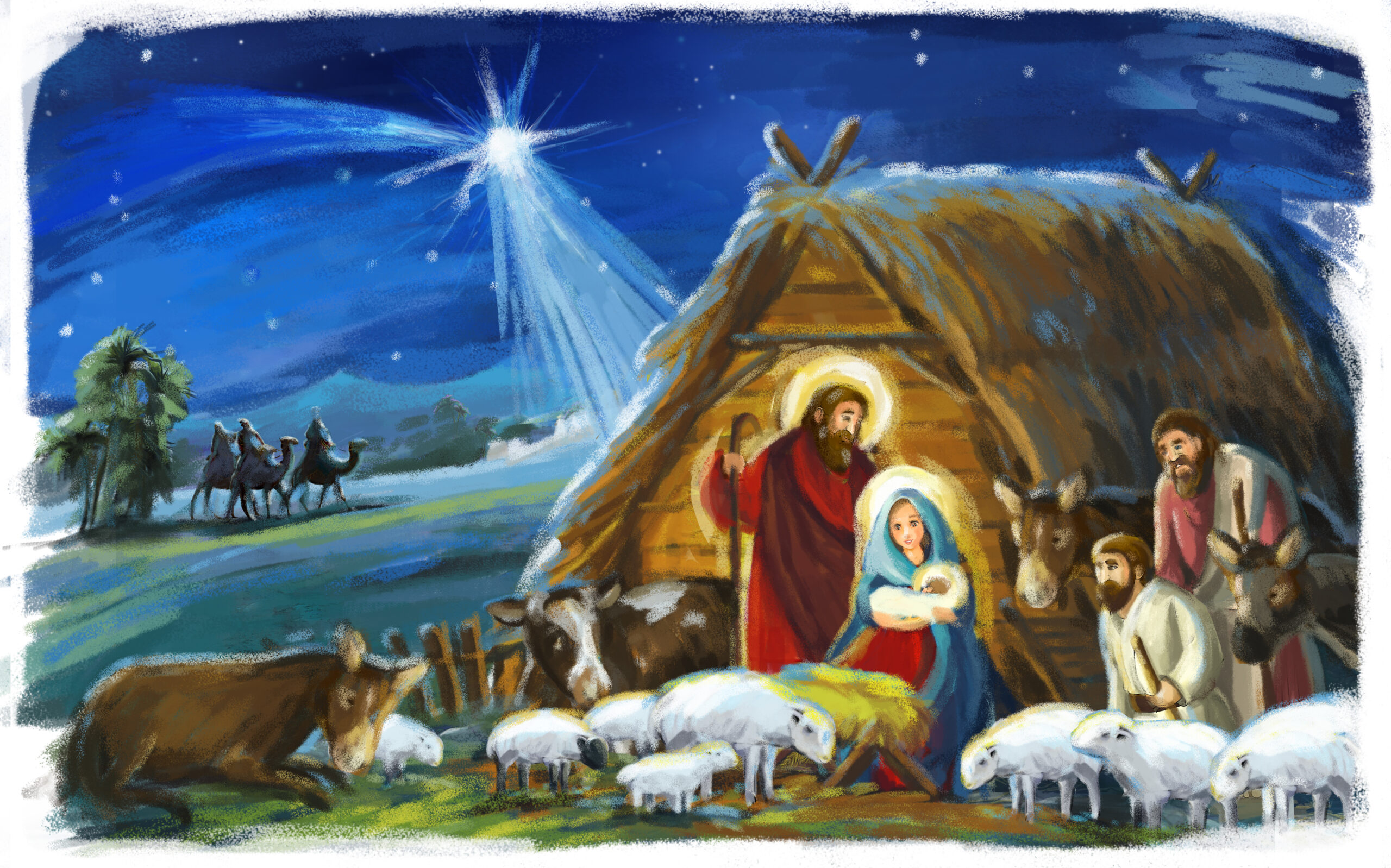
Robert: Decorations are nice; gifts are wonderful to give and receive. But it’s truly Christmas when our joy, celebrations and sharing of gifts spring from the profound knowledge that we are deeply loved by God through the gift of Jesus and we share that love with all we meet. Knowing this, we can live Christmas every day of the year. So, friends, let’s show the world what Christmas really looks like! Because when we do, all people will know that… [Robert raises his hand.]
All: IT’S BEGINNING TO LOOK A LOT LIKE CHRISTMAS!
