Christian faith is not [primarily] a “religion of the book” [the Bible]
By Robert Fontana

Christian faith is not [primarily] a “religion of the book” [the Bible].
That statement comes from the Catechism of the Catholic Church and not from me!
[Jesus ]Christ, the Son of God made man, is the Father’s one, perfect and unsurpassable Word. In him he has said everything; there will be no other word than this one. Art 65
Christian faith is not a “religion of the book.” Christianity is the religion of the “Word” of God, “not a written and mute word, but incarnate and living.” If the Scriptures are not to remain a dead letter, Christ, the eternal Word of the living God, must, through the Holy Spirit, “open (our) minds to understand the Scriptures. Art 108
Catholics (and other Christians) believe that the “Word of God” is the Risen Jesus present in the Church and in the world.
We know the risen Jesus in the written word of God but also in the lives of the saints, communal worship, the ministry and teachings of church leaders, and by faithful followers who love and care for one another. This is true for us today, and it was true of the early followers of Jesus who did not have a New Testament for the first 350 years of church life.
Who came first, Jesus or his disciples? Jesus. Who/what came first – the followers of Jesus (the church) or the New Testament? THE FOLLOWERS OF JESUS! Here’s an outline of how it happened.
1. Jesus proclaimed the Kingdom of God, gathered disciples, was crucified, rose from the dead, and commissioned his followers to proclaim the “Good News” to all the nations (33 AD).
2. The first generation of Jesus’ followers, believing that Jesus was going to return soon, urgently proclaimed his life and message through an “oral proclamation.” This included the organizing of churches and the writing of epistles (33-60 AD). During this time the followers of Jesus experienced the risen Jesus’ guiding them through the Holy Spirit to do the will of God. They shared this experience of the Risen Jesus, who is “the Word of God.” They did not have a written text; they passed on the stories through an oral tradition that included:
a. remembering Jesus in the “breaking of the bread;”
b. recounting the stories of Jesus during worship;
c. showing how the Jewish Scriptures is fulfilled in the death and resurrection of Jesus;
d. baptizing and teaching converts, and developing short creeds, songs, and prayers;
f. caring for one another and confessing sins to one another;
g. resolving disputes through the gathering of leaders in “councils.”
All these practices are mentioned in the letters of the New Testament that were written before the Gospels. They give us insights into the “oral transmission” of the Word of God, all before there was a written New Testament.
3. The stories of Jesus’ adult life, teachings, death, and resurrection were finally put in written form called “Gospels.” The Gospels are composed from these oral traditions. They were written at different times to different faith communities for two reasons: to pass on the life, teachings, and spirit of Jesus and to address specific issues with which the different churches were dealing. This explains why the Gospels are similar but different. Mark wrote to Gentile Christians who were suffering persecution (68 AD). Luke wrote to Gentile Christians who were poor (75-85 AD). Matthew wrote to a Jewish-Gentile community (75-85 AD), and John wrote to a mixed community started by the “Beloved Disciple” (95-100 AD).
Between the time when the Gospels were first written and the completion of the New Testament as we know it, the oral transmission of the “Word of God” continued.
4. Leadership of the “The Way,” as it was known in the years after Jesus’ death (see Luke’s Gospel), transitioned from the Jewish followers of Jesus in Palestine to the Gentile followers of Jesus throughout the empire. The followers of Jesus were called Christians. Doctrines about the Trinity and the divine nature of Jesus were developed. The “bishop” becomes the primary leader of a local church. Bishops discerned (and debated) about which written documents, from the Gospels to the various letters written by missionaries, were to be included in the “Christian Scriptures.”
One proposal was to have just one Gospel, Luke, to eliminate confusion, and reject the other three Gospels of Matthew, Mark, and John. This bishop also wanted to reject the Jewish Scriptures. That proposal was rejected by a council of bishops who prayed and discerned that all four Gospels would be included in the Christian Scriptures, as well as the letters of Paul, James, Peter, Jude, the Book of Revelations, and the Jewish Scriptures.
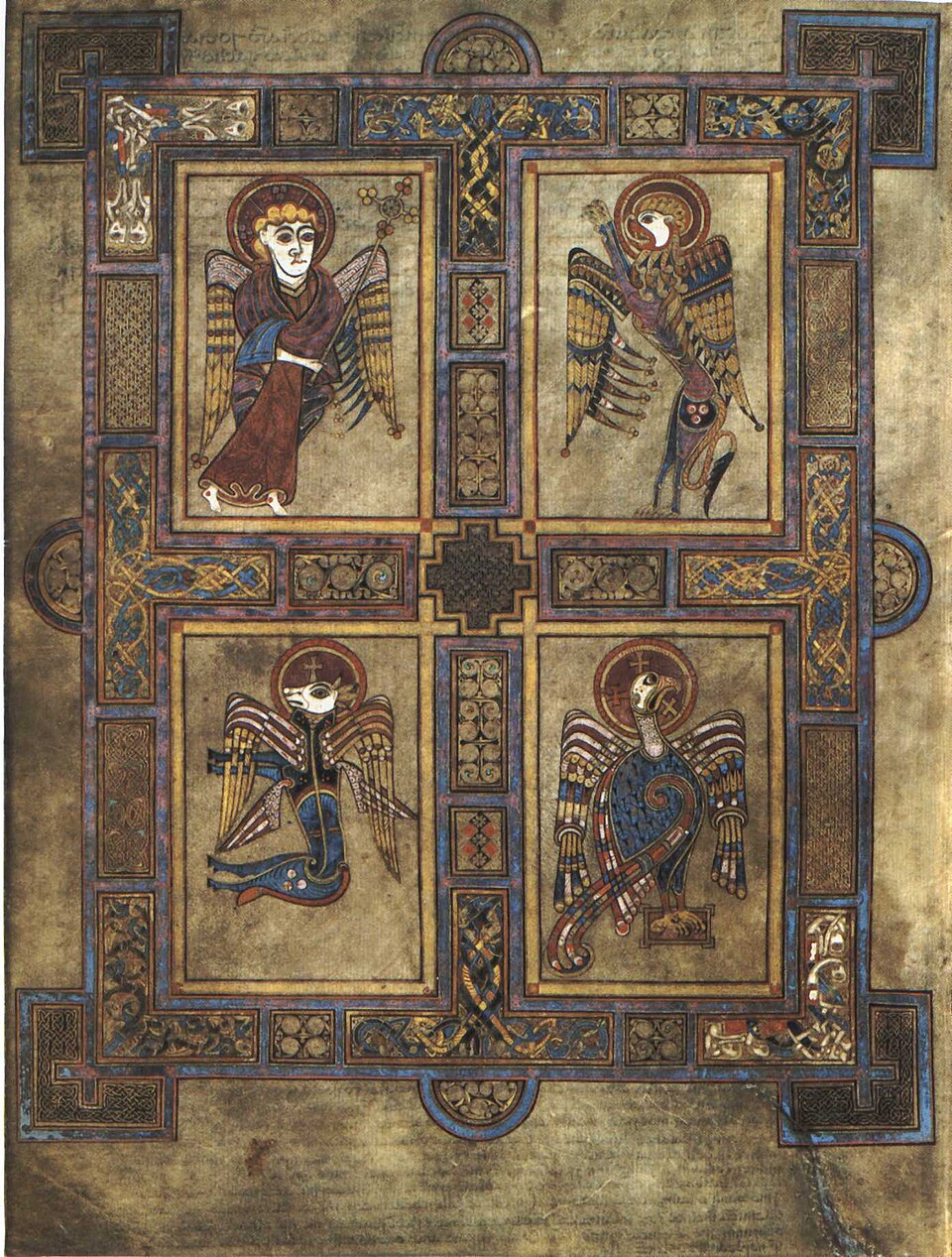
The final version of the New Testament took form between 350—394 AD. It is a product of the life and faith of the Church which kept the life, teachings, death and resurrection of Jesus alive without a book for 350 years. The “Word of God who is the Risen Jesus,” whose story is contained in the Bible, was not, is not fundamentally entrusted to a book, but to the Christian faithful.
Here’s how the Catechism of the Catholic Church puts it:
“The Word of God…is set forth and displays its power in a most wonderful way in the writings of the New Testament …Their central object is Jesus Christ, God’s incarnate Son: his acts, teachings, Passion and glorification, and his Church’s beginnings under the Spirit’s guidance.” Art 124
