Suppose two people break into your house
By Robert Fontana
Bear with me here. It’s 2 o’clock in the morning, and you hear something that sounds like a window breaking in your downstairs living room. Incredibly, you hear more breaking glass that sounds like it is coming from your kitchen on the opposite side of the house.

YOU’RE TERRIFIED: INTRUDERS!
You call the police as you lock the door to your bedroom. You’re in luck. A patrol car is in the neighborhood and arrives within minutes. The intruders are apprehended. You come down the stairs to see who broke into your home and why.
One officer has Intruder 1. You learn from this officer that Intruder 1 was hoping to steal electronics and perhaps jewelry to sell it on the illicit market.
The other officer has Intruder 2. From this officer you learn that Intruder 2 was fleeing her boyfriend who was in a drunken rage and threatening to kill her.
The officers ask you if you want to press charges for each intruder.
What each person did was illegal. What do you do?
As many of you know, Lori and I have been advocates for the rights of migrants and refugees who are seeking a new life in the U.S. Many of these people have been here for years. They are working in agriculture, fruit-packing plants, slaughterhouses, and as cleaners and caregivers for the elderly. Some of my Catholic friends will concede that not all migrants are “murderers, rapists, and criminals” as they have been described by some politicians. But, these same friends say emphatically:
THEY ARE HERE ILLEGALLY!
You know where this is going. In the story above, two people broke into the house, but only one of the intruders is really doing criminal activity.
Men, women, and children who cross into the U.S. seeking relief and safety from intense poverty, violence, and sex-trafficking have a moral right to do so. They may be in the U.S. illegally, but like the 2nd intruder in the story, they are not criminals. According to Scripture and Catholic social teaching, they have a moral right to flee their unlivable conditions to seek a better life elsewhere (as the Holy Family did when they fled Bethlehem to go to Egypt).
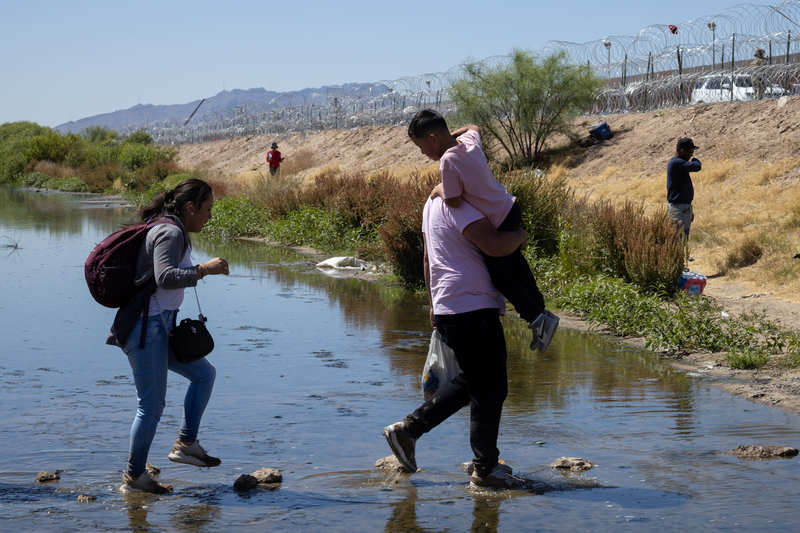
Migrants and refugees seeking a better life need our compassion, not judgment and bullying. This is true whether they have been here for years and are established as good citizens in whatever capacity; or they are recent arrivals who, compliant with U.S. law, have applied for asylum and have been granted an asylum hearing date.
That’s the case of the family that we are supporting who made the dangerous and difficult four-month journey, mostly on foot, from Columbia, through the jungles of Panama, across Nicaragua, Guatemala, and Mexico to El Paso, Texas. The mother, with her 17-year-old daughter and 5-year-old son, made the trip in desperation to prevent gangs from kidnapping the 17-year-old for trafficking.
When the Pharisees noticed the disciples of Jesus picking grains of wheat and eating them while it was the sabbath, they said:
“See, your disciples are doing what is unlawful to do on the sabbath.” He said to them, “Have you not read what David did when he and his companions were hungry, how he went into the house of God and ate the bread of offering, which neither he nor his companions but only the priests could lawfully eat? Or have you not read in the law that on the sabbath the priests serving in the temple violate the sabbath and are innocent? I say to you, something greater than the temple is here. If you knew what this meant, ‘I desire mercy, not sacrifice, you would not have condemned these innocent men. For the Son of Man is Lord of the sabbath.” Matthew 12:1-8
Can we not show mercy and justice to these good people who are actually, by and large, very much contributing to the common good of their local communities?
Here’s what Cardinal Robert McElroy had to say about the treatment of migrants at the Mass for the 111th World Day of Migrants:
“…this year we are confronting – both as a nation and as a Church – an unprecedented assault upon millions of immigrant men and women and families in our midst.
Our first obligation as a Church is to embrace in a sustained, unwavering, prophetic and compassionate way the immigrants who are suffering so deeply because of the oppression they are facing…
We are witnessing a comprehensive governmental assault designed to produce fear and terror among millions of men and women who have through their presence in our nation been nurturing precisely the religious, cultural, communitarian and familial bonds that are most frayed and most valuable at this moment in our country’s history…
Catholic social teaching states that every nation has the right to effectively control its own borders and provide security. Thus, efforts to secure our borders and deport those undocumented immigrants convicted of serious crimes constitute legitimate national goals. At times, our government asserts that these goals constitute the essence and scope of its immigration enforcement efforts, and if that were true, Catholic teaching would raise no objection.
But the reality we are facing here in the Archdiocese of Washington and across our country is far different. For our government is engaged in — by its own admission and by the tumultuous enforcement actions it has launched – a comprehensive campaign to uproot millions of families and hard-working men and women who have come to our country seeking a better life that includes contributing to building up the best elements of our culture and society.

Deportation is not the answer. What is needed is a simple and manageable pathway towards legal residency, with employment privileges, and with an option for citizenship.
John Wayne, Knute Rockne, Robert E. Lee, Jesus, and Dad
By Robert Fontana
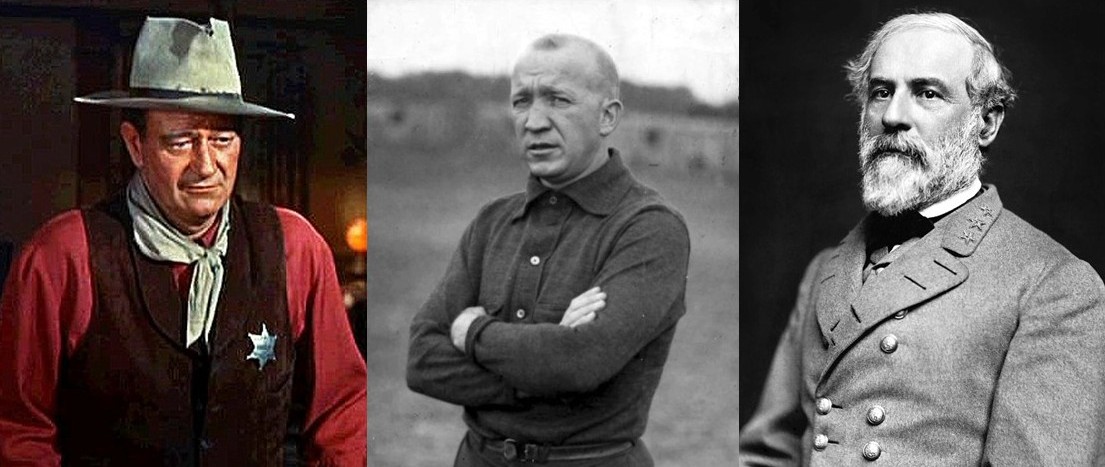
I know, strange title for an article. Those were my childhood heroes and in that order. My mother could hardly bear John Wayne movies. “He can’t act,” she would say. I wouldn’t listen. I was thrilled with seeing him in his old movies, The Quiet Man and The Sands of Iwo Jima and his new releases (in the 6o’s) The Sons of Katie Elder and True Grit.
Contrary to what my kids think, I did read during my childhood. Two of my favorite books were the biographies of Knute Rockne and Rober E. Lee, two “great Americans.” I became a devotee of Notre Dame football and the Confederate States of America.
Lori is astounded when I talk to people my age who also love Notre Dame, and ask them, “Remember when Ara Parseghian went for the tie in the 1966 game against Michigan State?” I put up framed photos of Notre Dame players on my wall that I cut out of Sports Illustrated magazines. And I sobbed when I learned that my uncle was one ticket short for the Notre Dame – LSU game, and I was the one who had to stay home and watch it on TV.

But it was Robert E. Lee who really caught my attention. He was the best that America had to offer, a Christian gentleman, man of principle, and master on the battlefield. Through him I was introduced to all the important men of the Confederacy, studied their battles, and suffered with them on that fateful July 3rd day when Pickett’s charge failed at Gettysburg. Of course, I was glad slavery was defeated, and that the U.S. remained an intact nation. Truly, I never paid attention to the politics that led to the “War of Southern Independence” as Southerners preferred to call it.
All this was happening to me as I attended Catholic Church and school, made my First Confession and Communion, went to Mass on Sundays and every day during Lent, prayed the rosary, and learned the Catechism of the Catholic Church. I was exposed to sacred music through our school choral program and learned to sing Mass in Latin. Our family often had priests over to our house for Sunday dinner, and I sometimes spent the night at the rectory to keep a priest company who was there alone (nothing bad happened to me).
I was raised within two cultures, one dominated by television, sports, and the southern Confederate identity, and the other by Catholic institutions – the parish, school, neighborhood, and family. These, of course, easily overlapped. My Catholic faith gave me a confidence in God, a love for the institutional Church and its history of saints, and a community of friends for my family. We were held together by the same worldview of “loving and serving God in this life so as to be happy with him in the next.”
But my Catholic community in South Louisiana, at least as I experienced it, did not critique the dominant culture that was shaping me. I was raised on the White side of segregation. Through my teen-aged years, I thought Robert E. Lee and the Confederacy were great and eventually flew a Confederate flag. I looked to John Wayne, hard-fighting, hard-drinking, and a lady’s man, as a model of masculinity. I was enamored with the military, and gave so much of my energy to sports.
I was unconsciously sucked into what St. Paul describes as “this age” from which he challenged Christians in Rome to avoid conforming to:
“Do not conform yourself to this age, but be transformed by the renewal of your mind, that you may discern the will of God…” Romans 12:2
I needed some shaking up, and Jesus was the very person to do it. It wasn’t dramatic. It wasn’t all at once. But once I had an experience of Jesus as a person who loves me and is with me at every moment, my unhealthy attachment to all my secular heroes and identification began to be challenged. The Catholic rituals and culture in which I participated opened for me a life-giving relationship with God.
As a senior in high school, John Wayne didn’t inspire me to visit the elderly in a nursing home or the inmates in the county jail, but the Legion of Mary, which I joined with a friend, did. The “Duke” also didn’t encourage me to treat girls with respect, to be a Christian athlete, and seek God’s will for my life, but my parents, their prayer group, and my high school friends active in the diocesan retreat movement did.
I had no capacity to see the harm of white supremacy’s hiding behind segregation and the cult of the confederacy that I so embraced until I met an African American seminarian from New Orleans who took me by the hand to show me what racism was. At first, as I encountered Black culture in its Catholic form, I thought that only he and other African Americans were harmed by racism. It took a while but one day it dawned on me that, “No, I was also a casualty of racism!” I was deprived of the beauty of African American culture and the friendships that it offered. And I was unknowingly perpetuating racism by my Confederate leanings.
The Confederate flag came down permanently after an encounter with an old family friend in my hometown of Abbeville who participated in Civil War battle re-enactments dressed as a Confederate general. As we discussed the 1863 battle at Port Hudson, Louisiana, where “colored troops” for the first time fought for the Union, this man’s friendly demeanor turned to hate as he said, “We kicked the N_ _ _ _ _ s then, and we’ll kick ‘em again.” I finally had to admit that all those monuments and symbols to the Confederacy were about a war to create a country based on the enslavement of African Americans, whose purpose was to prop up white power today.
Wow. I was duped by “this age” in its southern form.
As I matured and began separating myself from my childhood heroes, grew in faith, married, had children, and focused on a career in ministry, a new person emerged as someone I needed to imitate. It was my dad. Yes, of course it was Jesus, and the saints, and some new favorite people from history like U.S. Grant (I switched sides and became a Union man), but mostly it was my father. My dad, Anthony Fontana, became the person I most wanted to imitate. He had awakened faith in Jesus for me back in high school by sharing his faith with me. He (and mom) brought music to my life, both sacred and secular. Most importantly he showed me how to be a patient, faithful, playful, and loving husband, father, and grandfather.
Pope Francis had it rough with far-right Catholics. How will Pope Leo fair?
By Robert Fontana
One might think Pope Francis was the anti-Christ with the depth of vindictive comments leveled at him for his pastoral approach, small changes, and efforts at more inclusive dialogue. Here are some reasons for their complaints:
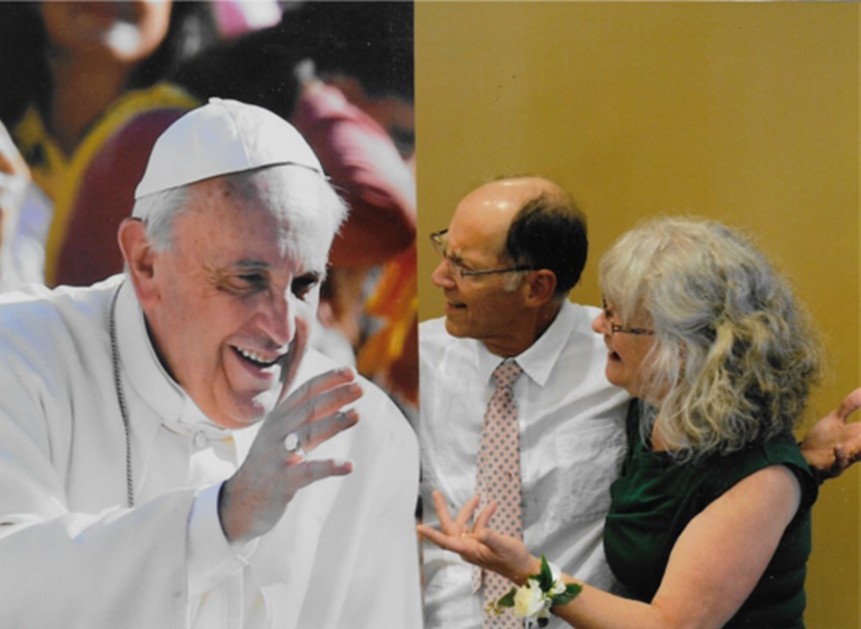
a. For placing lay women and men in leadership positions at the Vatican: Cardinal Beniamino Stella wrote, “[Pope Francis] is “breaking long standing tradition…imposing his ideas” which separate church governance from ordination.
b. For allowing controversial topics to be discussed at the synod, e.g., whether divorced and remarried Catholics be admitted to communion; ministry to gay and lesbian persons; and care for the earth, five cardinals complained. They wrote Francis a letter expressing their concerns that he was sowing “confusion, error, and discouragement” in the Church. They accused Francis of changing church doctrine because of the influence of sinful elements in western culture.
d. For allowing lay women and men to have a vote equal to bishops at the synod, Restore Tradition (a US based women’s group) wrote, “We wish to be represented only by bishops!”
Some far-right critics of Francis accused him of being “soft on sin” because of how he permitted the parish priest to forgive sins related to having an abortion, spoke too little about the sin of abortion and too much about the dignity of migrants and their right to seek a better life in another country. Pope Francis even drew the ire of the far-right with his encyclical Laudate Si’ that placed care of the earth alongside care of the unborn at the center of a pro-life agenda.
By all accounts, Pope Leo will continue the trajectory of Pope Francis. This was indicated by Pope Leo’s visit to pray at Pope Francis’ tomb. Like Francis, he won’t change Catholic doctrine on any of these hot-button issues. What he will do is place the doctrines and disciplines of the Church at the service of Catholics specifically and the human community in general. The images of the Catholic Church as a “field hospital” for the wounded and the Eucharist as “medicine for the sick and not a reward for the saved” will continue.
This echoes the teachings of Jesus who said, “The sabbath was made for man, not man for the sabbath.” Mark 2:27
Pope Leo is also following in the footsteps of another Chicagoan, Cardinal Bernardin, who coined the phrase of a “seamless garment,” uniting all the prolife issues of the church under a common banner and not just under one primary issue: abortion. This was certainly the practice of Pope Francis and his successors, Pope Benedict XVI and Pope John Paul II.
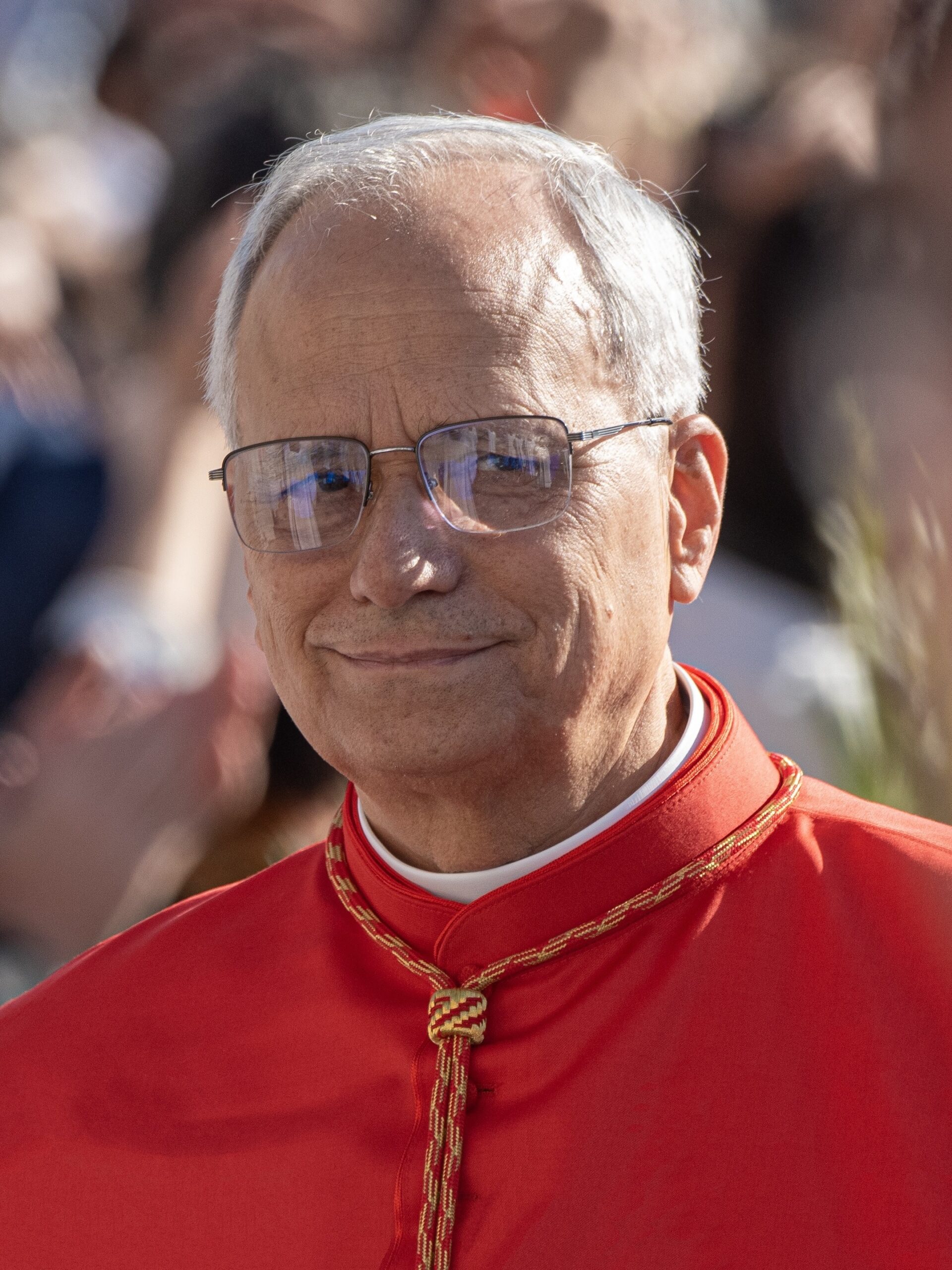
To be pro-life is also to take seriously the human influence on climate. Few people remember that Pope Benedict often spoke and wrote about the human responsibility to care for the earth:
“Preservation of the environment, promotion of sustainable development and particular attention to climate change are matters of grave concern for the entire human family.” (September 1, 2007)
“We are responsible for the protection and care of the environment. This responsibility knows no boundaries.” (January 1, 2010)
To be pro-life is also to critique economic systems in terms of their service to human dignity and the common good. Pope Francis was labeled as a socialist by his far-right critics because of his criticism of the so-called “free-market” system that creates great wealth for a few and poverty for many. He was just echoing what every pope, from John XXIII to the present, has said, including Pope John Paul II who wrote,
“We see a small number of countries growing exceedingly rich at the cost of the increasing impoverishment of a great number of other countries; as a result, the wealthy grow ever wealthier, while the poor grow ever poorer.” (1998 visit to Cuba)
“If the aim is globalization without marginalization, we can no longer tolerate a world in which there live side by side the immensely rich and the miserably poor, the have-nots deprived even of essentials and people who thoughtlessly waste what others so desperately need. Such contrasts are an affront to the dignity of the human person.” (Pope John Paul II, 1999)
The popes have taught what the bishops at the Second Vatican Council taught based on what the Scriptures taught: that the government (or king in the Scriptures) is responsible to protect the common good, especially protecting the dignity of every human being, from the unborn, to prisoners, to migrants, and the elderly.
“The state has the duty to prevent people from abusing their private property to the detriment of the common good. By its nature private property has a social dimension, which is based on the law of the common destination of earthly goods. Whenever the social aspect is forgotten, ownership can often become the object of greed and a source of serious disorder.” (Vatican II document, Church in the Modern World)
Pope Leo will continue his papacy in the trajectory of Pope Francis because it is the trajectory of the Holy Spirit’s leading the Catholic community since Vatican II and into the new millennium. Leo will have his own style, perhaps with a little less spontaneity and a little more clarity than his predecessor.
But synods with lay participation, Vatican congregations led by women, church leaders in dialogue with marginalized Catholics, mercy as the guide to pastoral behavior, pro-life work including care for migrants and care for the earth, and the church’s advocacy for government protection of the common good and a safety net for the poor – these values are here to stay.
Pope Francis had it rough with far-right Catholics. This doesn’t have to be the case with Pope Leo’s papacy. With the guidance and grace of the Holy Spirit, we can unite the “left” and the “right” in the Church behind these principles, taken straight from the GOOD NEWS of the Gospels.
The daily news, chocolate, and trusting in Jesus
by Robert Fontana

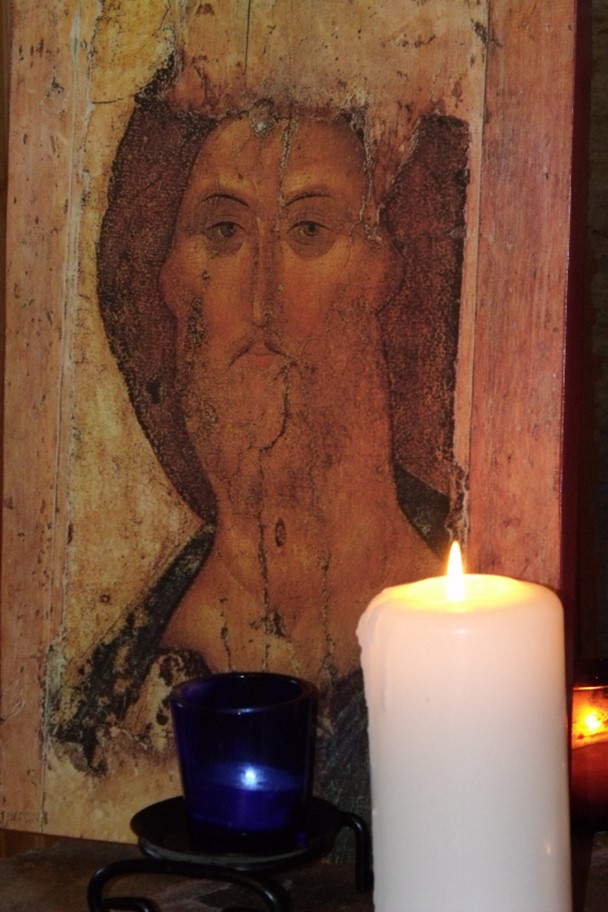
“Jesus, I trust in you.” This is one of my favorite mantras. I have said it so often that now these are the first words on my lips as I wake. It’s a prayer that brings me peace and calm, that is until I step out of bed, turn on the radio, and listen to the morning news. “Trust in Jesus” recedes into the background and “God, help us!” takes over.
“MORE KILLINGS AND FAMINE IN GAZA!” “LOCAL HOSPITAL AT RISK OF CLOSING!” “JUVENILE CRIME UP!” “LARGEST RUSSIAN DRONE ATTACK ON UKRAINE SINCE THE BEGINNING OF THE WAR!” “ICE AGENTS BREAKING INTO CARS TO ARREST SUSPECTED UNDOCUMENTED MIGRANTS!”
And the one headline that really hits home:
“HERSHEY IS HIKING ITS CHOCLATE PRICES DUE TO INCREASE OF COST OF COCOA.” (That’s because Ghana and the Ivory Coast, countries which produce almost 60% of the world’s cocoa, have been hit by poor harvests due to weather, exacerbated by climate change.)

Really, the one thing that consistently helps me cope with the evils of the world, in addition to Jesus, of course, is Hershey’s dark chocolate with almonds. And now the price is going up. Dear God!
Lori and I allow ourselves one dark chocolate Hershey Nugget a day. On a bad news day, we might allow ourselves two. Yes, we try to eat healthy – that Mediterranean Diet – but sometimes chocolate is the only comfort food that can counteract the daily dose of bad news.
Lori and I are news followers. Long ago, in a land faraway, when we were young Catholics participating in the Newman Center at LSU, some wise priest made the comment that a good preacher always had the Bible in one hand and the newspaper in the other. That’s when we learned what the Baltimore Catechism meant with the third question put to the faithful:
Why did God make you? God made me to know Him, to love Him, and to serve Him in this world, and to be happy with Him forever in heaven.
The priests and campus ministers at LSU helped us to see that if we want to serve God in this world, we must pay attention to what is going on in the world, the good, the bad, and the ugly. The daily news (along with National Geographic) is an excellent source for the happenings in the “world.” And probably like you, we quickly learned that most good news in the paper is saved for Section B or perhaps even Section C. Front page, headline news is generally BAD, SCANDALOUS, and UGH! Bad news sells papers and attracts radio, podcast, and online-streaming listeners.
Lori and I were new at applying our faith to the real issues we learned about from our news sources. In those days the issues were: hunger in Ethiopia; corruption in government following the Nixon presidency; the CIA’s role in overthrowing the Shah of Iran; the aftermath of Vietnam; women’s fight for equality; racial tensions and poverty in our college town of Baton Rouge; the Supreme Court’s decision legalizing abortion; and even some conflict between our campus ministers and the local bishop.
Two pieces of wisdom gave us direction. The first was: Chocolate comes from cacao which is a small tree. That makes it a plant. Chocolate is salad.
No, wait…that wasn’t the wisdom I was thinking of.
The first piece of real wisdom came from a book title: “Faith must do justice.” That really captured our imaginations, but what does it concretely mean? We discussed this thoroughly while eating, what else, brownies my mother made. Somehow this “cocoa salad” helped us to think deeply about the topic. Then we took the issue to our spiritual director, Fr. Dennis Berry, who gave us our second piece of wisdom.
He said, “The key is to keep asking yourself the question even if you are uncertain of an answer. The search for how to live a faith that is just and the courage to continue to ask what that looks like for this issue or that problem…this is what is really important. Keep asking the questions!”
About this time, with the help of our good friend Trish Richardson (now Mann), we began to examine the lives of St. Francis and St. Clare and their radical lifestyle of simplicity, care for the poor, love of nature, and trust in Jesus to provide. Here was a way to live a faith that is just. We can serve the poor by living a lifestyle that consumes according to our needs, that focuses on relationships rather than things, that welcomes women and men who are poor as our neighbors and friends, and that cares for the earth.
That was 48 years ago. Six children later; several moves across the country from Louisiana to Maryland to Washington; various ministry jobs; the beginning of CLM; becoming part of the Missionary Cenacle Family; lots of continuing education; adult children marrying; grandchildren; and the pressing question we are still asking ourselves is how to live a faith that is just in the midst of the issues that confront us today. I don’t have to list them. You read the papers and listen to the news. Stepping into these issues with a faith that strives for justice can only be done with trust that Jesus is with us and helping us to be a power for good. Jesus, I trust in you!
Oh, here’s one more plug for “cocoa salad” as spoken by a client of mine: “Chocolate has never let me down!” Chocolate may be a momentary distraction from the problems of life, but it has never given me a hangover, caused me to be thrown out of a bar at 2 a.m., or contributed to huge credit card debt. Enjoy it regularly, in moderation, and without guilt.
Aunt Dodie’s Chocolate Cake Recipe (a Fontana family favorite)
1 box of yellow pudding cake mix 1 cup oil
1 small box chocolate fudge instant pudding 3 eggs
1 cup sour cream 1 (6 ounces) package chocolate chips (dark)
Mix all ingredients except chips. Grease and lightly flour a bundt cake pan and put 6 heaping tablespoons of batter on bottom. Sprinkle ½ of the chocolate chips on top of this. Add rest of batter and then other ½ of chips. Bake at 350 degrees for 50 minutes. May look wet when it comes out of the oven. Let cool and turn onto serving plate.
(from Cheryl Ottinger in Tell Me More, a Cookbook Spiced with Cajun Traditions & Food Memories)

PLEASE CONSIDER SUPPORTING CATHOLIC LIFE MINISTRIES
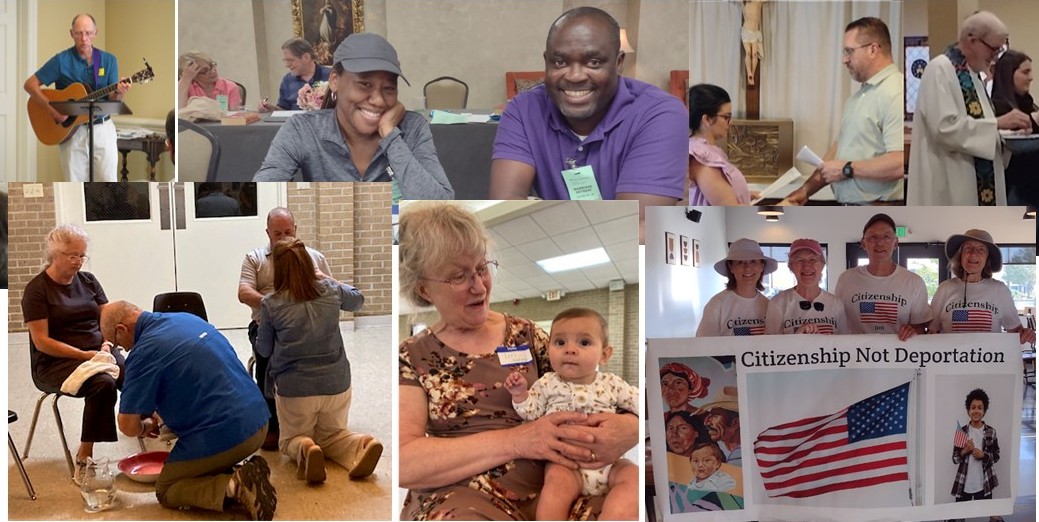
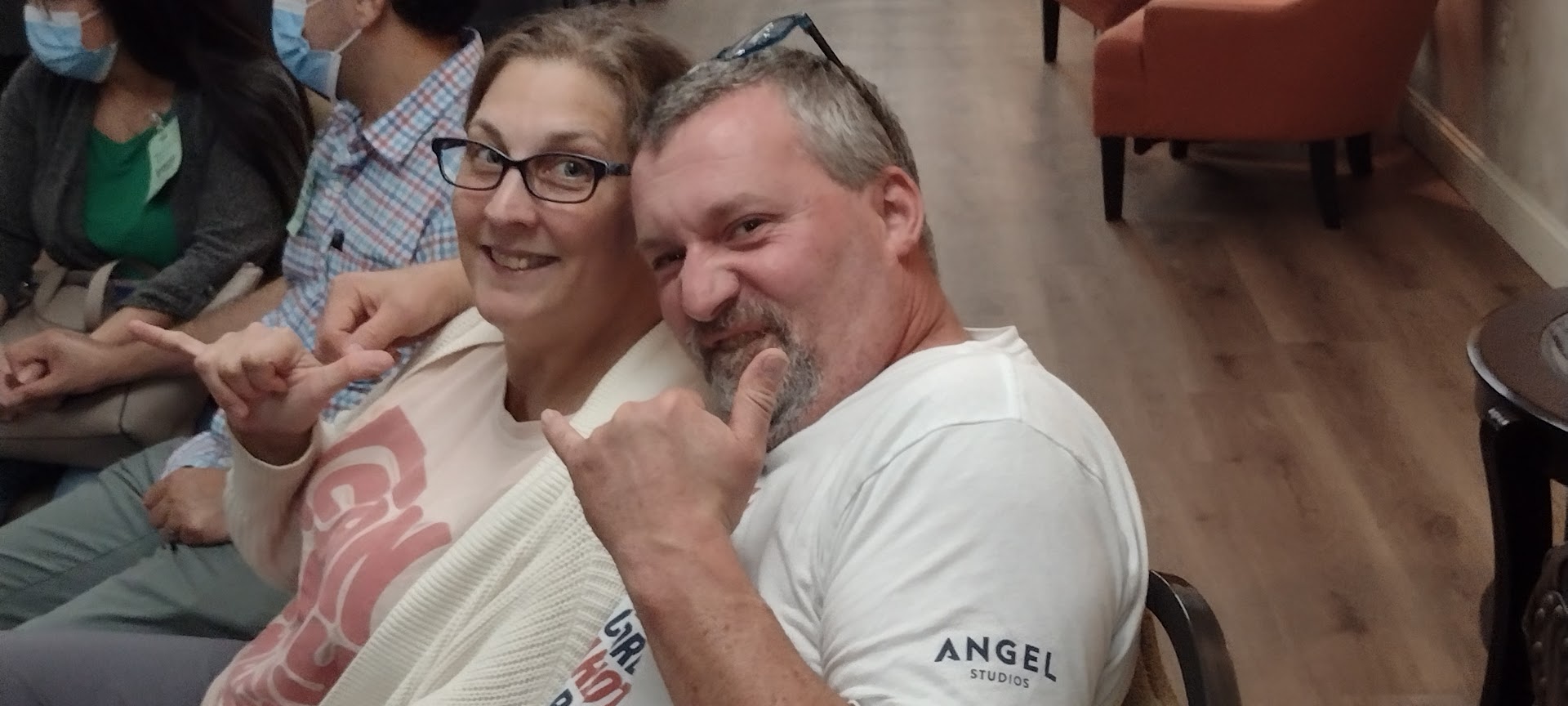
Dear Friends, once a year we ask you to discern if God is calling you to join in the work that we do. It is work that you believe in, and we do a pretty good job. Just yesterday we received letters from couples who attended a retreat we gave in Louisiana. Here’s some of what they wrote:
“We enjoyed the retreat so much. We learned so much, new things about each other, as well as getting to know the other couples that attended a little more…it was our first marriage retreat but definitely won’t be our last…renewing our vows was beautiful closure to the weekend…your wisdom, vulnerability and grace created a space where we could connect as a couple (I didn’t expect to enjoy myself, but I DID!).“
Through Catholic Life Ministries we do the following:
Þ Counseling couples, individuals, and families in a non-profit clinical practice that offers a sliding scale to make our services available to people of all income levels;
Þ Spiritual and faith formation for adults through retreats and Cenacle faith communities;
Þ Marriage enrichment and marriage preparation workshops;
Þ Advocacy for persons, the vulnerable and those living on the margins: migrants and asylum seekers, the unborn, and, following Pope Francis’ encyclical Laudato Si, our planet;
Þ Essays on living the Christian life within the complexity of the 21st century (“thinking with the Church and helping the Church think”).
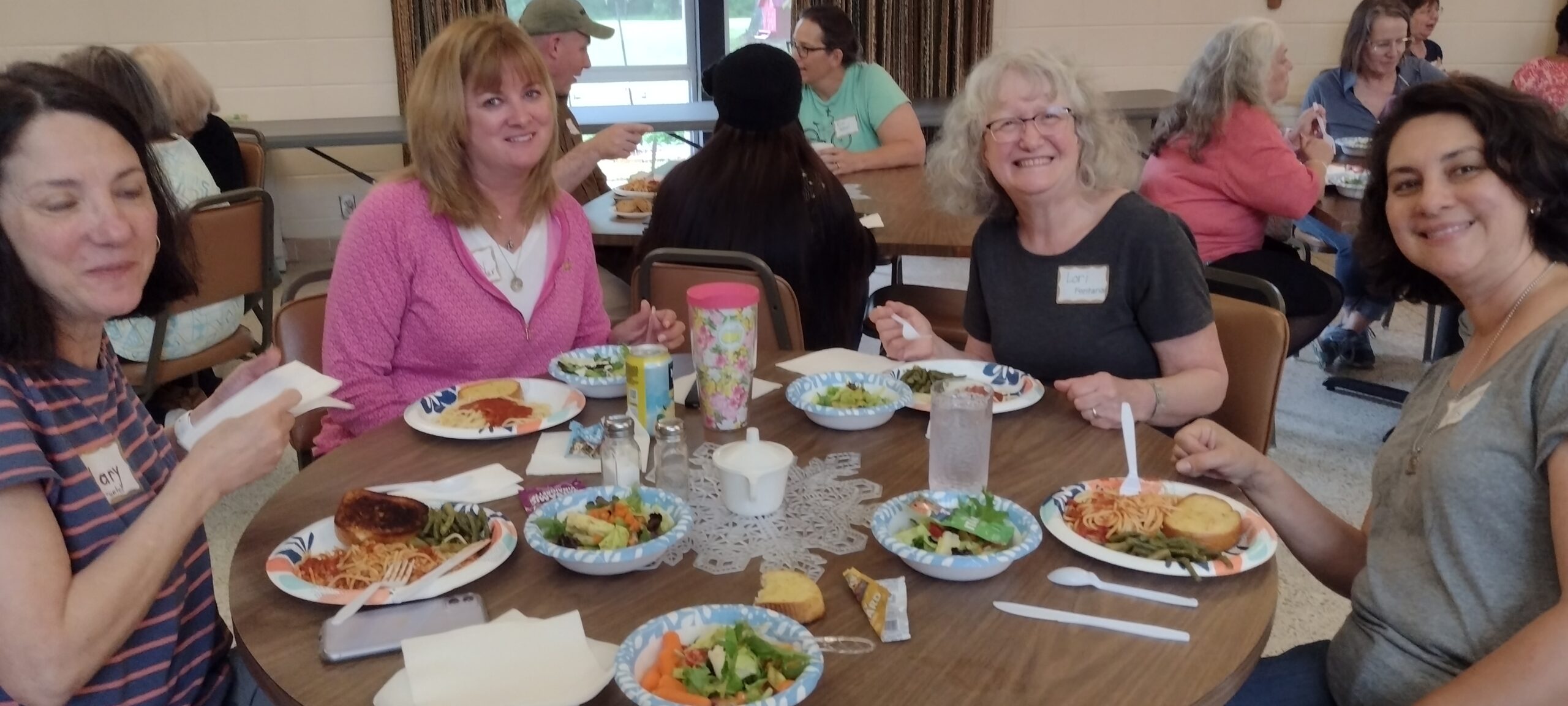
To support Catholic Life Ministries:
1. Make a donation online at https://www.catholiclifeministries.org/donate/
2. Make a check payable to CLM. Mail to CLM, 1827 NE 58th St, #B, Seattle, WA 98105.
3. Commit to praying for the Fontanas and CLM. Let us know you’ll pray for us! Email us at Robert@catholiclifeministries.org. Send us your prayer requests which we remember every Thursday. Our special prayer for each of you is below:
“O loving God, Father, Son, and Holy Spirit, we commend to you this day our love and service. We pray also, that in the providence of our every day life, we may be mindful of the poor and spiritually abandoned, those who do not know your love or the love of their neighbor. Be with and bless the community and mission of Catholic Life Ministries. Make CLM an instrument for drawing the busy and the bored, those in and out of church, into the love and communion of the Trinity. We ask this in the name of Jesus and through the intercession of St. Mary and St. Joseph and all the saints. Amen!”
CLM – Thinking with the Church, and Helping the Church Think
By Robert Fontana
We are grateful for your prayers and financial support. Because of you, Catholic Life Ministries (CLM) has offered a variety of outreaches over the years since we began our ministry in 1990:
Faith and fun camps for families; Taize youth ministry; sacramental preparation classes for Confirmation and Marriage; Camp St. Francis service weekends to repair homes for the elderly and poor; retreats for adults, youth, and couples; family workshops to prepare for Advent and Christmas; and counseling for individuals, couples, and families.
One of our major outreaches is this publication, The Troubadour, and online essays. Through these we offer our best effort to follow the wisdom of Fr. Judge, founder of the modern Cenacle movement, to “think with the Church.” However, we add to that the hard-learned wisdom from our 44 years of working in Catholic ministry: “help the Church think.”
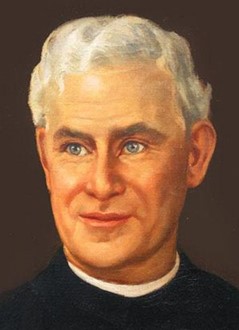
Fr. Judge, in insisting that we think with the Church, was not demanding blind loyalty to what Catholic leaders might be saying and doing in a particular circumstance. Father Judge went deeply into what the Church believes by studying the Scriptures, the second and third generations of Christian writers, the lives of the saints, and the teachings of Church councils. This, of course, included praying with the Church by praying the daily office, and observing the liturgical year. In doing so, he developed an inner capacity, rooted in the faith of the Church, to discern the impulses of the Holy Spirit to “think with the Church” while confronting the new and complex issues of his day (early 1900’s).
Fr. Judge would encourage us to do the same as much as we can within the circumstances of our own lives. I agree with his sentiments…to a point.
For one, few of us lay people, other than professional lay ministers, have the time or interest to delve deeply into the many ways the faith of the Church is known and passed down from generation to generation. Most of the laity must rely on Church leaders, clergy and lay, to do this work for us. There lies the rub: the practice of many clerics, from past times into the present, from parish priests to bishops, has been to interpret the phrase “think with the Church” as “pray, pay, and obey!”
That attitude reflects a view of the Church as a monarchy with a small caste of men who rule and the rest of us who are “ruled.” This is still so evident in our church structure at all levels. Lay people serve on parish councils, finance councils, diocesan pastoral councils, and Lay Review Boards, etc., all of which are ADVISORY. We pay all the bills but only get to offer advice on issues of importance.
Working at the Diocese of Yakima, I had a meeting with Bishop George (later Cardinal George of Chicago). He said to me, “Robert, before we get to our agenda, I need to talk to you about your difficulty with authority in the Church.” (The context: inadequate supervision of lay employees by pastors, low salaries, mistreatment of women in ministry.)
I was surprised, not sure what he was talking about. “WHAT? I’m a good Catholic boy!” He continued, “Well, some folks have told me you think there is a need for a union of lay employees.”
I replied, “Oh that. Bishop, I have learned that in the Church the clergy will always be management, and lay employees will always be labor, and never the twain shall meet.” He said, “Oh, is that all? You’re right.” That was the end of our discussion; and we continued with our meeting.
This conversation happened before the Catholic world imploded over clergy sex abuse crisis. Back then I was addressing issues such as salaries, equitable personnel policies, inclusion of lay people on church boards, and expanding the role of the permanent diaconate. The sexual, physical, and spiritual abuse of children by clergy and other church ministers, and the coverup of this abuse by church leaders demonstrated to Lori and me that the voices of conscientious lay women and men were needed more than ever.
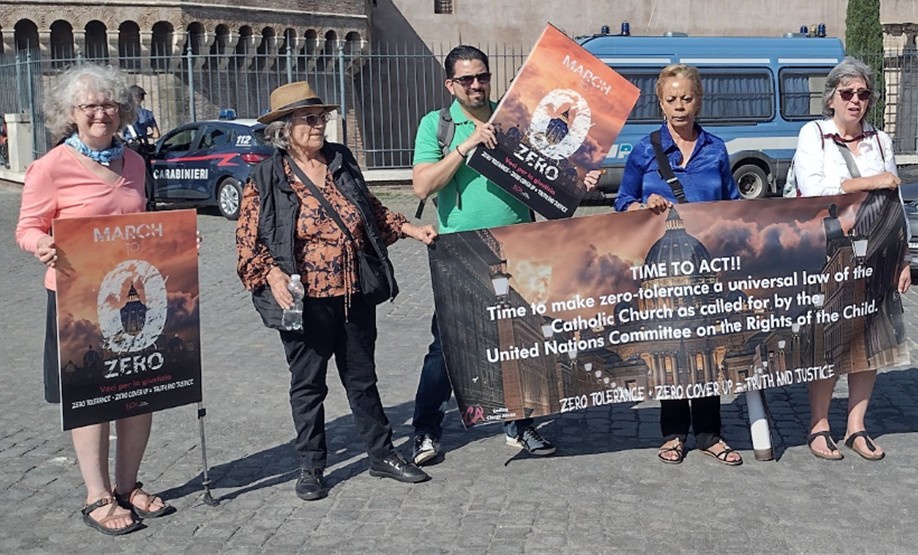
It is no longer enough to “think with the Church.” We must also “help the Church think!”
Pope Francis, apparently, would agree with us (or, perhaps, we are agreeing with him). He initiated a “synodal” process in the Catholic Church that reached out to every parish in the world. It was and is a process of listening to the real experiences of people, allowing these experiences to shape the conversation and discernment of how the Holy Spirit is leading the Church.
Lay women and men, for the first time ever, or at least since the time of the early Church, met with bishops and priests, religious women and men, to respond to questions generated from the worldwide synodal process, share experiences, and listen together, in prayer, to the Holy Spirit.
Through your prayers and financial support, Catholic Life Ministries has offered the Church community a variety of ministries and outreaches. In the essays we print online and in print with The Troubadour, we try, with you, to “Think with the Church, and Help the Church Think.”
______________________________________________________________________________
PLEASE CONSIDER SUPPORTING CATHOLIC LIFE MINISTRIES
Once a year we ask you to discern if God is calling you to join in the work that we do. It is work that you believe in:
- Counseling couples, individuals, and families in a non-profit clinical practice that offers a sliding scale to make our services available to people of all income levels;
- Spiritual and faith formation for adults through retreats and Cenacle faith communities;Marriage enrichment and marriage preparation workshops;
- Advocacy for persons, the vulnerable and those living on the margins: migrants and asylum seekers, the unborn, and, following Pope Francis’ encyclical Laudato Si, our planet;
- Essays on living the Christian life within the complexity of the 21st century (“thinking with the Church and helping the Church think”).

To support Catholic Life Ministries:
1. Make a donation online at https://www.catholiclifeministries.org/donate/
2. Make a check payable to CLM. Mail to CLM, 1827 NE 58th St, #B, Seattle, WA 98105. (Your donation covers everything from stamps, the websites, gas expenses, subsidizing clients who are underemployed, rental of retreat sites, refreshments, materials for retreats, and our salaries.)
3. Commit to praying for the Fontanas and CLM. Let us know you’ll pray for us! Email us at Robert@catholiclifeministries.org. Send us your prayer requests which we remember every Thursday. Pray the following prayer which we use when we pray for you:
“O loving God, Father, Son, and Holy Spirit, we commend to you this day our love and service. We pray also, that in the providence of our every day life, we may be mindful of the poor and spiritually abandoned, those who do not know your love or the love of their neighbor. Be with and bless the community and mission of Catholic Life Ministries. Make CLM an instrument for drawing the busy and the bored, those in and out of church, into the love and communion of the Trinity. We ask this in the name of Jesus and through the intercession of St. Mary and St. Joseph and all the saints. Amen!”
Christian Marriage is Beautiful…and Hard
By Robert Fontana
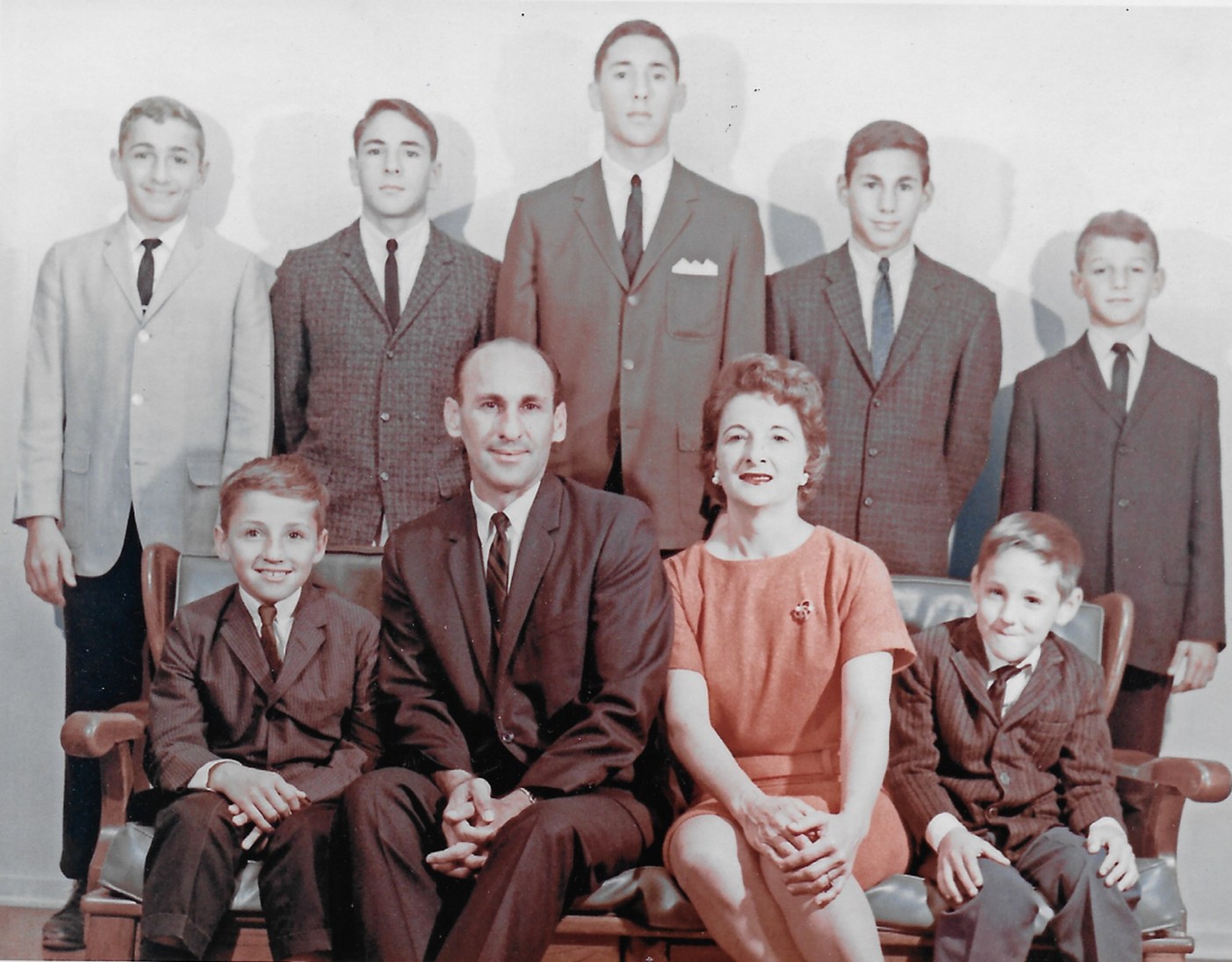
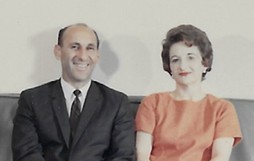
My mother tells the story that after 20 years of marriage, she and Dad could agree on only three things.
They were married.
They had seven sons. And…
Divorce was not an option (murder…maybe, but not divorce!).
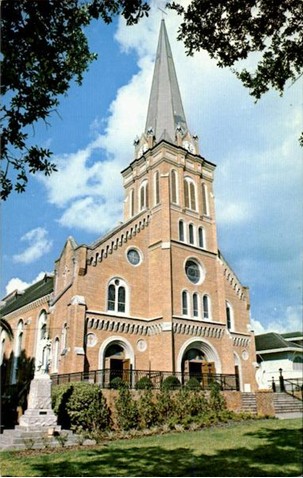
Yes, Mom and Dad had a Christian courtship. They were married after the early morning Mass at Assumption Catholic Church, in Donaldsonville, Louisiana, settling there near Dad’s family. And, following the Catholic method of family planning, their son, the first of seven sons, was born 11 months later.
All was not roses. I have a letter from early in their marriage. Dad wrote to Mom, begging her to come back home. Apparently, she had left in a huff to live with her mother, a three-hour drive away. Mom and Dad were experiencing conflict based on what marriage educators call the “unsolvable problem” in every marriage: Mom was not Dad; Dad was not Mom. Living together, they bumped into their differences; and they had not yet learned to resolve them peacefully. Their marriage, at times, was a tug-of-war. They pulled in opposite directions until somebody finally gave in, or they had a fight.
This wasn’t the whole story. They both loved listening to and playing music, enjoyed musical theater, played tennis, gathered with extended family on weekends, and went to church on Sundays. Knowing Mom, she probably said the rosary every day and went to Mass during the week. But their Catholic Christian faith did not teach them how to manage their differences peacefully, differences in temperament, personality, and expectations, such as how they were going to support a family, parent children, and deal with each other’s families. The tug-of-war continued off and on and, at times, escalated into fighting.
When spouses fight, neither is listening to the other. All couples have a “demon dance,” a negative pattern of interaction with each other when the gloves come off, and each spouse is trying to win the argument or, worse, get revenge and hurt their spouse who may have just hurt them. The “demon dance” develops slowly over time when spouses don’t effectively address differences. Rather, they react to each other in ways that reinforce hurt, resentment, distance, and loneliness. These reactions become a pattern, a “demon dance,” into which warring spouses easily step.

Spouse A makes a critical comment about Spouse B who responds with a smirk. Spouse A does some eye-rolling, and Spouse B speaks the “truth” with a certain tone, and Spouse A says, “Don’t give me that tone!” Spouse B withdraws to silence, and Spouse A gets loud and…
I don’t know what Mom’s and Dad’s demon dance was but, after 20 years, it must have been bad. Remember the only things they could agree on? They were not alone. They were part of the post-war generation of marriages in a rapidly changing America in which the rules that governed conventional marriage – husband as head of the house – were changing. Women were demanding to be treated as equals. In 1946, 1 in 4 marriages ended in divorce. By the late 70’s / early 80’s, the divorce rate jumped to half of all marriages.
What guides today’s marriages? Today’s marriages are no longer governed by roles in which men work and take care of all things outside the house (car, lawn, etc.), and women, who may also work, take care of the small children and everything inside the house. For many people, what shapes their marriage is their careers and ambitions for material success. Some people have “political marriages,” marriages for the sake of gaining access to power in society. Celebrities may use marriage to further their fan base with no intention of longevity or fidelity. Other people, coming from trauma, may use marriage to run away from a difficult childhood home life.
Couples not guided by vows shaped by Christian faith easily place careers, kids’ commitments, pet care, hobbies, or their car upkeep ahead of their marriage. They focus on what social commentators call the “Poison P’s” – Power, Position, Possessions, and Privilege – all made possible by money. When the marriage is second-place, behind every other good commitment, spouses become strangers to one another.

Christian marriage is also hard because life is hard. Many of us didn’t grow up in a family that could give us the consistency of love and healthy examples of working through conflict without yelling and screaming. For many reasons – poverty, sickness, tragedy, sexual and physical abuse, mental illness, drug and alcohol abuse, angry parents, bullying siblings, emotional neglect – individuals, though married in church, bring to their marriages the unresolved pain and hurt from childhood. When emotional needs are not met in marriage, faith notwithstanding, people can react to each other with survival skills learned in childhood. They might yell or withdraw into silence, avoid conflict by joking, become overly critical or logical, analyze for motives, lecture, threaten with consequences, and even boss their spouses around.
They never learned how to listen to each other for understanding, show compassion or validate one another’s emotions, or work together for a solution to the problem that both spouses could live with without resentment.
This was Mom’s and Dad’s challenge. 20 years of marriage, and they were strangers to one another. So guided by their vows and their faith, rather than going to divorce court, they went to a prayer meeting, where they experienced God’s love which turned their lives upside down.
In welcoming God into their marriage, they learned to make their relationship their primary commitment, even over parenting their seven sons. They developed a truly Christian view for married love. They worked to replace their tug-of-war marriage with one focused on seeking the good of the other and finding unity, friendship, and understanding. With God’s help and the help of a prayer community, they began pulling together rather than against each other. And their marriage became the love story that inspired my marriage.
Christian marriage is beautiful and HARD!
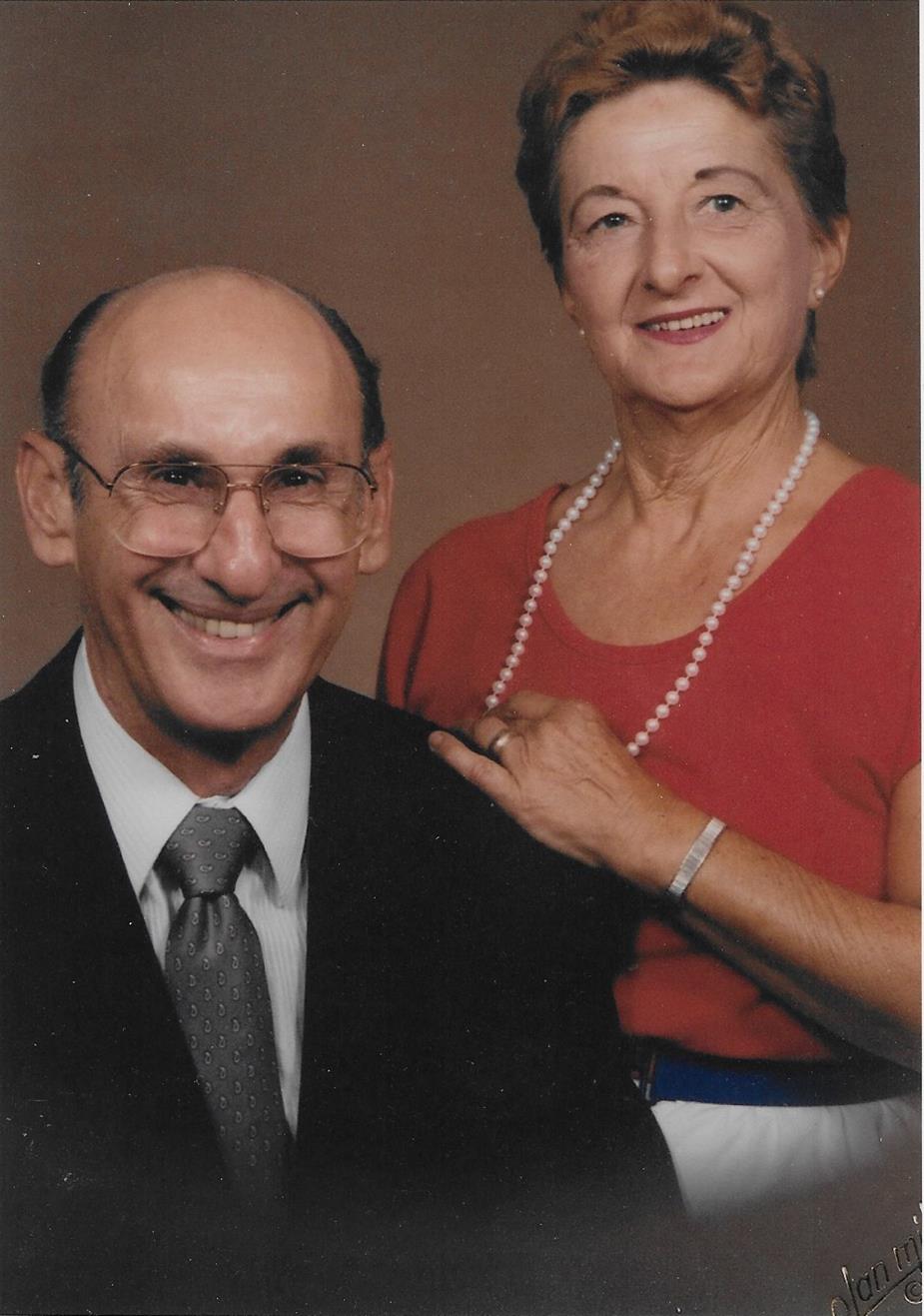
Citizenship for Migrants and Refugees (AND NOT DEPORTATION!)
By Lori and Robert Fontana

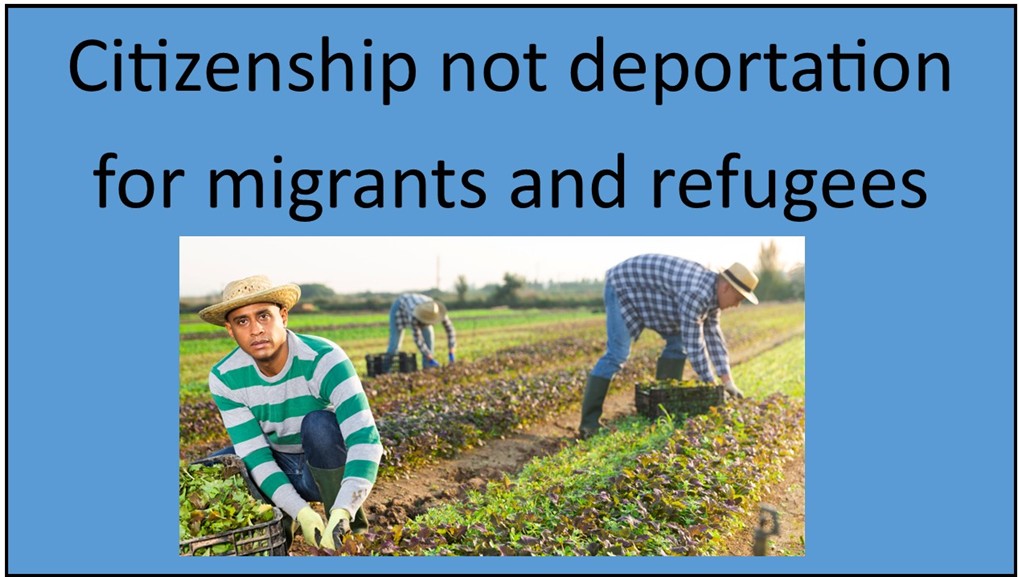
Let’s start a national campaign to promote a path towards citizenship for migrants and refugees. Mass deportations are not the answer. Migrants and refugees, by and large, are hard-working, family oriented, and law-abiding members of our communities. Some are professional people, others carpenters, electricians, and owners of small stores. But many are the laborers doing the physical work of caring for our elderly, cleaning our homes and businesses, driving taxis, working at airports and slaughterhouses, and picking our crops.
Write the Republican lawmakers from your state and insist that they find the moral courage to give these good people a path to citizenship as did Ronald Reagan, one of our most conservative presidents, did when he signed the Immigration Reform and Control Act of 1986!
What you can do to promote a pathway to citizenship for migrants and refugees:
1. Get informed. Fact check any information you learn about undocumented migrants and refugees. One argument for deporting migrants is that they are “all rapists, murderers, and criminals!” The majority of undocumented migrants and refugees are good people seeking to build a new life in the U.S.. But do they commit more crime than native born citizens? The data says “no.” Although there are not good national statistics on this issue, looking at state arrest records shows that undocumented persons are as much as 40% less likely to commit crime than native-born citizens (see: https://www.factcheck.org/2018/06/is-illegal-immigration-linked-to-more-or-less-crime/)
2. Learn about the real contributions of undocumented persons and refugees to U.S. society: “…There are currently an estimated 11 million individuals living in the United States without legal status, the vast majority of whom are working, paying taxes, and contributing in both economic and non-economic ways to their community, often starting their own businesses, and playing integral roles in agriculture, construction, hospitality, and other industries that are essential to the U.S. economy.” (see: https://www.newamericaneconomy.org/issues/undocumented-immigrants/)
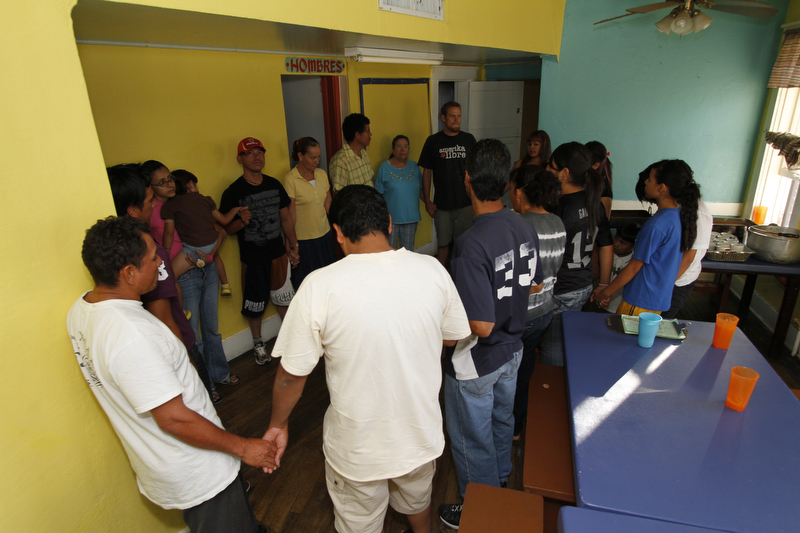
3. Learn what the Bible actually says about how one should treat foreigners: “The foreigner residing among you must be treated as your native-born. Love them as yourself, for you were foreigners in Egypt. I am the LORD your God.” Leviticus 19:34. “Whoever oppresses the poor shows contempt for their Maker, but whoever is kind to the needy honors God.” – Proverbs 14:31 “Then the king will say to those on his right, ‘Come, you who are blessed by my Father. Inherit the kingdom prepared for you from the foundation of the world. For I was….a stranger and you welcomed me.’” Matthew 25:35
4. Get organized. Meet with your friends and neighbors, especially those who are politically conservative. Have a conversation about the above. Remind folks that both the Biblical view of migration and Catholic social teaching state that people have a right to leave their homeland in search of a better life. And yes, Catholic social teaching also holds that governments have a responsibility to manage their country’s borders. The southern border is closed. Now is the time to advocate, in the spirit of Ronald Reagan (and guided by the Holy Spirit), for a path towards citizenship for migrants and refugees.
a. Meet with the congressional and senatorial representatives from your state, both parties. They have offices in the districts they represent. Talk with them and/or their staffs. Listen to their ideas; advocate for an end to mass deportations and urge them to create a path towards citizenship!
b. Organize a peaceful rally in front of their offices.
c. Write your newspaper; keep it up week after week.
5. Pray for the success of this campaign.
Prayer for the election of a new pope
by Fr. Sam Fontana
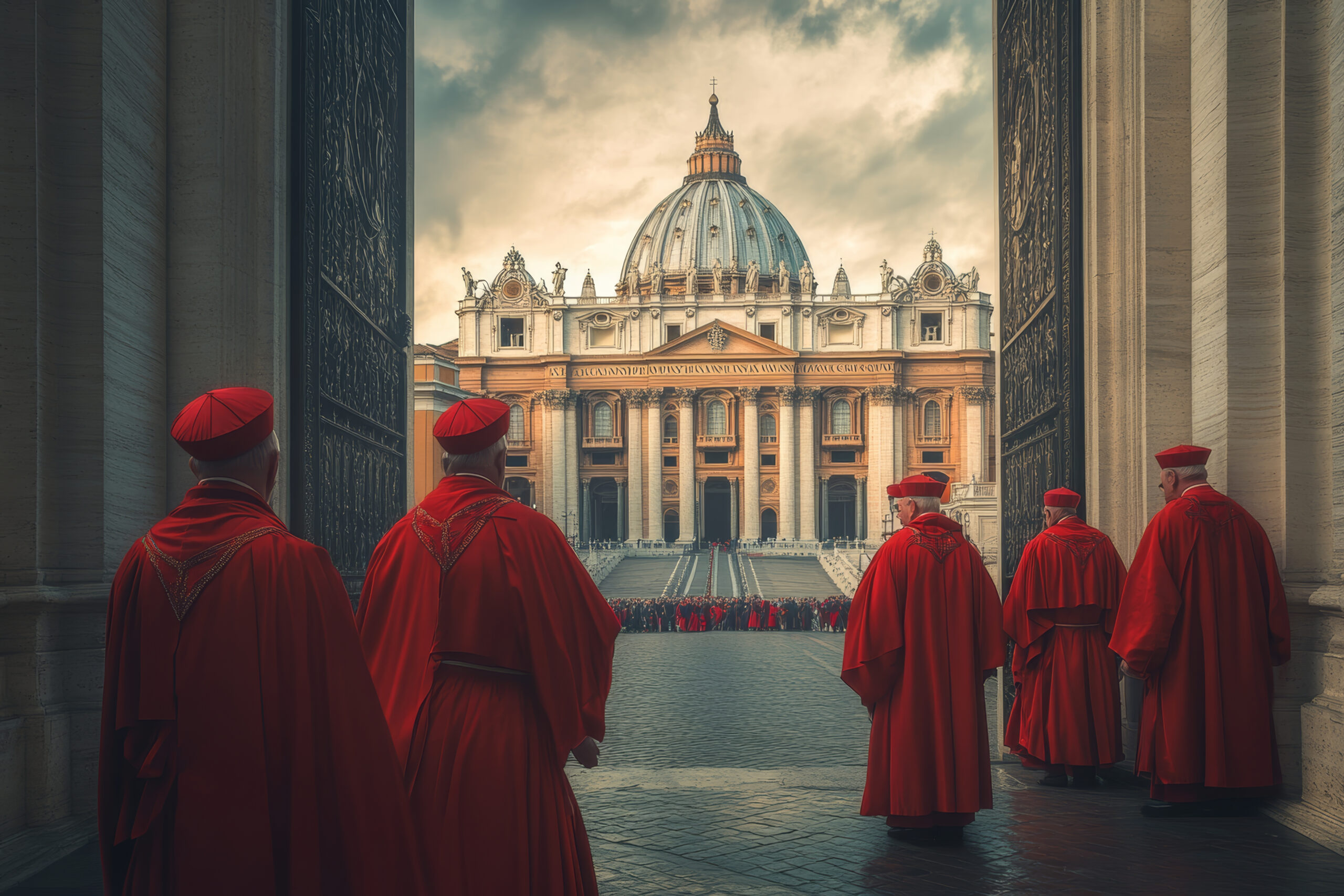
Come, Holy Spirit, fill the hearts of the Cardinal electors gathered in Rome and kindle in them the fire of your love. Fill them with your manifold gifts and make them docile to your promptings.
Come, O Spirit of Wisdom, purify and sanctify their minds, that they may listen and speak in truth.
Come, O Spirit of Peace, bind them together in charity and make them one in mind and heart.
Come, O Holy Paraclete, make known to them the man you have chosen, who will lead the Church in holiness and fidelity to the Gospel.
Heavenly Father, in union with the whole, Church, we humbly and confidently beg you, with your Son, to send the Holy Spirit upon the Cardinals of the Church. Through the power and inspiration of the Spirit, may your will be perfectly accomplished through them. Through Christ our Lord. Amen.
Gratitude for Pope Francis…and disappointment
By Robert Fontana
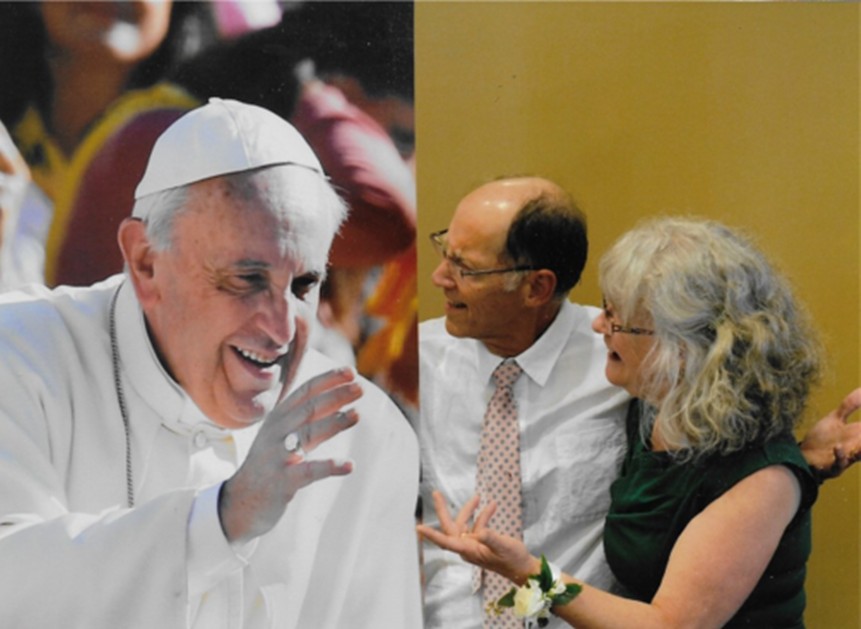
Jorge Mario Bergoglio was elected pope following the retirement of Benedict XVI (formerly Joseph Cardinal Ratzinger). I was surprised, like most people, by the words and behaviors of the new pope. He was very different from his two predecessors. He…
¨ chose the name Francis and as the new pope, asked us to pray for him.
¨ moved into an apartment to live alongside others.
¨ ate in a communal dining room.
¨ for his first papal trip, visited migrants on an island near Italy.
¨ washed the feet of Muslim and Christian inmates at a prison at Good Friday services.
¨ visited the wall in Ciudad Juarez adjacent to El Paso advocating for the rights and dignity of migrants.
¨ wrote an encyclical urgently challenging us all to care for the earth, our common home.
¨ instructed the clergy to leave the confines of the parish to mix with the people, saying a pastor should “smell like his sheep.” And…the church must be a “field hospital” more concerned with healing the wounds of suffering people than with defending its own interests. And…the Eucharist is “not a prize for the perfect but a generous medicine and food for the weak.”
¨ advocated for peace and justice for refugees everywhere, especially those living in Gaza.
¨ called a Catholic parish in Gaza daily to express his love and learn how the people were surviving.
¨ spoke with and welcomed individuals and groups formerly marginalized by the church (divorced and remarried, gay and lesbian).
¨ apologized for the sins of the church against children and youth through clergy sex abuse and destruction of native culture through boarding schools.
¨ initiated a new way of being church through the synodal process in which clergy and laity alike pray through and discuss issues of church life to discern guidance of the Holy Spirit.
¨ appointed most of the world’s cardinals, making the college of cardinals a truly international body.
I am grateful for the above. Pope Francis loved Jesus and sought to be a pastor rather than a king. Remember the first words out of his mouth when he referred to himself not as pope but as bishop:
Brothers and sisters, good evening. You all know that the duty of the Conclave was to give a bishop to Rome. It seems that my brother Cardinals have gone almost to the ends of the earth to get him… but here we are.
He demonstrated that the church is a communion of disciples of Jesus, not a monarchy, corporation, or fund-raising apparatus. He showed us how to advocate and work for the common good, for what is life-giving for all people, not just Catholics. That is a witness sorely needed today.
However, there are areas of Francis’ ministry that were disappointing.
Clergy sex abuse: He had a lackluster approach to protecting minors and vulnerable adults from sexual predators in the church. His encouragement to whistleblowers who seek to expose sexual predators and bishops who protect these criminals was weak. Survivors of clergy sex abuse want a clear and unambiguous change to canon law that will suspend a cleric from ministry permanently for even one offense against a minor or vulnerable adult. (I would add to that to suspend any bishop or church leader who protected the offending cleric.)
Clericalism: I wish Francis had done more to ask the Catholic people how we experience clericalism in the church and what we think ought to be done about it. Lori and I have worked with many good, kind, compassionate, and competent priests. And we have worked with many who were simply bullies. They were bullies to sacristans and altar servers, bullies to their staff, and even bullies when visiting the sick and dying.
I think the problem goes back to their formation in seminary with the notion that the priest is an “alter-Cristo.” He is the sacramental sign of Christ, head of the church. At Mass he is the last one to enter the church like a king entering court. He gives himself communion. And when Mass concludes, he blesses the rest of us, leaving himself out of the blessing. This is overstated and needs to change if the pastor is to “smell like the sheep.”

Women: Where would the Catholic Church be without the women who do most of the work in Catholic parishes, Catholic schools, Catholic dioceses, and social services? Yet women cannot preach, baptize, witness weddings, anoint the sick sacramentally, or preside at the burying of the dead. It is way past time that women be welcomed to the Sacrament of Holy Orders as deacons.
Celibacy: Pope Francis listened to pleas from South American bishops for a married clergy but caved to the backlash that came from traditionalists who demanded that he maintain celibacy for priests. This is silly and sinful. We have married clergy in the Eastern Catholic Churches, and we allow married men who were pastors of Protestant churches and converted to Catholicism to be ordained priests. The bishops of Amazonia wanted to make the Eucharist and other Sacraments readily available to people who may only see a priest once a year. Pope Francis said “NO!” I guess celibacy is still more important to church leaders than is the Eucharist. Otherwise we would dispense of that discipline for the priesthood and ordain married men so that the Eucharist and other Sacraments can be readily available to all no matter where they live.
I am most grateful for the life and ministry of Pope Francis, Bishop of Rome. He gave us the leadership that we needed at this time in history. I trust that the Holy Spirit will find a worthy successor whom I hope will take up some of the above issues.
Eternal rest grant unto him, O Lord; and may perpetual light shine upon him!
