Homespun Homily: Tulips and the Resurrection
By Lori Fontana

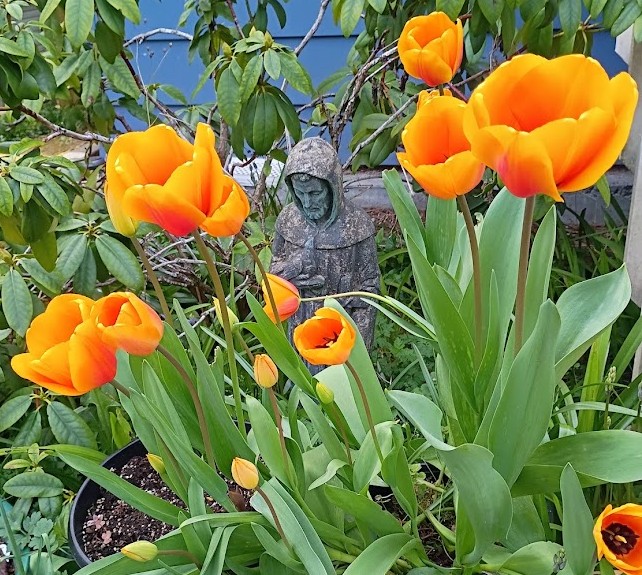
You know about tulips. I think they are my favorite flower. Each fall, around early September, I buy or pull out of the storage shed the oddly shaped, gnarled orbs we call bulbs. They look dry and lifeless, with loose peelings of brown skin and sometimes a tuft of short, dark root tendrils. I loosen the soil in our garden, dig little circular tunnels straight down, and, one-by-one, place the bulbs inside. As I smooth dirt over each bulb, I wonder – what will this one look like? What color will it be? Because, usually, I have no idea which bulb is which, which is red or pink, white or purple – it will be a great surprise come the spring.
Then, with great hope, I wait…and wait…and wait.
The bulbs are out of sight, hidden in the earth. Through the fall and winter, they are covered over with fallen leaves, puddles of rain, a smattering of snow.
The winter months are so dark, so gray, so wet. It’s hard to remember the promise of colorful blooms. Our Seattle spring comes very slowly. We might have one sunny day in January; maybe one more in February. By March the sun might shine once a week. Yet the air is still damp and icy cold. But the tulips respond to the slightest touch of sunshine warmth. Forgotten over the long winter, each bulb now stretches the tiny tip of a green leaf through the soil and into the weak sunlight of early spring.
At first, I hardly notice that the garden is coming alive. But then the tip of the leaf pushes further up; one leaf, then two and three. And nestled between them is the flower stem with the tightly closed bloom perched on top. The tulips grow at their own pace; and they keep their blooms securely under wraps until they reach full height. Only then do the buds begin to unfurl, showing the glorious colors of their delicate petals, some rounded, some pointed, some ruffled or scalloped. The petals are bright and luminous, catching the breeze and waving and bowing in the sunlight. What a wonderful spring surprise!
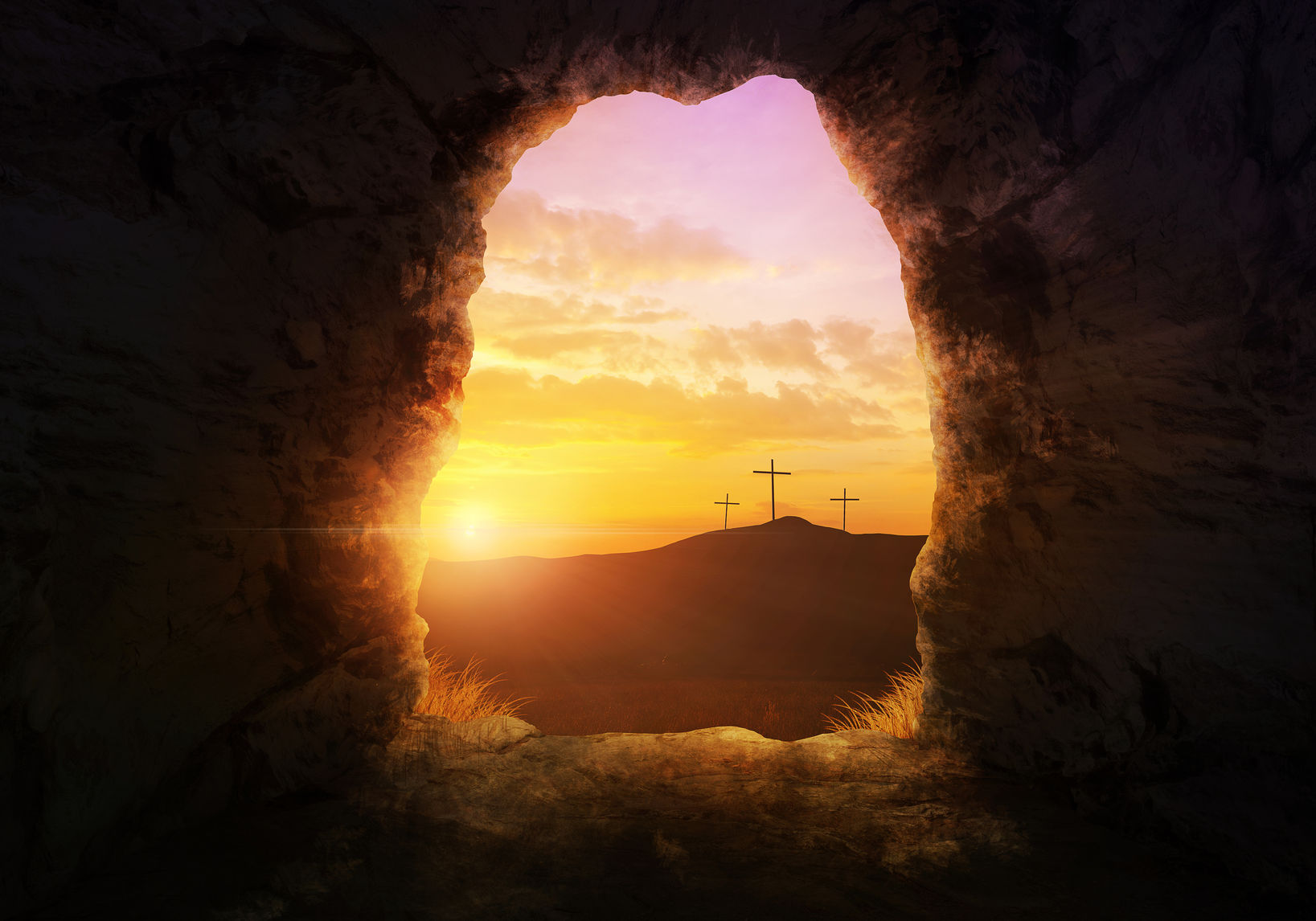
It’s very fitting that we observe Holy Week in the spring. As we celebrate Holy Week – the Passion, Death, and Resurrection of Jesus – I think tulips are a gentle reminder of the desolation and the glory of this painful, wonderful, awesome mystery. On the cross, Jesus gives his final gift. Through his passion and death, Jesus pours out his life in great love for us. At the end, he has nothing left to give – he’s given us his all. Taken down from the cross, Jesus is placed in the tomb, his tortured body hidden away in darkness, out of sight. His followers are left alone, bereft and drained of hope.
Symbolically, for Jesus’ followers, it’s winter in their hearts and souls: Jesus, whom the disciples believed was the Messiah, their friend and teacher whom they loved, is now lifeless, gone from their sight. All is hopelessness. The disciples cower behind closed doors, filled with doubt and fear. Quickly forgotten is the Jesus who turned water into wine, who multiplied loaves and fishes, who healed the blind and the lame, comforted the mourning, gathered the children in his arms, and raised Lazarus from the dead.
Then comes Sunday morning. Mary Magdalen and her companions come to the garden, intending to anoint Jesus’ body. The first rays of the rising sun warm their faces as they approach the tomb where Jesus lies. And then, wonder of wonders! “An angel of the Lord…[had] rolled back the stone.” To the women, the angel says, “He is not here, for he has been raised just s he said.” Matthew 28:2, 5-6
Jesus appears to Mary Magdalen and others of his disciples. Over the next several weeks, Jesus appears to many believers and doubters alike. With the resurrection, many renew their faith in Jesus; many others come to believe. What was lost is found; what was hidden is now seen; what was dead is now alive!

In a very humble way, the tulip mirrors the Resurrection. The tulip bulb appears dead. It’s hidden away in the cold earth. In fact, it must lie buried in winter’s cold so that it can “rise” to new life in the spring. A small miracle: from the bulb which, when planted, appears to be wrapped in a drab burial cloth, bursts forth a magnificent flower rich with color and life.
From death to life! The miracle of the Resurrection. As we travel with Jesus through Palm Sunday to the Last Supper of Holy Thursday, to the Agony in the Garden, through Jesus’ trial and torture, his Way of the Cross, his crucifixion on Calvary’s hill, his death and burial – cling to sure hope. Jesus’ burial in the dark tomb is not the final word. Easter morn will dawn, and with it the glory and colors of NEW LIFE. When you see tulips blooming in gardens and on Easter dinner tables, remember that death is not the end. For we who believe, it is the path to new life. What appears dead has new life in the promise of Jesus.
The lesson of the tulip is echoed in a line by Martin Luther, the great Protestant Reformer:
“Our Lord has written the promise of resurrection, not in books alone, but in every leaf in springtime.”
Happy Easter!
(This article was first printed in the Spring of 2023.)
The Tragedy of War, the Popes,and the Lenten Journey

By Robert Fontana
The United States and Israel are at war with Iran. Pope Francis wrote in his encyclical Fratelli Tutti (On Fraternity and Social Friendship):
“War is a failure of politics and of humanity, a shameful capitulation, a stinging defeat before the forces of evil…”
If you know just a little history of the Middle East, you know that there are no innocent parties involved. The Arab nations as we now know them were formed by the French and the British at the end of World War I, in part to ensure that oil found in the Middle East would flow to the West. In the late 19th– and early 20th– centuries, Palestinian Jews and Palestinian Arabs lived side by side with a measure of peace. That delicate co-existence changed with the vast increase of Jews who settled in Palestine through the Zionist movement and with the resettlement of Jews in Palestine following WW II. The British were responsible for Palestine. The discussions at that time focused on a two-state solution to resolve the tensions between Jews and Palestinians. That did not happen. When Israel was formed as a nation in 1948, thousands of Palestinian Arabs, both Christian and Muslim, were displaced.
In 1953 the United States CIA helped overthrow the government of Iran and put into power the Shah of Iran who led a pro-Western dictatorship with a security force as cruel and oppressive as the German Gestapo. The Shah was overthrown in 1979, and replaced by Ayatollah Khomeini, who became the supreme leader of the newly established Islamic Republic. And we have all heard of the trauma, torture, and oppression he has imposed on the Iranian people!
I write this brief history to remind us that there are no saints in this struggle for power in the Middle East, but there are plenty of innocent victims, mostly women and children, who suffer the brunt of oppressive governments and ensuing wars. There have been some heroic leaders who tried to work for peace, e.g. Rabin of Israel and Sadat of Egypt, but they were murdered by extremists who did not want a peace that made Arabs and Israelis neighbors.

Like St. Augustine, who developed the Just War Theory that the Catholic Church adopted, I’m persuaded there are times when military intervention is essential, for example, in Ukraine’s defense against Russian invasion. But even there, what a woeful failure of “politics and humanity.”
I do not trust this administration to wage a just war because I do not see a concern for justice coming from the White House. What I do see is a stance of bullying in dealing with undocumented migrants, with anyone who disagrees with White House policies, and even with our long-standing allies, such as Canada and NATO partners. Now the bullying approach is applied to Iran.
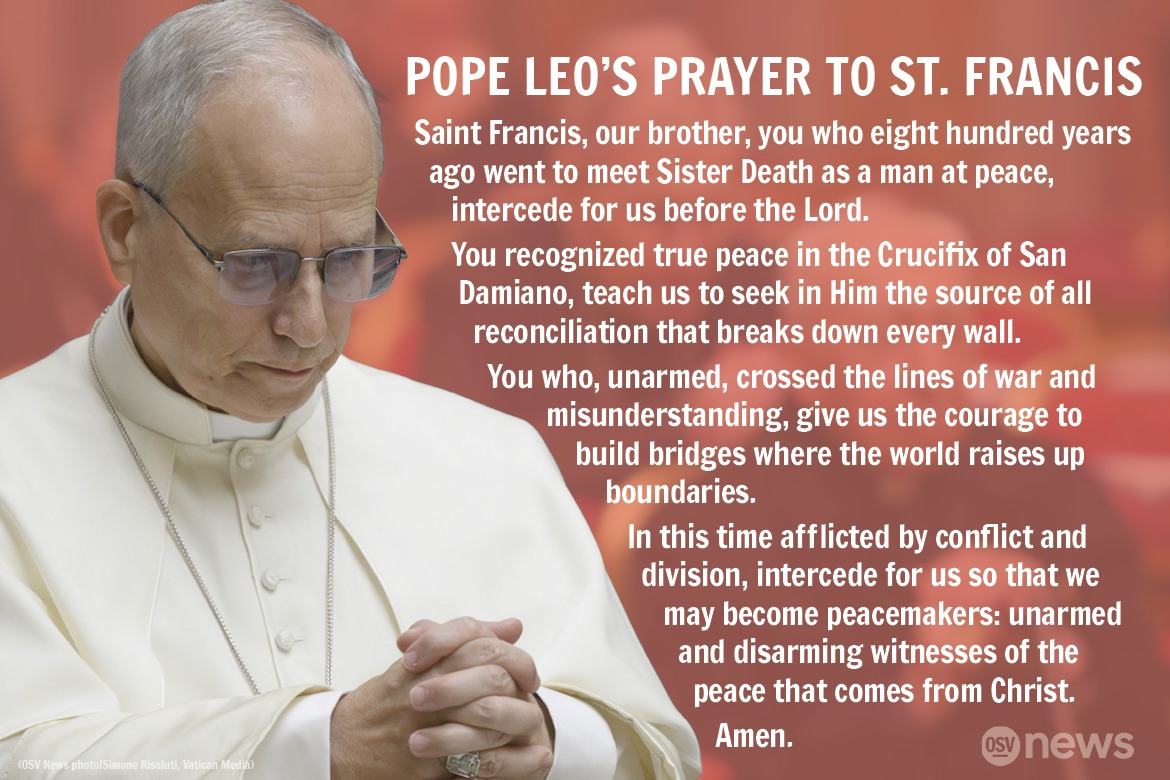
Here’s what Pope Leo XIV said about the war (March 1, Angelus):
I am following with deep concern what is happening in the Middle East and in Iran during this tumultuous time. Stability and peace are not achieved through mutual threats, nor through the use of weapons, which sow destruction, suffering, and death, but only through reasonable, sincere, and responsible dialogue. Faced with the possibility of a tragedy of immense proportions, I make a heartfelt appeal to all the parties involved to assume the moral responsibility of halting the spiral of violence before it becomes an unbridgeable chasm. May diplomacy regain its proper role, and may the well-being of peoples, who yearn for peaceful existence founded on justice, be upheld. And let us continue to pray for peace.
During this Lenten season let us carry the trauma and pain of the innocent victims of this war and all the current wars, in our journey towards the cross. Hold them close in our personal prayer and the prayers of our parish church.
As an action, let us contact our congressional leaders and DEMAND THAT MILITARY OPERATIONS CEASE and that the US with its allies return to DIALOGUE WITH THE IRANIANS AND US ALLIES FOR A PEACEFUL WAY FORWARD.
A plausible sermon by Dr. Martin Luther King Jr. responding to the ICE raids in Minneapolis
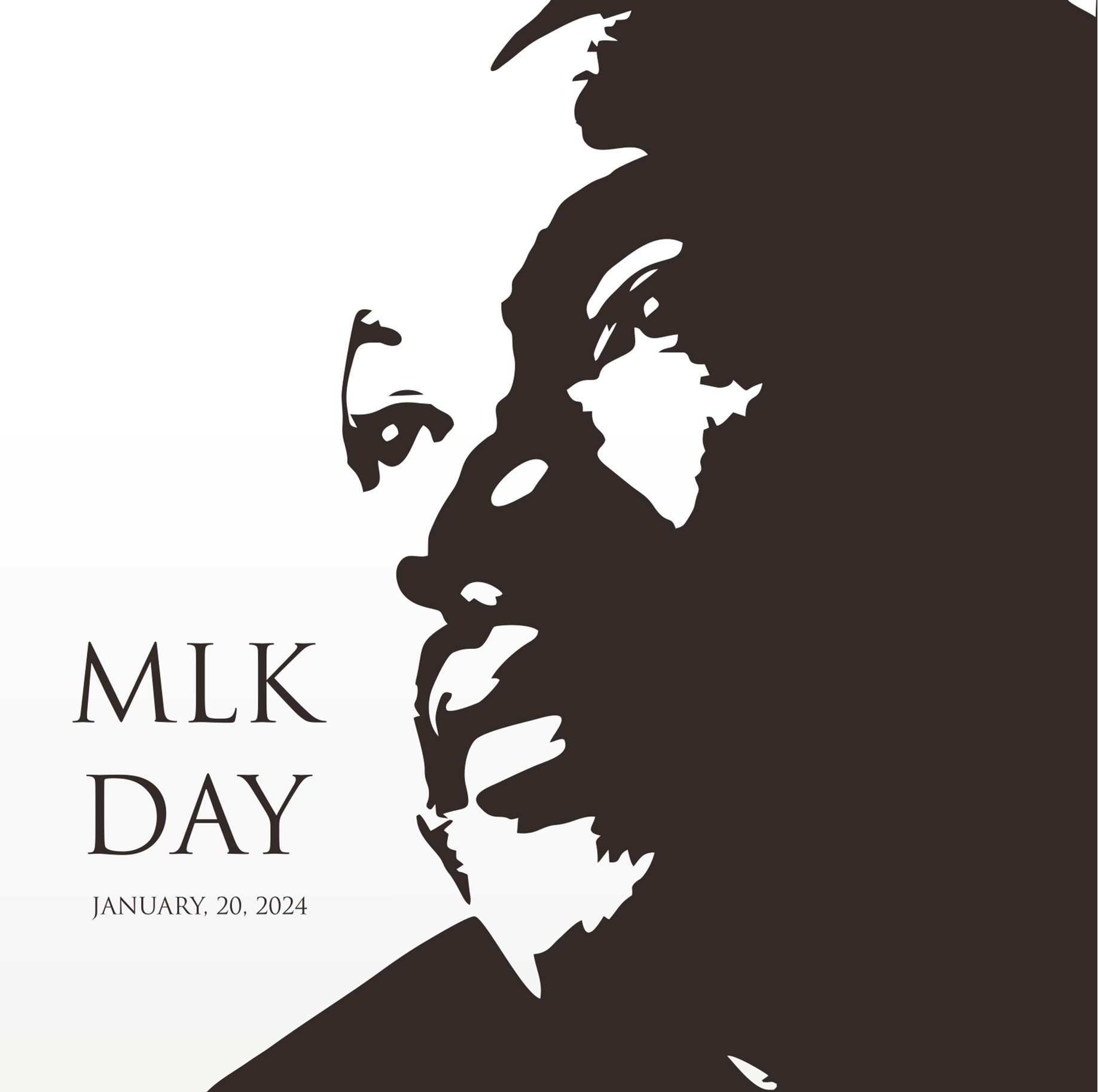
By Robert Fontana
As I considered the tragic events in Minneapolis, I wondered what Dr. Martin Luther King would say if he had the pulpit in the Twin Cities. I took MLK’s words from two of his speeches and one book – speeches when receiving the Nobel Peace prize and his last speech in Memphis, “I’ve been to the Mountaintop,” and his book “Strength to Love.” I added in my own words to update Dr. King’s words to the current conflict in Minneapolis between protesters and ICE. Here’s what I imagine he might say:
I am happy to be here! The people are rising in Minneapolis. Their cry is,
“Respect our constitutional rights! Respect our dignity as human beings!”
The federal government has chosen violent tactics as a solution to the challenges of immigration. Minneapolis, you have responded with non-violence. Nonviolence is the answer to the crucial political and moral question of our time – the violent oppression of the poorest among us, people of color, immigrants from other countries, documented and undocumented. That is where we are today. If something isn’t done, and done in a hurry, to bring the millions of souls who immigrated to our country through this time of dehumanizing lies, malicious attacks, and political oppression, this constitutional experiment in democracy is doomed.

The fundamental issue is this: the refusal of the president of the United States of America to recognize the God-given dignity and humanity of immigrant men, women and children, many who have fled the violence of their home country for the dream to live in the land of the free. Many immigrants are legal citizens; many are here with the permission of our government to seek asylum from the violence and inhumanity of drug cartels and oppressive governments.
Yet all believed the great story of America that “we hold these truths to be self-evident, that all [people] are created equal.” They believed in the constitution of America that there is freedom to worship, freedom to speak and even protest, and freedom from unjust search and seizure. They believed that America is ruled by law, not by dictatorial decree.
We now have a government ruled by bigotry and not law. ICE officers harass, threaten, track down, run down, and abduct our immigrant brothers and sisters at all hours of the day and night. Furthermore, federal agents have shot and killed two white citizens, a mother and poet, Renee Good, and an ICU nurse who served veterans, Alex Pretti.
What does this mean in this great period of history? It means that we’ve got to stay together. We’ve got to stay together and maintain unity. We’re gonna march again and we’ve gotta march again to put the issue where it is supposed to be, and force everybody to see that the agents of bigotry will not win here! No, the agents of bigotry did not win in Selma, Alabama, and they will not win in Minneapolis, Minnesota.

We don’t have to argue with anybody. We don’t have to curse and go around acting badly with our words. We don’t need any bricks and bottles. We just need to let the president, the congress, and these agents of bigotry know, “God sent us here to say to you that you’re not treating His children right. The immigrants who live among us are God’s children. We demand that you treat them with dignity! We demand that you stand down!”
I refuse to accept the cynical notion that power makes right, that violence and fear are the path to make America great again. I believe that unarmed truth and unconditional love are the only path towards restoring American greatness. This is why right temporarily defeated is stronger than evil triumphant. I believe that what self-centered political leaders have torn down, other-centered ordinary citizens can build up. I still believe that nonviolent redemptive good will proclaim the rule of the land. “And the lion and the lamb shall lie down together.” I still believe that we shall overcome!
And so, I say to the agents of bigotry from political leaders to the bullies on the streets in Minneapolis: you can pull us out of our homes and cars, and we will still love you with truth and non-violence. You can throw tear gas at us and knock us to the ground, and we will still love you with truth and non-violence. You can shoot us, calling us domestic terrorists, and we will not renounce our duty to love you with truth and non-violence. And in the end, we will win a double victory, the just treatment of our immigrant neighbors and your friendship! This is the only path to making America great again.
What’s guiding our Lenten observance?
What ought to guide us in how we participate in the annual Lenten retreat especially considering the great tensions that exists in the Church and in society today? I suggest as Lent begins we read and pray through the Sermon on the Mount (Matthew 5-7) and the Sermon on the Plain (Luke 6:17-49). Let’s return to the basics of Christian discipleship by prayerfully reviewing what Jesus taught. Isn’t the purpose of the Lenten 40 days to set aside this time to draw close to Jesus and more faithfully conform our lives to the demands of being his disciple? One size does not fit all. We do this according to the circumstances of our lives, according to our duties and responsibilities, age and abilities. Our responses will be different, but respond we must!
This is clearly what Pope Leo is asking of us (Apostolic Letter – On Love for the Poor):
And the Church, if she wants to be Christ’s Church, must be a Church of the Beatitudes, one that makes room for the little ones and walks poor with the poor, a place where the poor have a privileged place (cf. Jas 2:2-4)… our response to the challenges posed by contemporary migration can be summed up in four verbs: welcome, protect, promote and integrate…solidarity [with suffering people] “also means fighting against the structural causes of poverty and inequality; of the lack of work, land and housing; and of the denial of social and labor rights. It means confronting the destructive effects of the empire of money…
So let’s review the fundamental lessons of discipleship as they are recorded in the Scriptures. Then ask the Holy Spirit to show each of us what is ours to do to be a power for good during these difficult times. Yes, let’s make specific sacrifices that remind us from day to day that we are in the season of Lent – give up chocolate. But let’s connect those sacrifices to a firm determination to be brave in discerning how we are to be a power for good within the circumstances our lives and the tensions present in society and the Church.
We also might spend time in prayer before the cross. Here’s a prayer devotion often prayed at noon (or when it is convenient) on Fridays during ordinary time, every day during Lent and on any day when life is difficult.
DEVOTION BEFORE THE CROSS
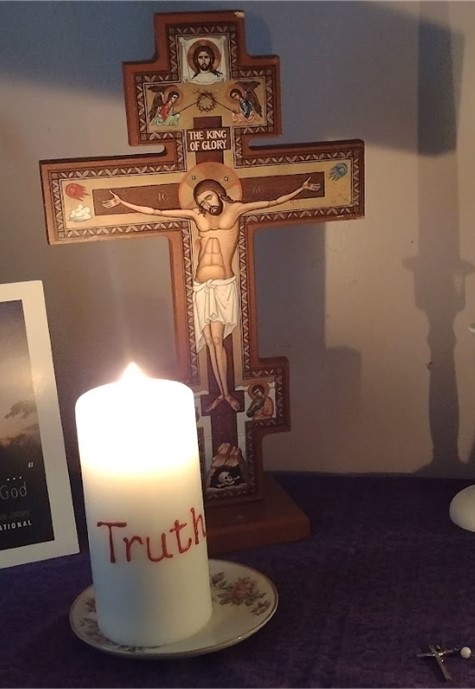
L For God so loved the world that he gave his only son, not to condemn the world but to save it. (John 3:16)
All Christ suffered for [us] that [we] should follow in his footsteps. (1 Peter 2:21)
L Though he was in the form of God, [Jesus] did not regard equality with God something to be grasped. Rather, he humbled himself …becoming obedient to death…death on a cross. (Philippians 2:6-8)
All Christ suffered for [us] that [we] should follow in his footsteps. (1 Peter 2:21)
L Jesus said, “Whoever wishes to come after me must deny himself, take up his cross and follow me. For whoever wishes to save his life will lose it, but whoever loses his life for my sake will find it.” (Matthew 16:24-26)
All Christ suffered for [us] that [we] should follow in his footsteps. (1 Peter 2:21)
L Let us pray.
All Father, I abandon myself into your hands; do with me what you will. Whatever you may do, I thank you: I am ready for all, I accept all. Let only your will be done in me, and in all your creatures – I wish no more than this, O Lord. Amen. (Prayer of Abandonment, Charles de Foucauld)
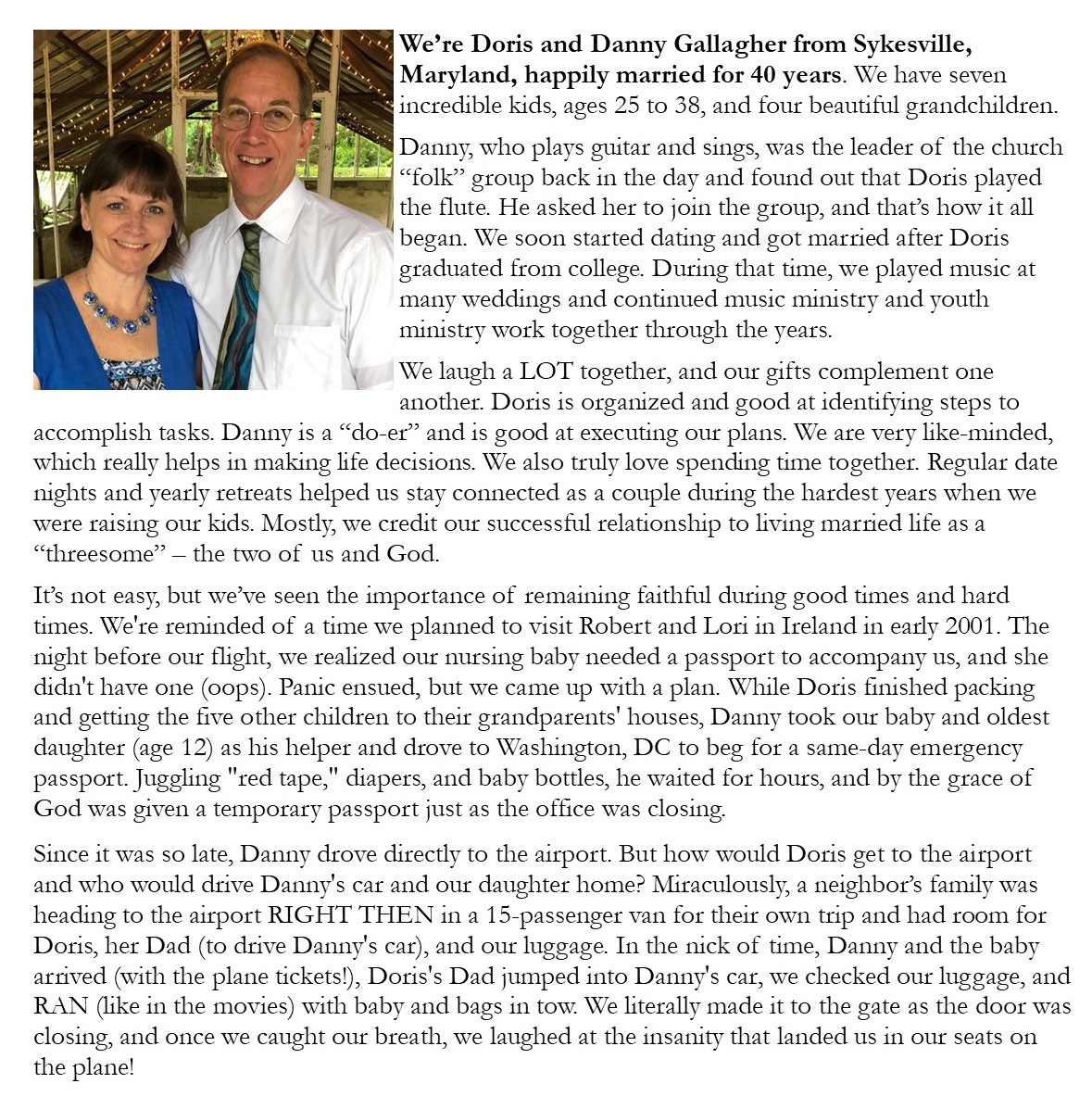
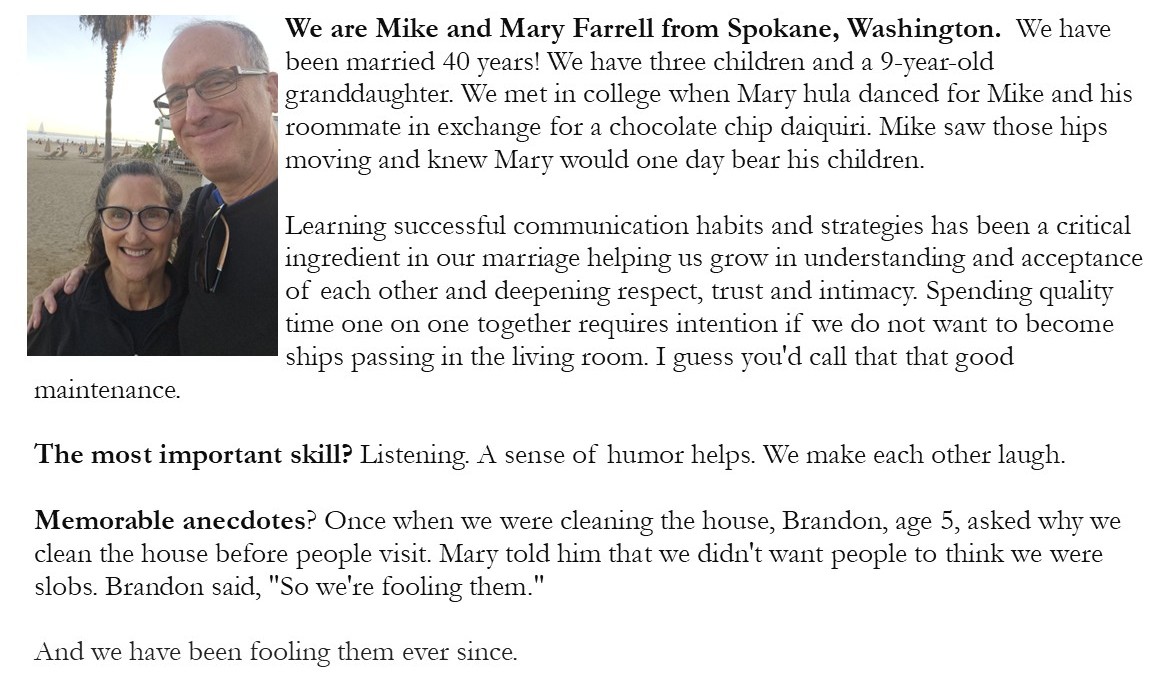
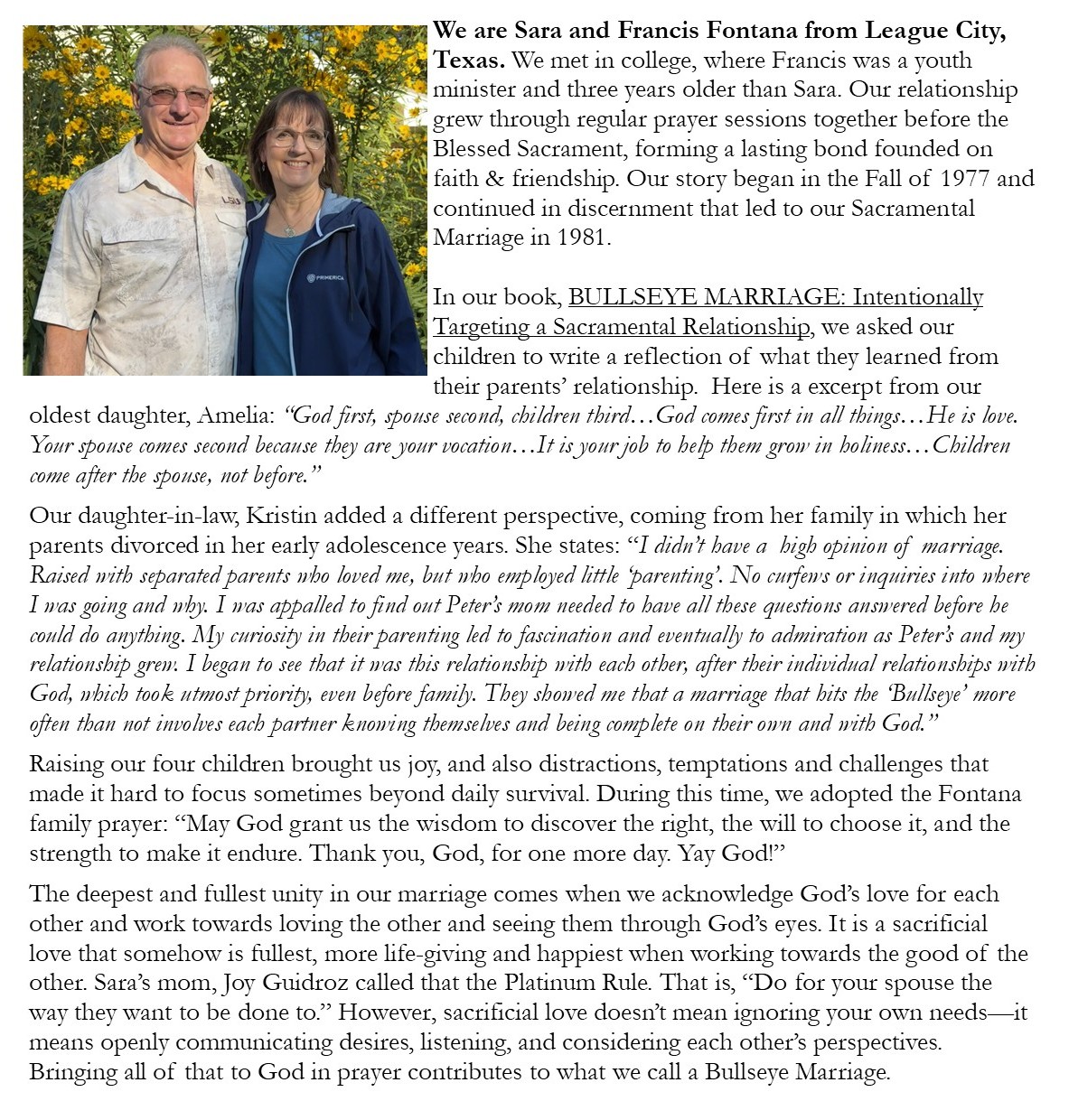
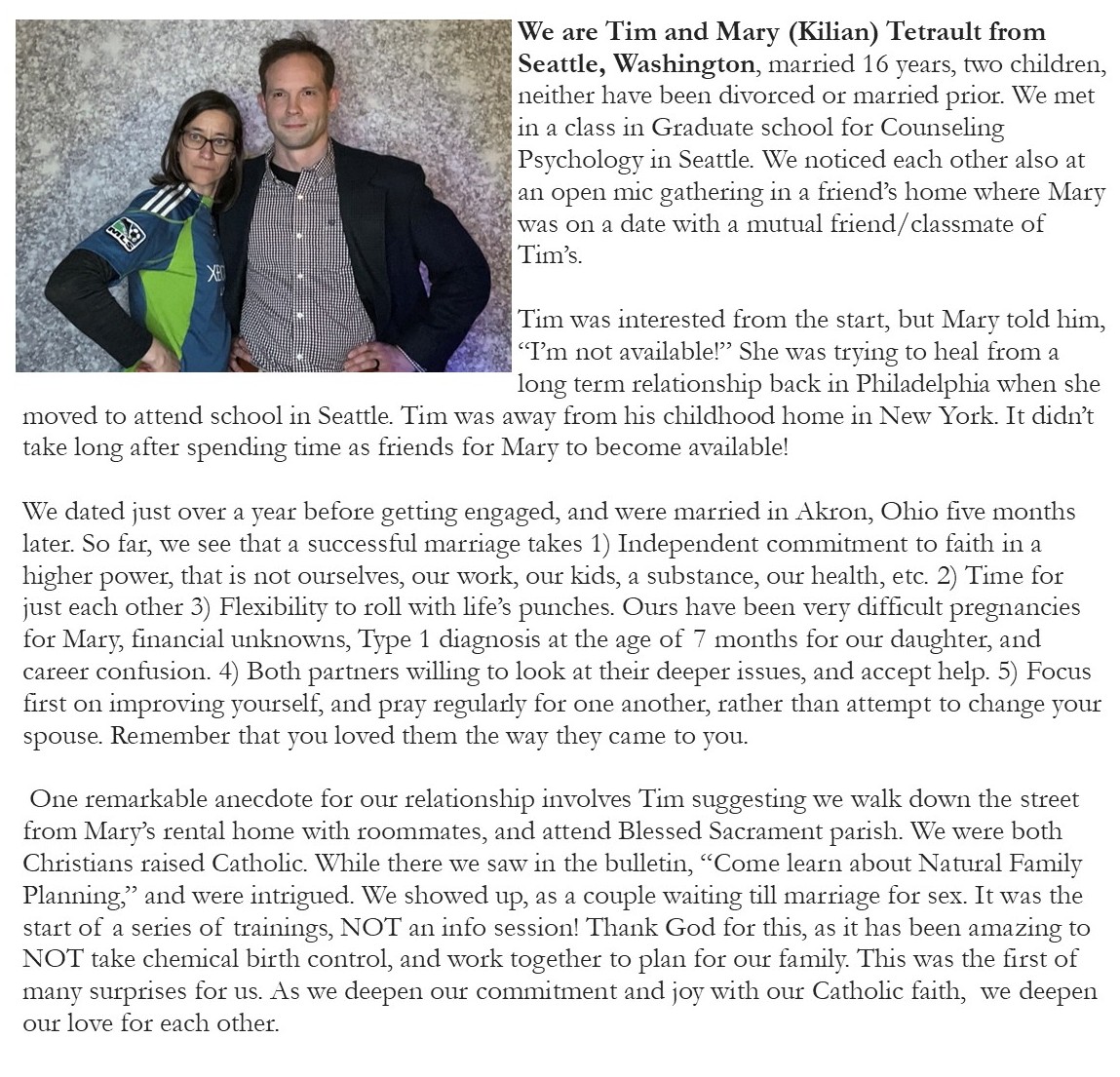
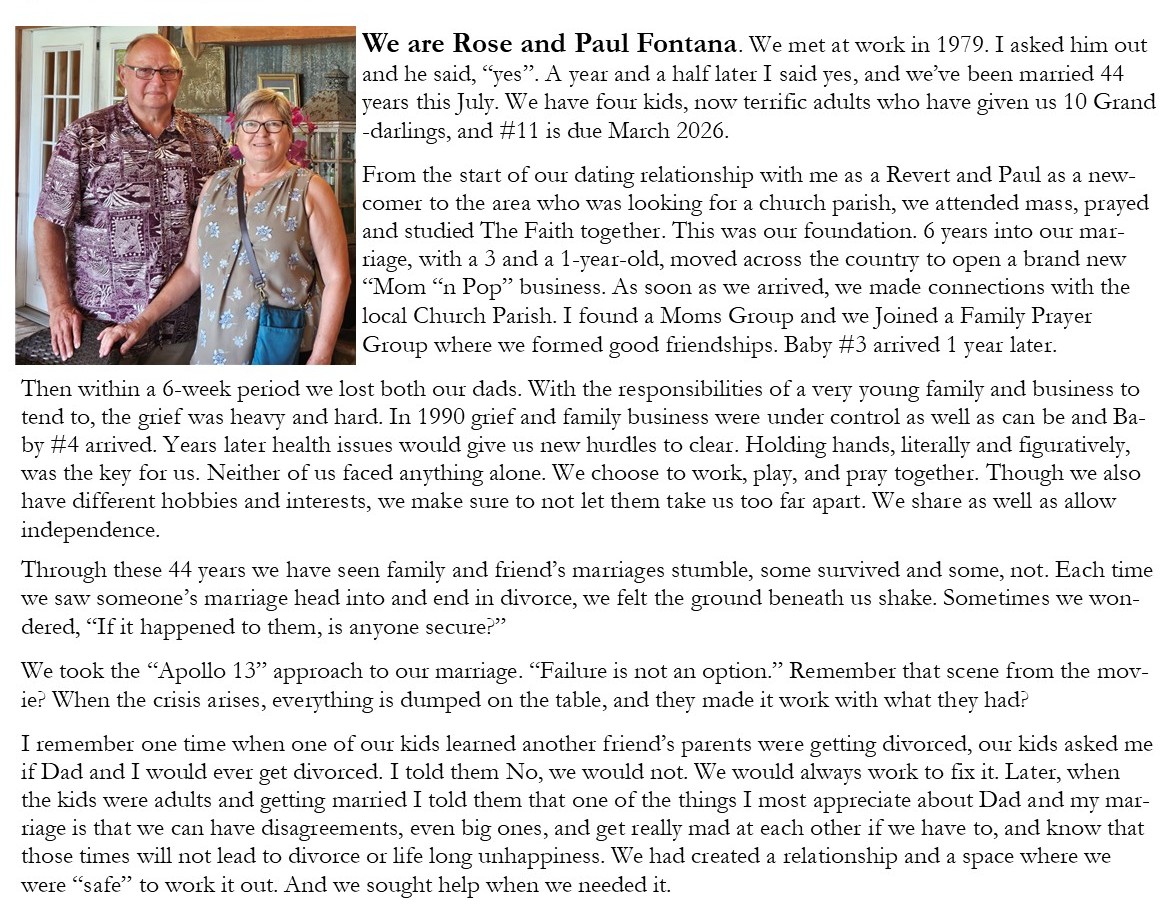
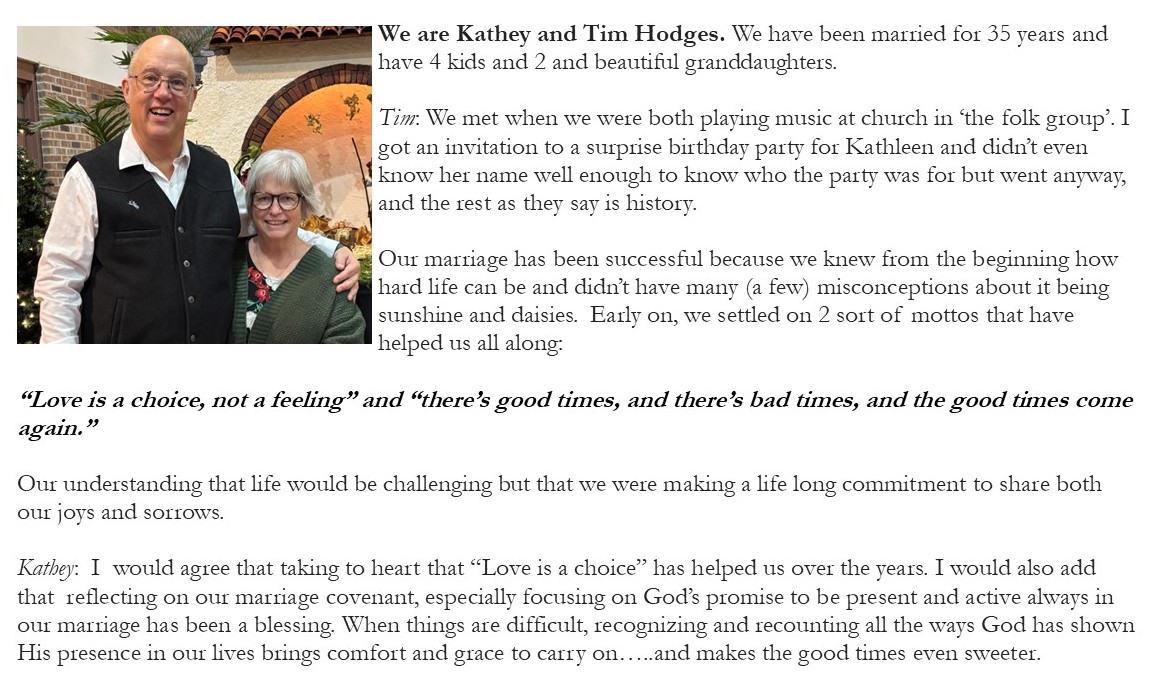
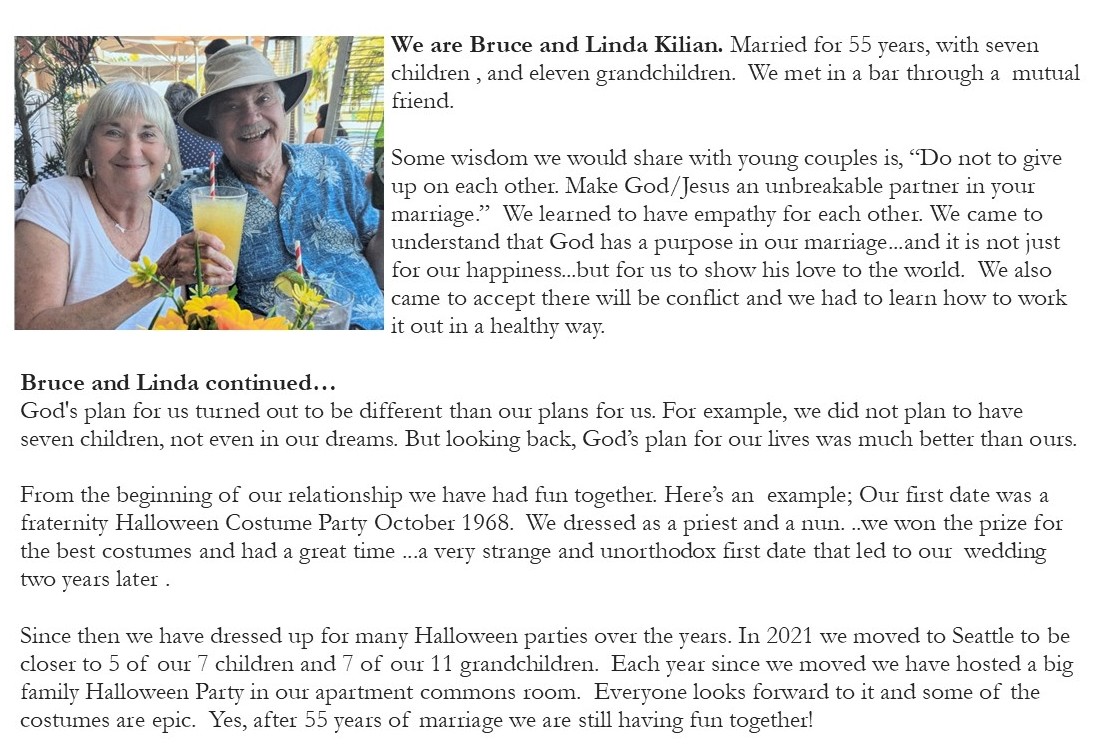
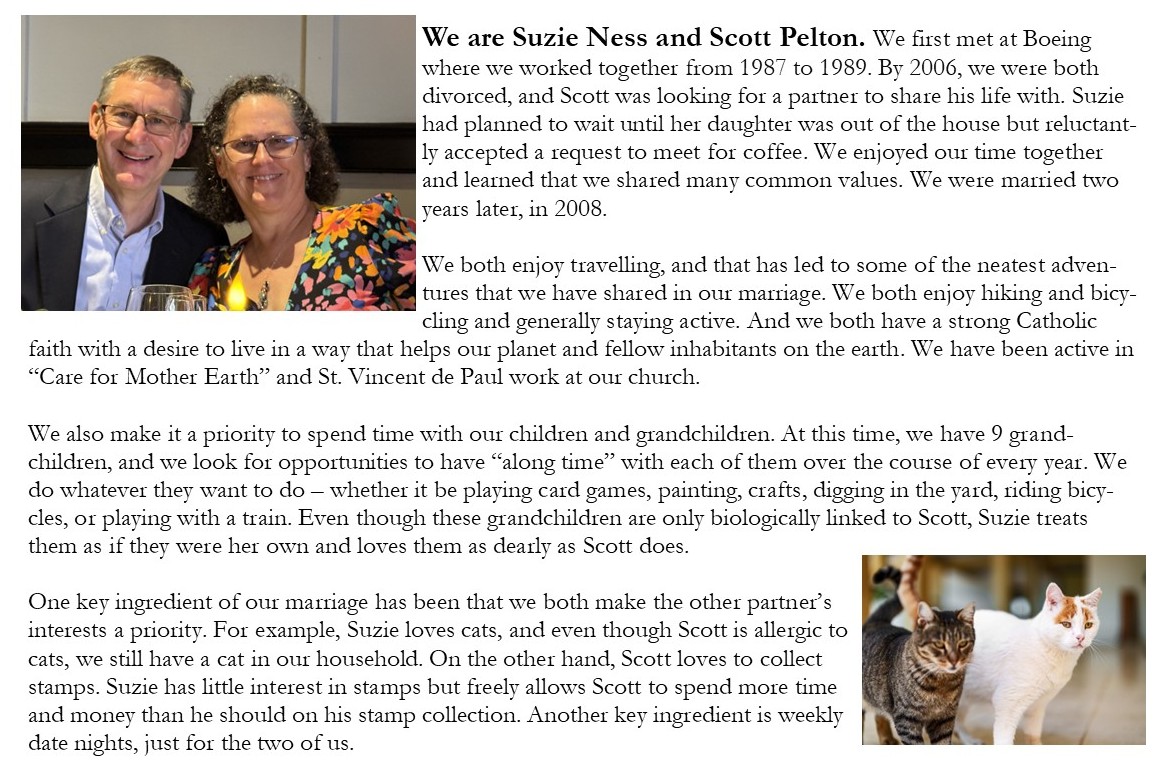
Marriage stories celebrating National Marriage Week – Feb 7-14
“Marriage has no guarantees. If that’s what you’re looking for, go live with a car battery.” (Erma Bombeck)
We have more marriage wisdom for you in celebration of National Marriage Week (February 7-14). We’ve asked friends of CLM to share short testimonies of their marriages. We are sharing some in this issue and in the March issue. Married or not, may these stories inspire you, encourage you, and remind you of the immense value of the institution of marriage to couples, their children and to society as a whole!
Life Lessons from the Magi and the Feast of Epiphany
By Robert Fontana
DON’T TAKE DOWN YOUR CHRISTMAS DECORATIONS!

The Christmas season continues through the great feast of Epiphany which proclaims the divinity of Jesus. In the U.S., it is celebrated on the second Sunday after Christmas, this year January 4th. The rest of the Christian world celebrates Epiphany every January 6th. (Unlike December 25th which still has a hold on the imagination of most Catholics, January 6th – Epiphany – seems to have lost its meaning in our country, so the U.S. bishops moved Epiphany to a the second Sunday after Christmas.)
While acknowledging the heart of the Epiphany message – the divinity of the human Jesus – there is also much wisdom to tease out of the story of the Magi. Let’s “work the text” of Matthew Chapter 2 to learn what the Magi have to teach us.
“When Jesus was born in Bethlehem of Judea, in the days of King Herod, behold, magi from the east arrived in Jerusalem, saying, “Where is the newborn king of the Jews? We saw his star at its rising and have come to do him homage.”
First lesson: If you are sincere in seeking the divine, pay attention to nature; pray with nature; listen to nature. Before the “Word of God” was revealed to the Jewish people through the Patriarchs, prophets, and eventually Jesus of Nazareth, it was manifested in creation. Every culture in every age has access to God’s divine presence through the things God has made. (Romans 1:12) Where did Jesus like to go to encounter God? The desert, mountains, a lakeshore, any quiet place away from the village.
Also, the Magi learned something very important when they arrived at King Herod’s palace: the child they were seeking was not there. Discerning a negative is important in our lives as well. It moves us along on our spiritual journey to continue searching.
“When King Herod heard this, he was greatly troubled, and all Jerusalem with him. Assembling all the chief priests and the scribes of the people, He inquired of them where the Christ was to be born. They said to him, “In Bethlehem of Judea, for thus it has been written through the prophets…”
Second Lesson: Look to the Scriptures for guidance but be careful of religious leaders who align themselves with the secular powers of the world. They may speak certain spiritual truths, as the scribes did to King Herod about where the Messiah was to be born. But notice; they do not speak truth to power. They don’t encourage Herod to join the Magi, nor do they go themselves. They know firsthand Herod’s cruel behavior. They will not risk their privileged relationship with the king by challenging him in any way. Are there parallels today?
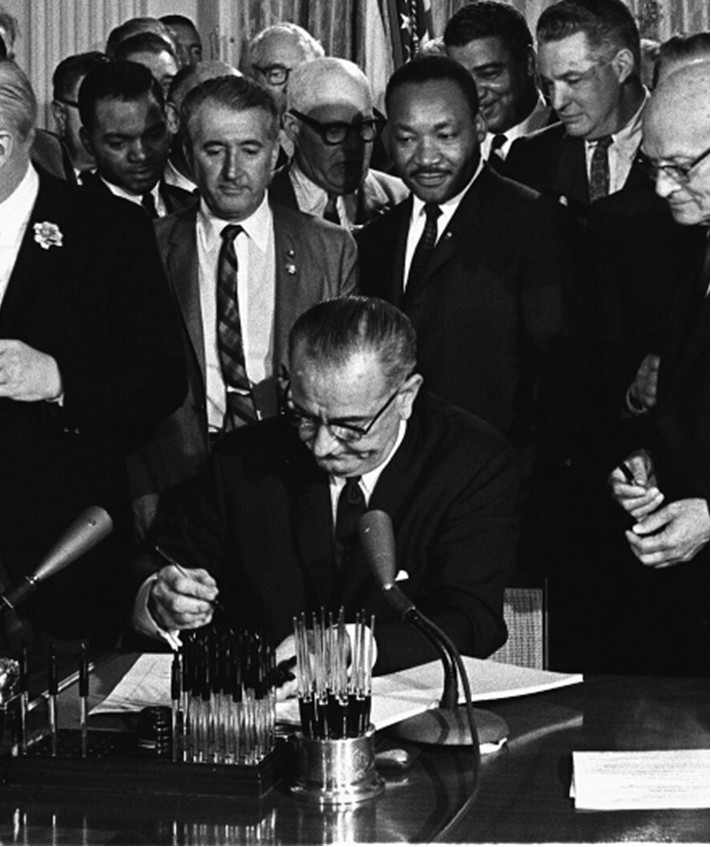
Someone who took this lesson to heart was the late Dr. Martin Luther King. He found common cause with President Lyndon Johnson in passing civil rights legislation in 1964 – 65. Yet a few years later, to Johnson’s chagrin, King publicly challenged the President on his continued support for the war in Vietnam.
“Then Herod called the magi secretly and ascertained from them the time of the star’s appearance. He sent them to Bethlehem and said, ‘Go and search diligently for the child. When you have found him, bring me word, that I too may go and do him homage.’ After their audience with the king, they set out. And behold, the star that they had seen at its rising preceded them, until it came and stopped over the place where the child was.”
Third Lesson: Step away from the noise of life so you can grow in awareness of the divine’s leading you. Notice how the star has disappeared as the Magi “hang out” with Herod and his entourage! There are a lot of voices in the world that do not have your good or the common good in mind. What they say may sound good…but look at their past behaviors as the best indication of whether their words can be trusted. Secular power in all its forms – political, corporate, commercial, etc. – has a history of manipulating well-meaning people of faith and using them for its own selfish ends. Beware! Step away from the “noise” of the marketplace, easy living, and power. Get away to the quiet where you can continue your spiritual journey and once again see and hear the divine guiding you.
“They were overjoyed at seeing the star, and on entering the house they saw the child with Mary his mother. They prostrated themselves and did him homage. Then they opened their treasures and offered him gifts of gold, frankincense, and myrrh. And having been warned in a dream not to return to Herod, they departed for their country by another way.”
Fourth Lesson: The divine is to be found in the ordinary. It is easy to think that God is present in special people like Mother Teresa and Pope Leo and even the “holy” people at your church. The Magi may have been surprised when the star stopped over a simple house belonging to a carpenter. (Luke’s Gospel has Jesus born in a stable, but there are no Magi.) When the Magi enter, they find a woman with her newborn baby. How many of us have stepped into a room with a mother and newborn child and gasped in awe as did the Magi! Every child born is a child of God. That Jesus is uniquely God’s beloved son does not take away from the fact that divine life is present in all our homes, in all our relationships, if only we have eyes to see.
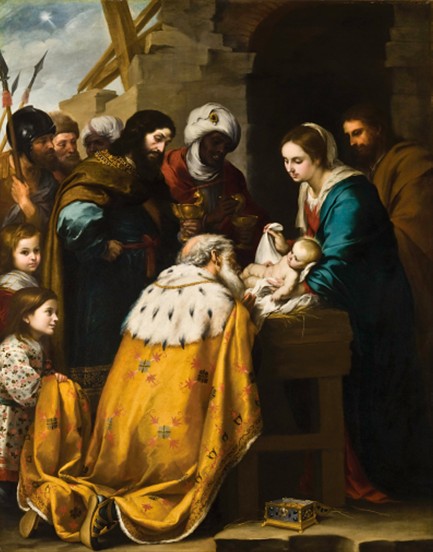
The Magi prostrated themselves before the Christ child and did him homage. It is Jesus who gets our adoration and gifts, not King Herod with his power, possessions, and privilege! When we place Jesus and his mother at the center of our devotion, we use our power to serve others. We use our possessions to meet our material needs and assist others who have less. We use our privileges, whatever they may be – a good education, a stable family life, a good job – to be a power for good in the world, especially through our family life, work, and civic activism.
I hope you can spend time reflecting on the story of the Magi, and its lessons for us today:
- Listen to and pray with nature.
- Look to the Scriptures for guidance but be wary of religious leaders who align themselves with secular powers.
- Step away from the noise of life to be able to hear the divine leading you; and
- Be prepared to encounter God in the ordinary circumstances of life and use our blessings to be a power for good in the world.
A Five-Minute Christmas Homily
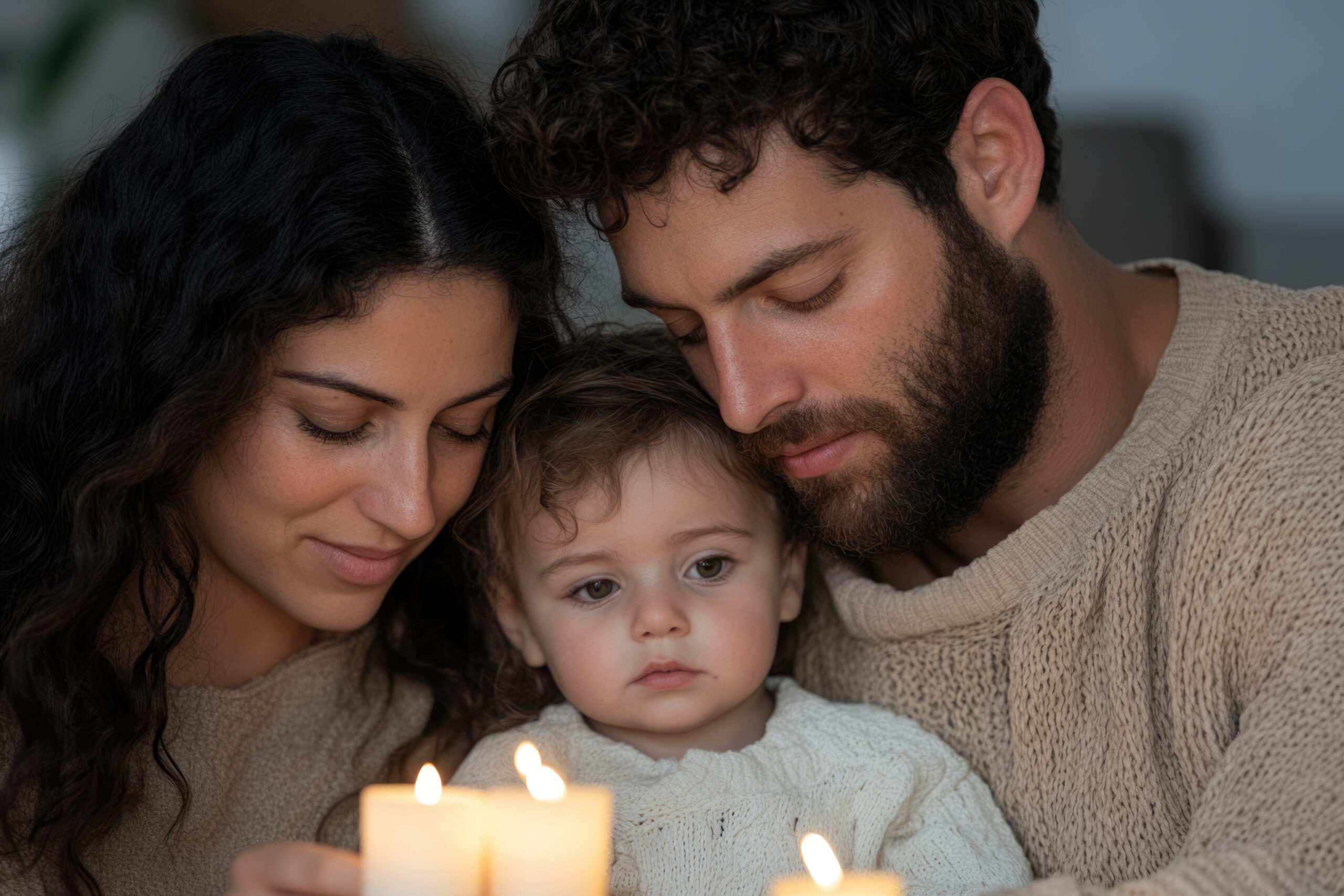
Dear Friends, the homily for the Christmas Masses need not be long because the entire day of Christmas, including the liturgy and carols sung, proclaim the meaning of this holy day. Here’s my short, five minute Christmas homily for Christmas.
A Five-Minute Christmas Homily
Merry Christmas, Church! It’s that great day when the entire world sings the music of Handel – HALLELUJAH!! [Robert sings the first line of the HALLELUJAH! Chorus.] You know this tune with the wonderful word, HALLELUJAH!. Can you sing it with me?
All: HALLELUJAH!
The word comes from the Jewish language, and it means “God be praised” or “Praise the Lord.” It’s the “Great Word” that is so appropriate for this day when we remember in song, Word and Sacrament, at home and in this community of faith, the birth of God’s beloved Son Jesus.
All: HALLELUJAH!
HALLELUJAH!, indeed. GOD HAS NOT FORGOTTEN US! Terrible things are happening in the world today, and terrible things were happening in the world 2000 years ago. And God did not leave us alone to suffer the sins of our graced but fallen world. God became a human being in Jesus so that we would know without a doubt that we are loved and are destined for a heavenly future. Jesus is “Emmanuel,” God with us.
All: HALLELUJAH!
But more than that! The birth, life, death, and resurrection of Jesus, and the sending of his Spirit upon His Church did not happen just to get us to heaven. It happened so that we would bring heaven to earth, at least a measure of it, within our marriages and families, in our neighborhoods and at work, and even in our politics. YES, WE CAN BRING HEAVEN TO EARTH!
All: HALLELUJAH!
Change for the better, both in the world and in our lives, is possible. Wars between nations and the plagues of war – hunger, destitution, and death by the thousands – does not have to be our future. You and I, in Christ, can become the peace that the world is longing for. We can feed the hungry, clothe the naked, welcome the refugee and the migrant, visit the sick, and comfort the dying. It is our joy and our privilege to do so!
All: HALLELUJAH!
Addiction to alcohol, drugs, pornography, gambling, gaming, shopping, and whatever other forms of addiction that afflict us do not have to dominate our lives, destroy our inner peace, or cripple our relationships. Emmanuel is with us; we can find freedom from addictions!
If you struggle with any sort of addiction, God is with you. Help is available through God’s grace, with the support of loving family and friends, and with the assistance of dedicated professionals. You can live addiction free.
All: HALLELUJAH!
Most importantly, because of Christmas, Jesus is Emmanuel – “God with us,” we can stop trying to earn God’s love and the love of others. We can rest with complete assurance in the knowledge and truth that, from the moment of our conception until this very day, we are completely and unconditionally loved by our Divine Lover. We don’t earn it; we can’t buy it; we can’t produce it. We can only open our hearts to God and receive God’s gift of love in Jesus and the Holy Spirit.
Dear Church, it’s Christmas. Let’s join with the entire world, with heaven and nature, too, in singing that “Great Word” that proclaims the joy and hope that fills our hearts.
All: HALLELUJAH!

A Family Prayer from Christmas Day to Epiphany
To Bethlehem we travel with the Magi from the East across the days from Christmas to the Epiphany feast. Give us the courage of the Magi as we begin our search for you. Give us the eyes of the Magi that we might see the star that leads us too. And when we get to Bethlehem on that holy Epiphany Day, give us the heart of the Magi that humbles us to pray.
Keep in mind the differences between St. Nicholas and Santa
By Robert Fontana
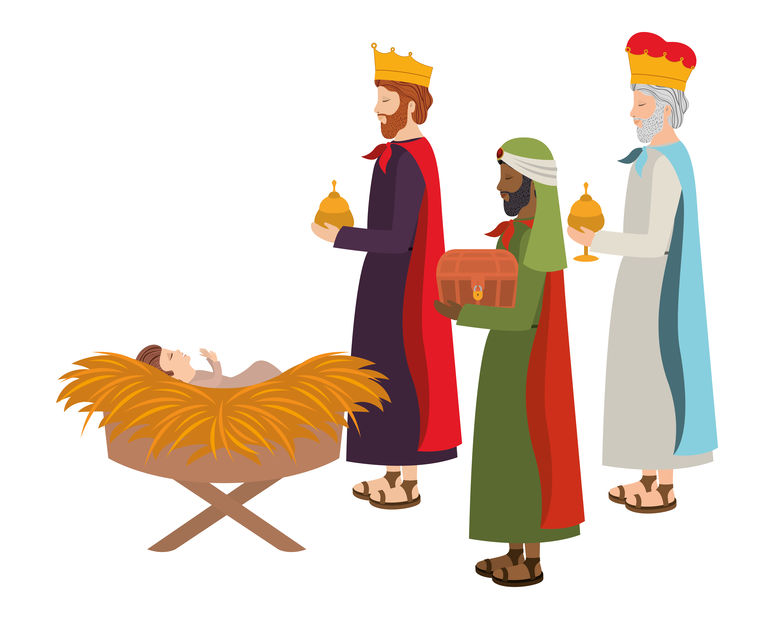
December 6 is the Feast of St. Nicholas, Bishop of Myra (in modern day Turkey).He had a reputation for secretly giving gifts to people in need, which led to the rise among pious Christians of the figure of Santa Claus (Sinterklaas (Dutch: [ˌsɪntərˈklaːs]) or Sint-Nicolaas – https://en.wikipedia.org/wiki/Saint_Nicholas).
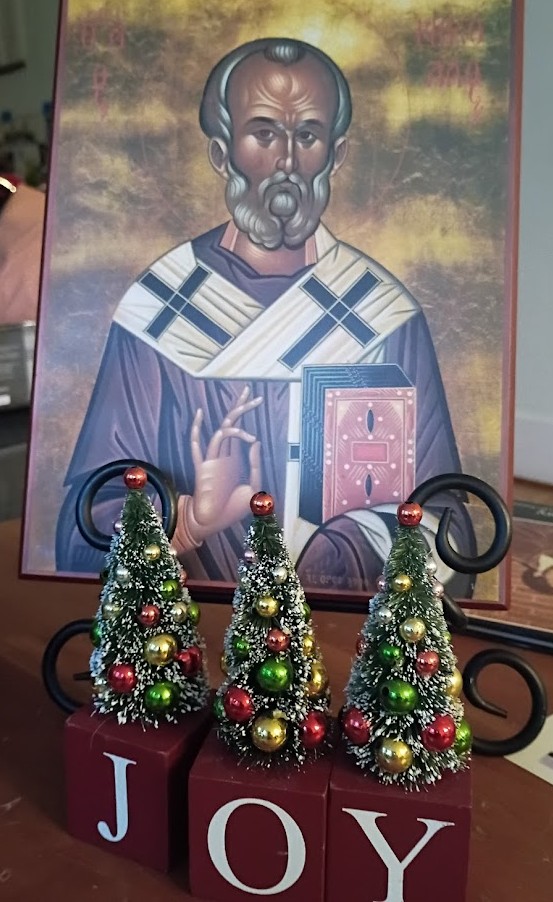
Lori and I decided when our children were small to make the Feast of St. Nicholas a special day for them so that they would understand the Christian figure behind the Santa Claus story. We are continuing that custom with the grandchildren. On St. Nicholas Day morning, they will be opening their Christmas stockings, each containing a book, a candy treat, and an orange. For the grands who live above us, we’ll have breakfast together with an ice cream pie as the main dish!
Here’s a reflection on the difference between St. Nicholas and Santa Claus, followed by a prayer service that families (with or without children) or friends can do to honor St. Nicholas, disciple of Jesus, and friend of the poor.

- Santa wants your credit card; Nicholas wants your heart.
- Santa will turn you into a consumer; Nicholas will help you be a servant.
- Santa is a whimsical tale of a fat old elf who gives toys to boys and girls who have been good; St. Nicholas helped children escape from poverty and slavery.
- Santa reminds us to give presents; Nicholas reminds us to give ourselves.
- Santa is controlled by the department store; Nicholas was led by the Spirit.
- Santa is a man dressed in a costume; Nicholas was a Bishop who cared for his people.
- Santa reminds us to follow the Christmas sales; Nicholas reminds us to follow Jesus.
- Santa promises us happiness through gift-giving; Nicholas reminds us that happiness is the fruit of a faithful life.
- Santa is a fun story to read to children at Christmas Eve; Nicholas was a man of great compassion who sold his possessions and gave the money to the poor so that he could do God’s will in perfect freedom.
- Santa has nothing to do with Jesus the God-Man whose birth is celebrated on Christmas Day. Nicholas’ life only makes sense because of his love and commitment to Jesus the God-Man whose birth is celebrated on Christmas Day.
Enjoy the story of Sant Claus with your children and grandchildren, and teach them about the real person behind the myth.
A Prayer Service for the Feast of St. Nicholas, Adapted by Robert Fontana from a prayer service by Thomas G. Simons from the St. Nicholas Center.
Call To Worship
Leader: Praise God for St. Nicholas!
Children: Yea St. Nicholas!
Leader: The Spirit of the Lord was upon him.
Children: Yea St. Nicholas!
Leader: Loving God, St. Nicholas loved Jesus, and because he loved Jesus he loved children and the poor. We honor his memory today and in doing so hope to imitate his kindness and love.
Children: St. Nicholas, pray for us. Amen!
Word Service – 1 Peter 5.1–4
The following summary of the life of St. Nicholas may be read and discussed.
St. Nicholas was born to Christian parents. Legends recount the story of Nicholas’ baptism when his parents brought him to the sacred fount; he leapt from his mother’s arms into the Baptismal waters. After the death of his parents, he gave away his inheritance to the poor of Myra, and dedicated himself to serve his people first as a priest and later as a bishop.
Bishop Nicholas preached the Gospel in a Roman culture still dominated by Greek and Roman religious customs and moral behavior. He organized Churched, taught the Catholic faith, and invited non-Christians to join the community of faith. He is most remembered as a helper to the poor and to children. Once Bishop Nicholas heard that a father was struggling to feed his three daughters. He did not have the money for a marriage dowry, and was considering selling them off into slavery so they would at least have something to eat. On three occasions, Bishop Nicholas threw a bag of gold through the window into the room of the sleeping father. His daughters soon were married. Later the father came to Nicholas, fell at his feet and said, “Nicholas, you are my helper.”
This story and his many other works of charity led to the tradition of giving presents on the Feast of St. Nicholas and at Christmas. The name Santa Claus, in fact, evolved from his name.
Bishop Nicholas proclaimed the Gospel, baptized new Christians, feed the hungry and poor, and taught the truths of Christianity. He died at Myra in 350 A.D. His popularity, already great, increased when his bones were brought to Italy in 1087. Both the Eastern and Western churches honor him. St. Nicholas is the patron saint of Russia, Greece, and Sicily. He is regarded as the special patron of children. His feast is December 6.
Intercessions
Reader: For the gift of each person here.
All: We give thanks.
Reader: For the many material blessings that we have received and can share with those in need.
All: We give thanks.
Reader: For a holiday season of joy, hope, and peace.
All: We give thanks.
Blessing Prayer
Leader: Gracious and good Lord, we bless you on this feast of St. Nicholas, your servant, who is an example to us of a life of charity and love.
All: Help us to imitate his good deeds.
Leader: Make us always mindful of the needs of others and help us rejoice in the abundance of your goodness around us. We ask this through Jesus our Lord.
All: Amen.
Our Father…
Share a special treat or exchange small gifts, if desired.
Homespun Homily by Lori: Lord, surprise me this Advent!
By Lori Fontana

Another grocery-store parable: it began at our local Safeway, in the University District, so you know it’s swarming with hungry young people. I try to shop before noon because the crowds swell in the afternoon and evening, and it becomes bumper-to-bumper grocery carts, baskets, and backpacks.
It was 11:30 a.m. – just under the wire for the calmer morning. Entering the store, I saw a middle-aged man carrying a large empty bag in one hand and grasping in his other hand the leash of a scraggly dog, bulky and muscular, and cranky-looking.
What is he doing in here? With that dog? And why the big bag? I was in a rush, so I moved to the veggies and fruits. As I glanced back, I saw the man placing apples into his open bag.
“I bet he won’t be paying for those,” I groused to myself, jumping to conclusions without knowing the whole picture. There I go – judging. Who am I anyway? The grocery bouncer?
“Let it go,” my wiser self reminded me. But it’s hard! Almost every time I shop, I see folks who take groceries without paying. I now tell myself that they must be very hungry, and what would any of us do if we were very hungry and without resources. Still, I have a self-righteous streak that complains: “There are other options.”
I crossed paths with the man and his dog in the cereal aisle, and again in the frozen food aisle. He still clutched the bag, which was now plump with items. I whispered, “God bless him,” (does it still count if done through gritted teeth?), and continued my shopping.
Of course, I got my comeuppance! As I pushed my loaded cart to the self-service check-out, I saw my fellow shopper unloading groceries from his bag for the clerk to ring up. The scary-looking dog sat peacefully at his feet, yawning. Surprise!

Oh, boy! Chastened, I remembered Jesus’s words in the Gospel of Matthew, right after he teaches his followers the “Our Father:”
Stop judging, that you may not be judged. For as you judge, so will you be judged, and the measure with which you measure will be measured out to you. Why do you notice the splinter in your brother’s [or sister’s] eye, but do not perceive the wooden beam in your own eye?…You hypocrite, remove the wooden beam from your eye first; then you will see clearly to remove the splinter from your brother’s [or sister’s] eye. (Matt 7:1-3, 5)
Will I ever get the beam out of my own eye? Not likely…There will always be at least some sawdust clouding my vision.
Less judgment, more mercy – a foundational Gospel teaching. A parallel secular piece of wisdom is, “Don’t judge a book by its cover.” (In my case, don’t judge a shopper by his dog!)
This encounter has been on my mind as we enter the season of Advent. I’m reminded of one of the most misjudged events of all time: the birth of Jesus. The Jewish people waited centuries for the Messiah, and they wondered, who would this Messiah be? Isaiah describes how the Jewish people envisioned their long-awaited Messiah:
For a child is born to us, a son is given us; upon his shoulder dominion rests. They name him Wonder-Counselor, God-Hero, Father-Forever, Prince of Peace. His dominion is vast and forever peaceful, from David’s throne, and over his kingdom, which he confirms and sustains by judgment and justice, both now and forever. (Is 9:5-6)
They were expecting a great and mighty king! Their hope was for the King of Glory, who would throw off their oppressors, from the Egyptians to the Babylonians to the Romans. But that isn’t who they got.
Luke tells us, “For today in the city of David a savior has been born for you who is Messiah and Lord. And this will be a sign for you: you will find an infant wrapped in swaddling clothes and lying in a manger.” (Luke 2:11-12)
A little baby? Born in a stable; sleeping in a manger? What kind of a king was that? Other than the shepherds (in Luke’s Gospel) and the magi (in Matthew’s Gospel), few recognized the young Jesus as Isaiah’s Prince of Peace. In fact, his relatives and the townspeople of Nazareth scoffed at Jesus. In essence they asked, “This Jesus, son of a carpenter, just who did he think he was?!
Wonder-Counselor, God-Hero, Father-Forever, Prince of Peace – born in a lowly stable to a poor carpenter and his young wife? Quite a surprise!
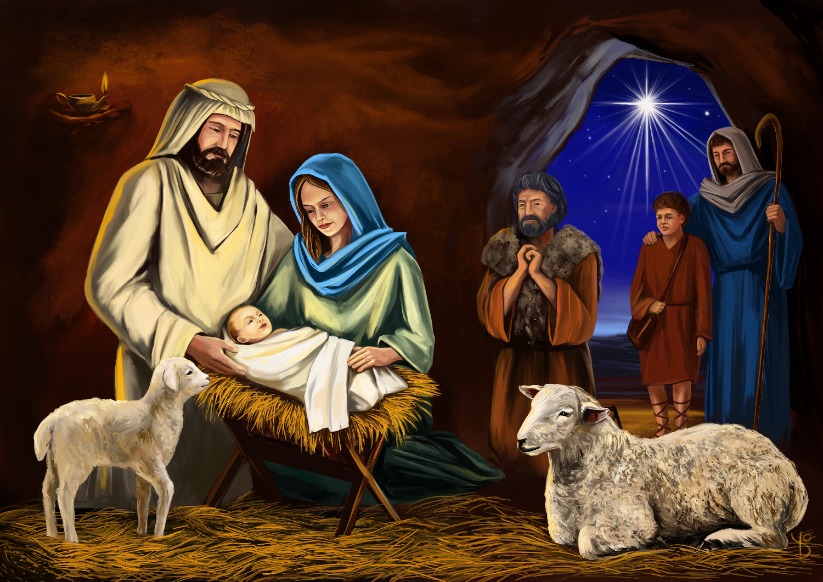
This Advent, what surprises does God have in store for me? For you? It won’t be a new king, born a babe and lying in a manger, BUT…might it be a change of heart in a family member, a peaceful cooperation with a neighbor or co-worker, an encouraging conversation with a sales clerk or a stranger on the street, a humbling recognition of honesty in a man with a dog in the grocery store? Let’s not miss the loving and learning surprises God has waiting for us this holy season.
Open my eyes, Lord, my mind, and my heart, to your goodness alive in the world today!
TODAY IS “GIVING TUESDAY.” If you found this article and others that we post thoughtful and helpful for you in your walk of faith, please consider making a donation to Catholic Life Ministries NW. All donations are tax deductible. To donate, go to https://www.catholiclifeministries.org/donate/
WE ARE MOST GRATEFUL FOR YOUR SUPPORT.
