Prepare an “Altar of Remembrance” for the month of November
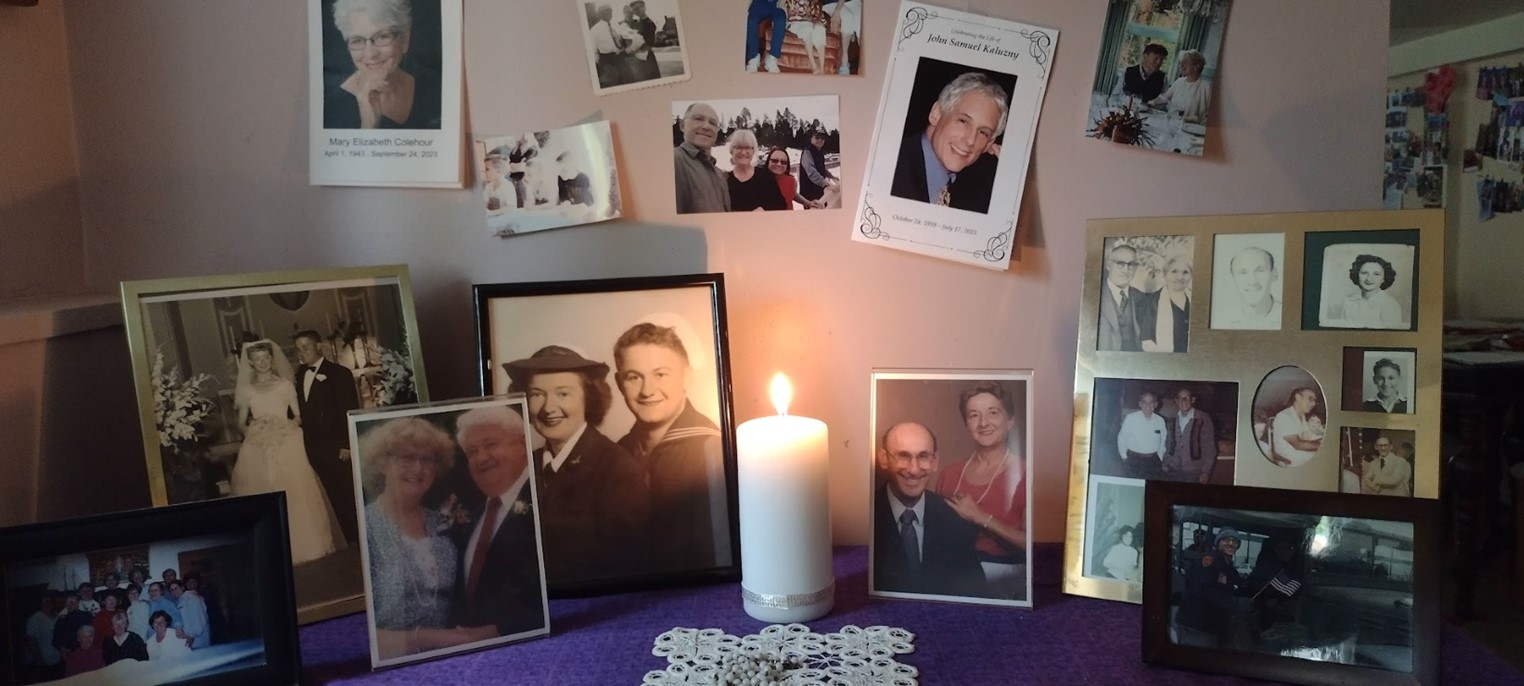
Set up an Altar of Remembrance in your home with the photos and symbols of your loved ones who have died as part of your celebration of the All Saint’s Trilogy: All Hallow’s Eve, October 31 (when hospitality is shared); All Saints Day, November 1 (when we remember at Mass all the unnamed and unknown saints who live with God in heaven); and the Solemnity of All Souls, November 2 (when we honor the graves of our ancestors, pray for any of them who may be in purgatory, and commend all who have died to God).
A word about “Purgatory.” WE DON’T KNOW MUCH ABOUT IT! What we do know is that it is an expression of God’s love and mercy. Purgatory is not so much a place but a process. It is God’s love and mercy reaching beyond the grave, cleansing us of sin, and preparing us for eternal communion with God. As dear old Fr. Royce put it to the grade school kids at St. Joseph’s where all our kids went and where Lori taught, “Purgatory is like going to the car wash on Saturday before driving to church on Sunday. Or it is like taking a shower at the end of the day to clean up before having a meal with the family. Here’s what The Catechism of the Catholic Church says:
“All who die in God’s grace and friendship, but still imperfectly purified, are indeed assured of their eternal salvation; but after death they undergo purification, so as to achieve the holiness necessary to enter the joy of heaven.” Art. 1030
Homespun Homily by Lori: “I can be a saint, you can be a saint.”
NOVEMBER 1 IS THE FEAST OF ALL SAINTS!

Who’s your favorite saint? Who do you know who is a modern-day “saint,” someone in your family or your circle of friends who exemplifies saintly qualities?
Here’s my recent nominee for “sainthood.” She has a kind greeting for each person that passes by. She never fails to notice a person’s bright-colored shirt or happy smile or when someone is moving slowly and perhaps with pain. Her cheerful greeting rings out loudly, showing interest and care:
“How are you, my dear?” “Ahh, you have that lovely sweater on – isn’t this fall weather gorgeous?” “Take care now. May I help you with that cart?” “Thank you for your smile today!”
Perhaps you have a greeter at your grocery store these days, someone who welcomes you into the store and checks your purchase receipt on your way out. At my regular grocery store, the greeter is a lovely woman, mature in age, tall and slender, with long graying hair. For the many times that I trek to the grocery store, I always experience her as warm, hospitable, and truly sincere in her compliments and encouraging words.
This cheery woman is a light in the often dark and chaotic world of today, and her example is a lesson in faith, hope, and love. She doesn’t know what’s going on in the lives of the many people who pass by her each day. And we shoppers don’t know what she might be experiencing in her own life. But she is present to the moment. She sees the person in front of her, she notices something specific and positive – hair, smile, clothing, how the person is responding to the day or the weather – and she offers a loving word.
I know nothing about this lovely woman’s faith. But I know that “God is love, and all who abide in love abide in God.” (1 John 4:16) The love and kindness she consistently shows certainly reflects the love of God she somehow feels in her heart.
Isn’t this the call of Jesus, to live in the now with gratitude for our lives? He says, “…do not worry about your life and what you will eat, or about your body and what you will wear. For life is more than food and the body more than clothing.” Luke 12:22-23
I don’t think it means that we should give up planning or have no hopes for the future. But I take Jesus’ words as a reminder to appreciate the present moment and to nurture a grateful heart for the people and the circumstances that are right before us. Where we are, who we are with, what we are experiencing – this is where God has placed us; and God gives us the strength and grace to endure, and is with us through it all.
The world can seem like a mean place, making it difficult to see God’s grace in our neighborhoods, our workplaces, in the faces we pass on the street, in the news we read each day. As Christians, though, we are called to LOOK for God’s grace EVERYWHERE.
My daily prayer to the Holy Spirit is, “Help me to see God in everyone I meet today. Help me to share the love of God in every instance, even if it seems so small and insignificant. Give me Your strength and wisdom and power, because on my own, I can do nothing.”
What gets in the way of our Christian call to sainthood, blocking grace and stifling gratitude? In that frame of mind, we can’t share God’s love with others. My block is fear and worry. It’s impossible to be as cheerful and welcoming as our grocery store greeter when I am mired in negative “why’s” and “what if’s.” At those times, I’m an Eeyore (Winnie the Pooh’s glass-half-empty friend). But lately I’ve asked myself, “Will worry help?” We all know the answer to that one.
Jesus addresses anxiety throughout the New Testament. So many times Jesus reminds us – “Do not worry! Do not be afraid!” Look again at Luke 12 – full of exhortations of “do not fear.” In fact, “Fear not,” or some variation of this phrase, is widely accepted as the most repeated command in the Bible, appearing hundreds of times, depending on the translation.
All of us are at times like Eeyore, but we can’t wallow there for long. However, neither am I promoting a Pollyanna attitude, a false happiness. Life is hard. Sometimes life is not fair. Life comes with suffering, and we’re all going to die. As we encounter these stark truths, can our faith make a difference in how we respond? Yes it can!
“What came to be through him [Jesus] was life, and this life was the light of the human race; the light shines in the darkness, and the darkness has not overcome it.” John 1:3-5
Jesus didn’t promise his followers a trouble-free life. But he did promise to be with us throughout our lives; and he gave us an advocate, the Holy Spirit, to guide and empower us. That is GOOD NEWS, the best news, news worth sharing with everyone we meet. And, in most cases, the best way to share that good news is how my grocery store greeter does – with a caring smile and a kind word.
Who are the “saints” in your daily life? And how will you strive to be a saint today?
Suppose two people break into your house
By Robert Fontana
Bear with me here. It’s 2 o’clock in the morning, and you hear something that sounds like a window breaking in your downstairs living room. Incredibly, you hear more breaking glass that sounds like it is coming from your kitchen on the opposite side of the house.

YOU’RE TERRIFIED: INTRUDERS!
You call the police as you lock the door to your bedroom. You’re in luck. A patrol car is in the neighborhood and arrives within minutes. The intruders are apprehended. You come down the stairs to see who broke into your home and why.
One officer has Intruder 1. You learn from this officer that Intruder 1 was hoping to steal electronics and perhaps jewelry to sell it on the illicit market.
The other officer has Intruder 2. From this officer you learn that Intruder 2 was fleeing her boyfriend who was in a drunken rage and threatening to kill her.
The officers ask you if you want to press charges for each intruder.
What each person did was illegal. What do you do?
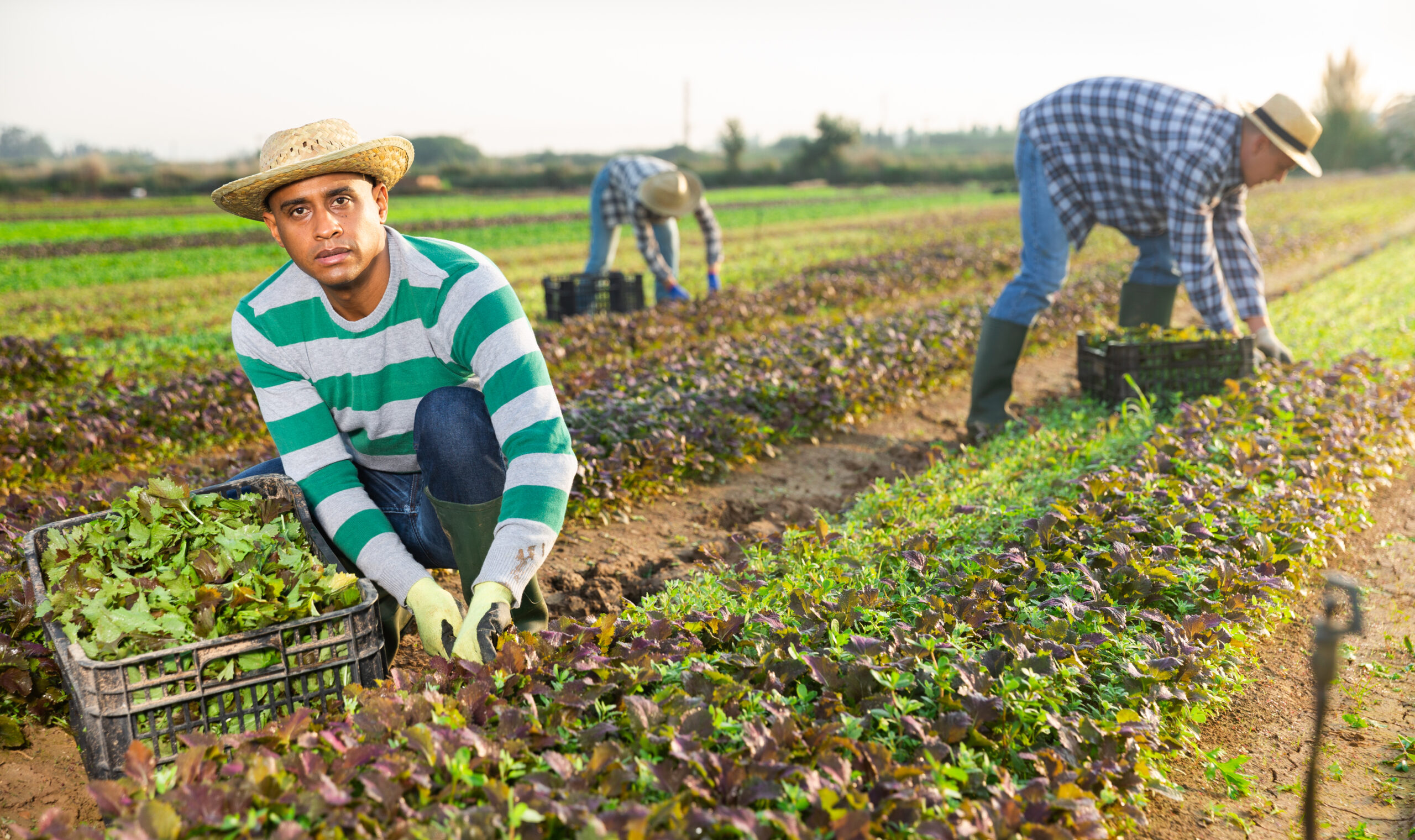
As many of you know, Lori and I have been advocates for the rights of migrants and refugees who are seeking a new life in the U.S. Many of these people have been here for years. They are working in agriculture, fruit-packing plants, slaughterhouses, and as cleaners and caregivers for the elderly. Some of my Catholic friends will concede that not all migrants are “murderers, rapists, and criminals” as they have been described by some politicians. But, these same friends say emphatically:
THEY ARE HERE ILLEGALLY!
You know where this is going. In the story above, two people broke into the house, but only one of the intruders is really doing criminal activity.
Men, women, and children who cross into the U.S. seeking relief and safety from intense poverty, violence, and sex-trafficking have a moral right to do so. They may be in the U.S. illegally, but like the 2nd intruder in the story, they are not criminals. According to Scripture and Catholic social teaching, they have a moral right to flee their unlivable conditions to seek a better life elsewhere (as the Holy Family did when they fled Bethlehem to go to Egypt).
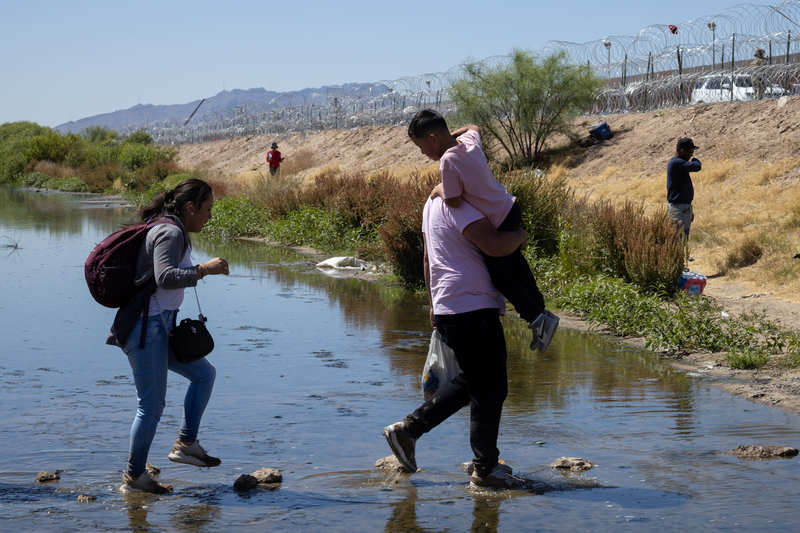
Migrants and refugees seeking a better life need our compassion, not judgment and bullying. This is true whether they have been here for years and are established as good citizens in whatever capacity; or they are recent arrivals who, compliant with U.S. law, have applied for asylum and have been granted an asylum hearing date.
That’s the case of the family that we are supporting who made the dangerous and difficult four-month journey, mostly on foot, from Columbia, through the jungles of Panama, across Nicaragua, Guatemala, and Mexico to El Paso, Texas. The mother, with her 17-year-old daughter and 5-year-old son, made the trip in desperation to prevent gangs from kidnapping the 17-year-old for trafficking.
When the Pharisees noticed the disciples of Jesus picking grains of wheat and eating them while it was the sabbath, they said:
“See, your disciples are doing what is unlawful to do on the sabbath.” He said to them, “Have you not read what David did when he and his companions were hungry, how he went into the house of God and ate the bread of offering, which neither he nor his companions but only the priests could lawfully eat? Or have you not read in the law that on the sabbath the priests serving in the temple violate the sabbath and are innocent? I say to you, something greater than the temple is here. If you knew what this meant, ‘I desire mercy, not sacrifice, you would not have condemned these innocent men. For the Son of Man is Lord of the sabbath.” Matthew 12:1-8
Can we not show mercy and justice to these good people who are actually, by and large, very much contributing to the common good of their local communities?
Here’s what Cardinal Robert McElroy had to say about the treatment of migrants at the Mass for the 111th World Day of Migrants:
“…this year we are confronting – both as a nation and as a Church – an unprecedented assault upon millions of immigrant men and women and families in our midst.
Our first obligation as a Church is to embrace in a sustained, unwavering, prophetic and compassionate way the immigrants who are suffering so deeply because of the oppression they are facing…
We are witnessing a comprehensive governmental assault designed to produce fear and terror among millions of men and women who have through their presence in our nation been nurturing precisely the religious, cultural, communitarian and familial bonds that are most frayed and most valuable at this moment in our country’s history…
Catholic social teaching states that every nation has the right to effectively control its own borders and provide security. Thus, efforts to secure our borders and deport those undocumented immigrants convicted of serious crimes constitute legitimate national goals. At times, our government asserts that these goals constitute the essence and scope of its immigration enforcement efforts, and if that were true, Catholic teaching would raise no objection.
But the reality we are facing here in the Archdiocese of Washington and across our country is far different. For our government is engaged in — by its own admission and by the tumultuous enforcement actions it has launched – a comprehensive campaign to uproot millions of families and hard-working men and women who have come to our country seeking a better life that includes contributing to building up the best elements of our culture and society.
Deportation is not the answer. What is needed is a simple and manageable pathway towards legal residency, with employment privileges, and with an option for citizenship.
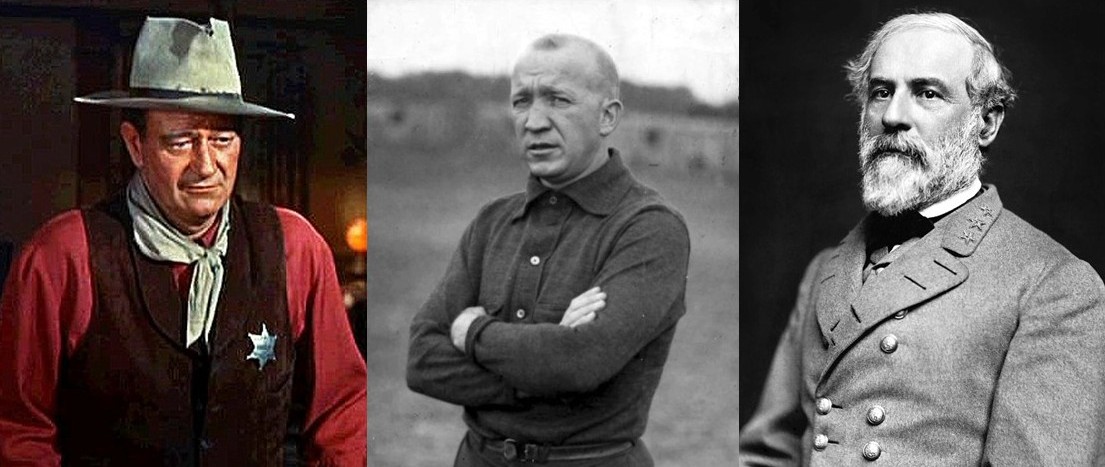
John Wayne, Knute Rockne, Robert E. Lee, Jesus, and Dad
By Robert Fontana
I know, strange title for an article. Those were my childhood heroes and in that order. My mother could hardly bear John Wayne movies. “He can’t act,” she would say. I wouldn’t listen. I was thrilled with seeing him in his old movies, The Quiet Man and The Sands of Iwo Jima and his new releases (in the 6o’s) The Sons of Katie Elder and True Grit.
Contrary to what my kids think, I did read during my childhood. Two of my favorite books were the biographies of Knute Rockne and Rober E. Lee, two “great Americans.” I became a devotee of Notre Dame football and the Confederate States of America.
Lori is astounded when I talk to people my age who also love Notre Dame, and ask them, “Remember when Ara Parseghian went for the tie in the 1966 game against Michigan State?” I put up framed photos of Notre Dame players on my wall that I cut out of Sports Illustrated magazines. And I sobbed when I learned that my uncle was one ticket short for the Notre Dame – LSU game, and I was the one who had to stay home and watch it on TV.

But it was Robert E. Lee who really caught my attention. He was the best that America had to offer, a Christian gentleman, man of principle, and master on the battlefield. Through him I was introduced to all the important men of the Confederacy, studied their battles, and suffered with them on that fateful July 3rd day when Pickett’s charge failed at Gettysburg. Of course, I was glad slavery was defeated, and that the U.S. remained an intact nation. Truly, I never paid attention to the politics that led to the “War of Southern Independence” as Southerners preferred to call it.
All this was happening to me as I attended Catholic Church and school, made my First Confession and Communion, went to Mass on Sundays and every day during Lent, prayed the rosary, and learned the Catechism of the Catholic Church. I was exposed to sacred music through our school choral program and learned to sing Mass in Latin. Our family often had priests over to our house for Sunday dinner, and I sometimes spent the night at the rectory to keep a priest company who was there alone (nothing bad happened to me).
I was raised within two cultures, one dominated by television, sports, and the southern Confederate identity, and the other by Catholic institutions – the parish, school, neighborhood, and family. These, of course, easily overlapped. My Catholic faith gave me a confidence in God, a love for the institutional Church and its history of saints, and a community of friends for my family. We were held together by the same worldview of “loving and serving God in this life so as to be happy with him in the next.”
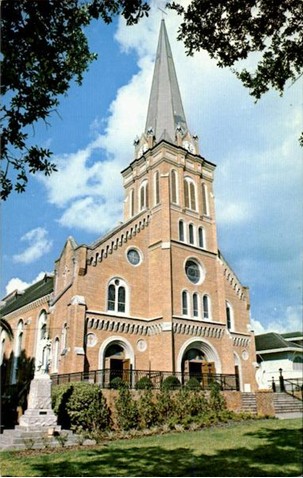
But my Catholic community in South Louisiana, at least as I experienced it, did not critique the dominant culture that was shaping me. I was raised on the White side of segregation. Through my teen-aged years, I thought Robert E. Lee and the Confederacy were great and eventually flew a Confederate flag. I looked to John Wayne, hard-fighting, hard-drinking, and a lady’s man, as a model of masculinity. I was enamored with the military, and gave so much of my energy to sports.
I was unconsciously sucked into what St. Paul describes as “this age” from which he challenged Christians in Rome to avoid conforming to:
“Do not conform yourself to this age, but be transformed by the renewal of your mind, that you may discern the will of God…” Romans 12:2
I needed some shaking up, and Jesus was the very person to do it. It wasn’t dramatic. It wasn’t all at once. But once I had an experience of Jesus as a person who loves me and is with me at every moment, my unhealthy attachment to all my secular heroes and identification began to be challenged. The Catholic rituals and culture in which I participated opened for me a life-giving relationship with God.
As a senior in high school, John Wayne didn’t inspire me to visit the elderly in a nursing home or the inmates in the county jail, but the Legion of Mary, which I joined with a friend, did. The “Duke” also didn’t encourage me to treat girls with respect, to be a Christian athlete, and seek God’s will for my life, but my parents, their prayer group, and my high school friends active in the diocesan retreat movement did.
I had no capacity to see the harm of white supremacy’s hiding behind segregation and the cult of the confederacy that I so embraced until I met an African American seminarian from New Orleans who took me by the hand to show me what racism was. At first, as I encountered Black culture in its Catholic form, I thought that only he and other African Americans were harmed by racism. It took a while but one day it dawned on me that, “No, I was also a casualty of racism!” I was deprived of the beauty of African American culture and the friendships that it offered. And I was unknowingly perpetuating racism by my Confederate leanings.
The Confederate flag came down permanently after an encounter with an old family friend in my hometown of Abbeville who participated in Civil War battle re-enactments dressed as a Confederate general. As we discussed the 1863 battle at Port Hudson, Louisiana, where “colored troops” for the first time fought for the Union, this man’s friendly demeanor turned to hate as he said, “We kicked the N_ _ _ _ _ s then, and we’ll kick ‘em again.” I finally had to admit that all those monuments and symbols to the Confederacy were about a war to create a country based on the enslavement of African Americans, whose purpose was to prop up white power today.
Wow. I was duped by “this age” in its southern form.
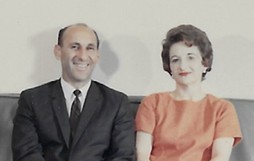
As I matured and began separating myself from my childhood heroes, grew in faith, married, had children, and focused on a career in ministry, a new person emerged as someone I needed to imitate. It was my dad. Yes, of course it was Jesus, and the saints, and some new favorite people from history like U.S. Grant (I switched sides and became a Union man), but mostly it was my father. My dad, Anthony Fontana, became the person I most wanted to imitate. He had awakened faith in Jesus for me back in high school by sharing his faith with me. He (and mom) brought music to my life, both sacred and secular. Most importantly he showed me how to be a patient, faithful, playful, and loving husband, father, and grandfather.
Pope Francis had it rough with far-right Catholics. How will Pope Leo fair?
By Robert Fontana
One might think Pope Francis was the anti-Christ with the depth of vindictive comments leveled at him for his pastoral approach, small changes, and efforts at more inclusive dialogue. Here are some reasons for their complaints:
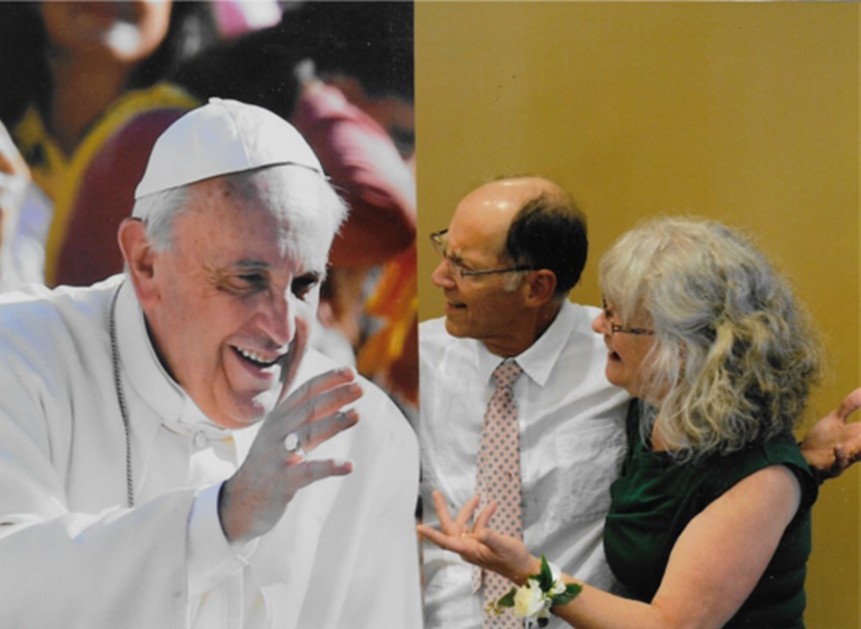
a. For placing lay women and men in leadership positions at the Vatican: Cardinal Beniamino Stella wrote, “[Pope Francis] is “breaking long standing tradition…imposing his ideas” which separate church governance from ordination.
b. For allowing controversial topics to be discussed at the synod, e.g., whether divorced and remarried Catholics be admitted to communion; ministry to gay and lesbian persons; and care for the earth, five cardinals complained. They wrote Francis a letter expressing their concerns that he was sowing “confusion, error, and discouragement” in the Church. They accused Francis of changing church doctrine because of the influence of sinful elements in western culture.
d. For allowing lay women and men to have a vote equal to bishops at the synod, Restore Tradition (a US based women’s group) wrote, “We wish to be represented only by bishops!”
Some far-right critics of Francis accused him of being “soft on sin” because of how he permitted the parish priest to forgive sins related to having an abortion, spoke too little about the sin of abortion and too much about the dignity of migrants and their right to seek a better life in another country. Pope Francis even drew the ire of the far-right with his encyclical Laudate Si’ that placed care of the earth alongside care of the unborn at the center of a pro-life agenda.
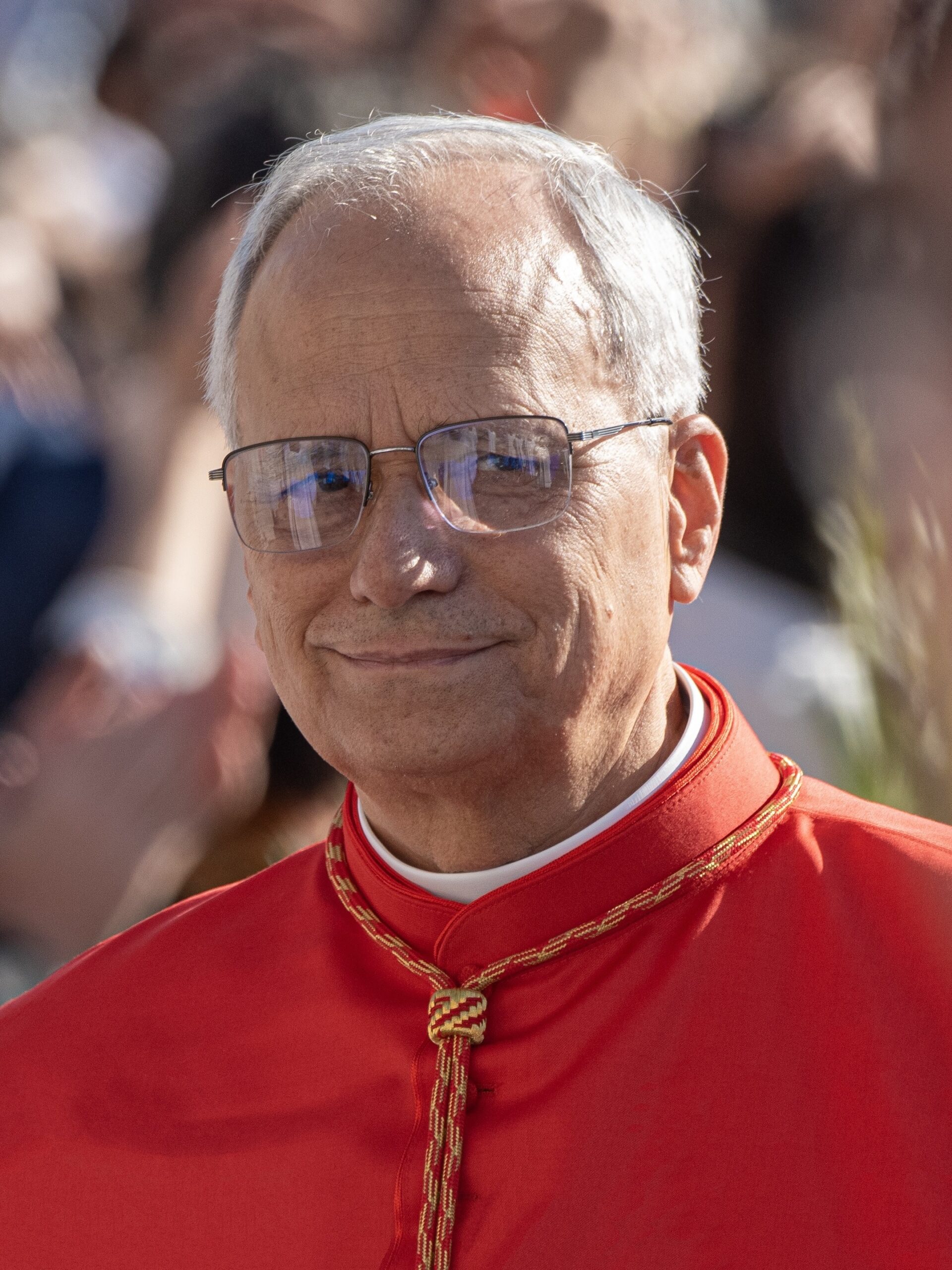
By all accounts, Pope Leo will continue the trajectory of Pope Francis. This was indicated by Pope Leo’s visit to pray at Pope Francis’ tomb. Like Francis, he won’t change Catholic doctrine on any of these hot-button issues. What he will do is place the doctrines and disciplines of the Church at the service of Catholics specifically and the human community in general. The images of the Catholic Church as a “field hospital” for the wounded and the Eucharist as “medicine for the sick and not a reward for the saved” will continue.
This echoes the teachings of Jesus who said, “The sabbath was made for man, not man for the sabbath.” Mark 2:27
Pope Leo is also following in the footsteps of another Chicagoan, Cardinal Bernardin, who coined the phrase of a “seamless garment,” uniting all the prolife issues of the church under a common banner and not just under one primary issue: abortion. This was certainly the practice of Pope Francis and his successors, Pope Benedict XVI and Pope John Paul II.
To be pro-life is also to take seriously the human influence on climate. Few people remember that Pope Benedict often spoke and wrote about the human responsibility to care for the earth:
“Preservation of the environment, promotion of sustainable development and particular attention to climate change are matters of grave concern for the entire human family.” (September 1, 2007)
“We are responsible for the protection and care of the environment. This responsibility knows no boundaries.” (January 1, 2010)
To be pro-life is also to critique economic systems in terms of their service to human dignity and the common good. Pope Francis was labeled as a socialist by his far-right critics because of his criticism of the so-called “free-market” system that creates great wealth for a few and poverty for many. He was just echoing what every pope, from John XXIII to the present, has said, including Pope John Paul II who wrote,
“We see a small number of countries growing exceedingly rich at the cost of the increasing impoverishment of a great number of other countries; as a result, the wealthy grow ever wealthier, while the poor grow ever poorer.” (1998 visit to Cuba)
“If the aim is globalization without marginalization, we can no longer tolerate a world in which there live side by side the immensely rich and the miserably poor, the have-nots deprived even of essentials and people who thoughtlessly waste what others so desperately need. Such contrasts are an affront to the dignity of the human person.” (Pope John Paul II, 1999)
The popes have taught what the bishops at the Second Vatican Council taught based on what the Scriptures taught: that the government (or king in the Scriptures) is responsible to protect the common good, especially protecting the dignity of every human being, from the unborn, to prisoners, to migrants, and the elderly.
“The state has the duty to prevent people from abusing their private property to the detriment of the common good. By its nature private property has a social dimension, which is based on the law of the common destination of earthly goods. Whenever the social aspect is forgotten, ownership can often become the object of greed and a source of serious disorder.” (Vatican II document, Church in the Modern World)
Pope Leo will continue his papacy in the trajectory of Pope Francis because it is the trajectory of the Holy Spirit’s leading the Catholic community since Vatican II and into the new millennium. Leo will have his own style, perhaps with a little less spontaneity and a little more clarity than his predecessor.
But synods with lay participation, Vatican congregations led by women, church leaders in dialogue with marginalized Catholics, mercy as the guide to pastoral behavior, pro-life work including care for migrants and care for the earth, and the church’s advocacy for government protection of the common good and a safety net for the poor – these values are here to stay.
Pope Francis had it rough with far-right Catholics. This doesn’t have to be the case with Pope Leo’s papacy. With the guidance and grace of the Holy Spirit, we can unite the “left” and the “right” in the Church behind these principles, taken straight from the GOOD NEWS of the Gospels.
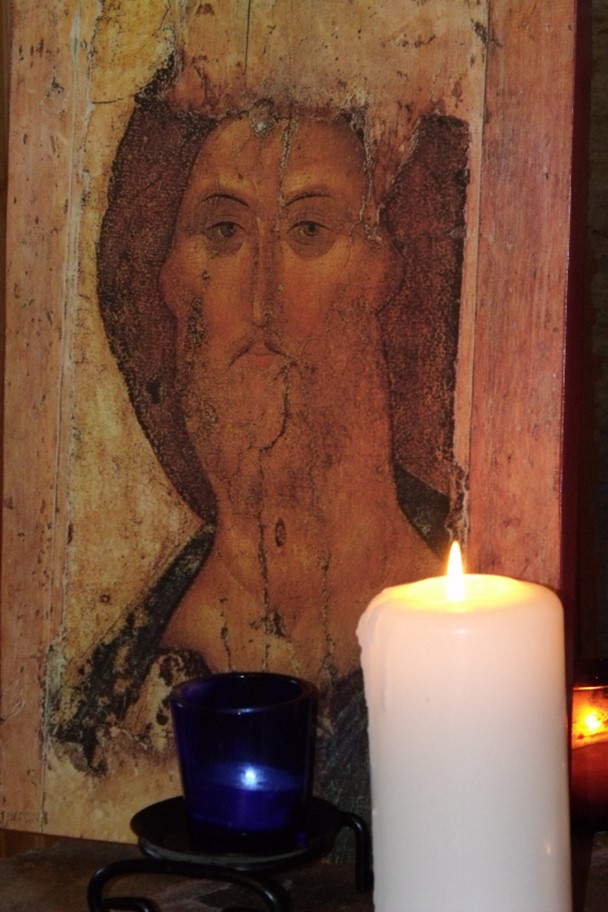
Marriage Vows: Challenge and Gift
By Robert Fontana
The subject of marriage often gets negative jokes and one-liners:
¨ I asked my wife to embrace her mistakes. She gave me a hug.
¨ A retired husband is often a wife’s full-time job.
¨ My son asked me what it’s like to be married so I told him to leave me alone and when he did, I asked him why he was ignoring me.

Yes, these one-liners are funny because they contain some truth. And that truth is, MARRIAGE IS HARD! And the evidence suggests that it’s so hard, many couples give up on it during their first try.
According to Forbes: 43% of first marriages end in divorce (as do 60% of second marriages, and 73% of third marriages). What’s behind these statistics? Why do couples divorce? The most common reason given is “lack of commitment” to the marriage. 72 % of divorcees state that they clearly did not understand, prior to “tying the knot,” how demanding marriage would be on their time, talent, and treasure. When marriage is difficult and does not meet one’s expectations, it is easy to look elsewhere for the fun and intimacy that might be missing in one’s marriage. A whopping 60% of divorced couples reported that it was a spouse’s infidelity that led to divorce.
Low income or poverty isn’t good for marriages either. People who live at, just above or just below, the poverty line often choose not to marry at all. Those who do marry find that the stress of earning a low income takes a toll on marital love. One study showed that 46% of married couples living below the poverty line divorced, whereas couples with higher incomes have lower divorce rates.
Adding to the mix of what makes succeeding in marriage so challenging is addiction – alcohol, drugs, gambling, sex, pornography, or shopping. An active addiction makes it almost impossible to build trust and intimacy because addiction demands absolute loyalty from the addict, and that undermines any good intentions to change behavior.
That’s the bad news.
The good news is that MANY COUPLES DO SUCCEED IN MARRIAGE (straight and gay)!
What’s the key to succeeding in marriage? From my research, my personal experience of 47 years of married life, and my work as a therapist, I’ve come to see that couples who treat marriage vows with the utmost seriousness succeed in marriage. This is crucial, because it is the vows that provide boundaries to marital relationships. The marriage vows of “fidelity, love, and honor” in “good times and in bad, in sickness and in health” are extremely important and should be considered a “social good” as are freedom of religion or the right to assemble.
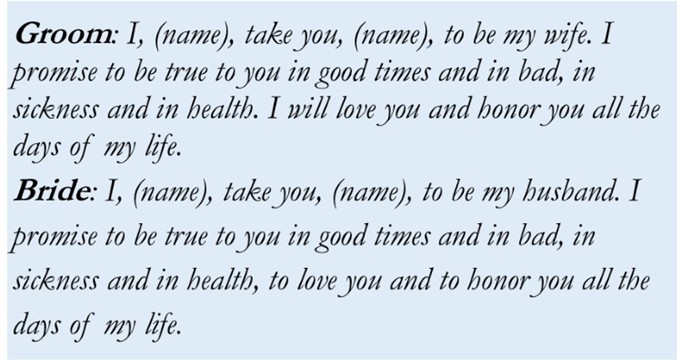
Though everyone wins when couples succeed in marriage, these vows have been undervalued and even ridiculed in modern culture. Vows give couples the framework for learning to direct their relational and sexual energy to each other and to mature and grow as individuals and as a couple, even when their emotions might lead them in another direction. This was certainly true for my parents who, after 20 years of marriage, could agree on only three things: we’re married; we have seven sons; and divorce is not an option. Commitment to their vows held them together. Through hard work, and with the help of Marriage Encounter and lots of prayer, they repaired their marriage and thrived as a couple for the next 19 years until my father’s death.
Vows also provide guardrails for managing relationships outside the marriage, especially at work and in the marketplace. This was true for me. I got married the summer before my senior year in college. I worked part-time but was mainly supported by Lori who worked as a hospital clerk. My student schedule allowed me to attend daily Mass, and it was there that I met many other college students, including a very nice young woman with whom I often exchanged the sign of peace and chatted after Mass. I remember thinking to myself, “we ought to have lunch and visit,” and then caught myself. “Nope, can’t do that anymore.” Faithful to my vows, I needed to protect my marriage by creating appropriate boundaries with women other than my wife.
When marriages succeed, EVERYONE WINS! That’s not simply my opinion; it is backed up by research data. In successful marriages, children thrive; spouses are more effective employees; couples manage their finances for long-term wealth building; spouses get involved in the community to create safer neighborhoods and schools. Wives and husbands enjoy greater sexual intimacy, friendship, and trust, and lay a strong foundation for their life together and care for one another long after the children have left home.
And the biggest winner when marriage succeeds is…men! In fact, the social evidence is clear. Most men need a healthy marriage to strive. When a man directs his sexual and emotional energy to his spouse, and it is received with love and respect, he grows into his best self. Married men live longer, have greater psycho-spiritual health, are more involved in their families and communities, and are more effective at work than their single counterparts. Again, the data backs this up.
As I wrote above, most couples who divorce claim they were not prepared for the challenges of marriage. No surprise there because most couples, even those who succeed in marriage, also report that they were not fully prepared for what married life would bring them. Couples who come to marriage prepared to embrace and live out the vows of “fidelity, love, and honor” truly have the best chance of success. Marriage vows are a gift to the couple and to society.
(Next topic: Sadly, we teach our youth to discipline themselves for success in sports, the arts, academics, and trade skills. But we do not teach them to discipline their sexual and emotional energies to succeed in marriage.)
1. See https://www.forbes.com/advisor/legal/divorce/divorce-statistics/
2. See The Case for Marriage: Why Married People Are Happier, Healthier and Better Off Financially by Linda Waite (University of Chicago) and Maggie Gallagher (National Organization for Marriage) and Get Married by Brad Wilcox (Institute for Family Studies).
Homespun Homily by Lori: Tempted by a good book and a sleepy conscience to HIDE!
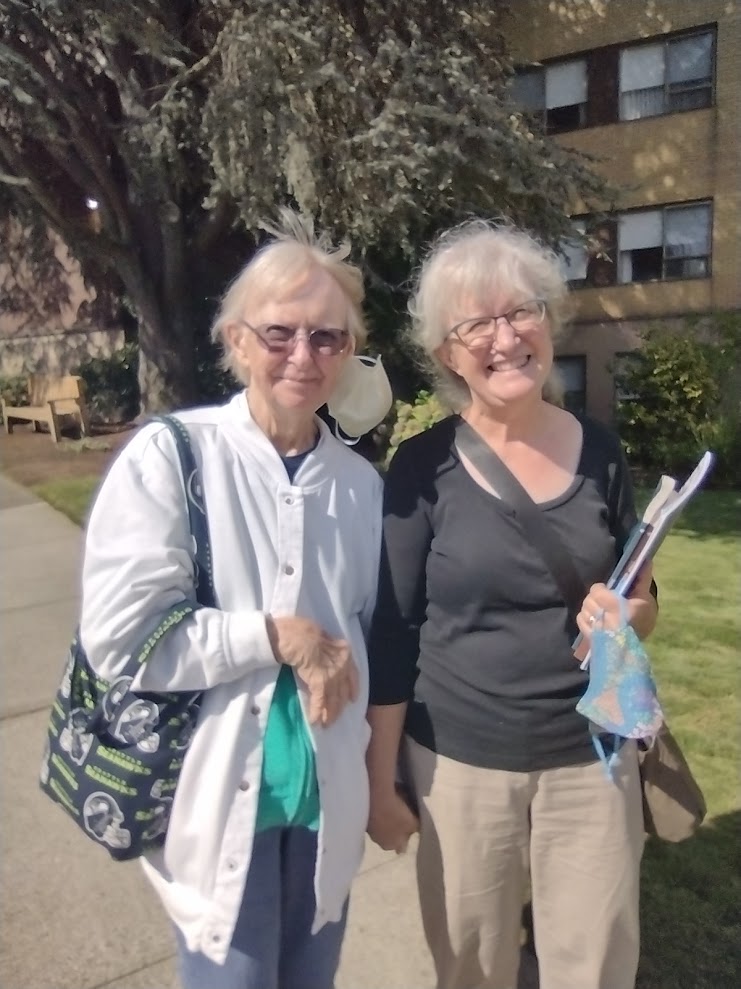
I’m in my 8th decade of life now (my, that sounds old 😊), and my perspective has certainly evolved over these many years. Looking back on my life, I think that for most of it I’ve been very engrossed in the daily tasks at hand. And with six children, and now seven grandchildren, and a husband whose my “office boss,” those tasks are many and seem never-ending.
I have always kept up with the news of “world events,” though these happenings seemed very far away and didn’t seem to have a noticeable impact on my day-to-day life. Many of these events I included on my intercessory prayer list, especially challenges and tragedies involving moms and children. I felt, quite optimistically, that eventually God would sort these problems out and that justice and good would prevail.
And now? My optimism has been sorely battered by events of the past 10 years. Surely, humankind has been through many eras of troubled times, times far worse than the events of this last decade. But this is my lifetime; these are my world’s challenges; and lately, I’ve felt moments of despair at the state of the world and the seeming lack of goodness and compassion among us human beings.

You know well the list of troubled people and places. It’s a constant thrum throughout our media-saturated day. Yes, we know there are big problems; we know there are many people behaving badly; we know there are other people in such dire need of a helping hand. But what can we do?
Here’s one small example from my life. Sunday’s paper, front page – a photo of a mother in Gaza sitting with her two children. The two-year-old has his back to the viewer, and I can count every tiny bone of his spine and ribs, his shoulder bones, and even the tendons in his neck and upper arms. He is literally “skin and bones.” The mother’s face is contorted in anguish.
What can I do? Immediately, I emailed our two U.S. Senators and my U.S. Representative. It was a plaintive email, urging them to do something. A few days later, I see that Jordan and some other countries are air-dropping pallets of food into Gaza. Good…but this is creating its own mayhem, as so many people are desperate with hunger that they are fighting among themselves for a tin of fruit or some flour and oil.
I can hardly bear to watch. I don’t know the answer, and truly, I have no power to help in these world tragedies. Those with the power to make positive change seem to lack the will. Even my Christian faith seems impotent – where is God in all of this suffering?
I’ve certainly lost my youthful optimism that, under God’s watchful eye, all will be well. And yes, I know, I’m operating out of my definition of “well.” Scripture tells us God’s ways are not our ways…But a starving child?
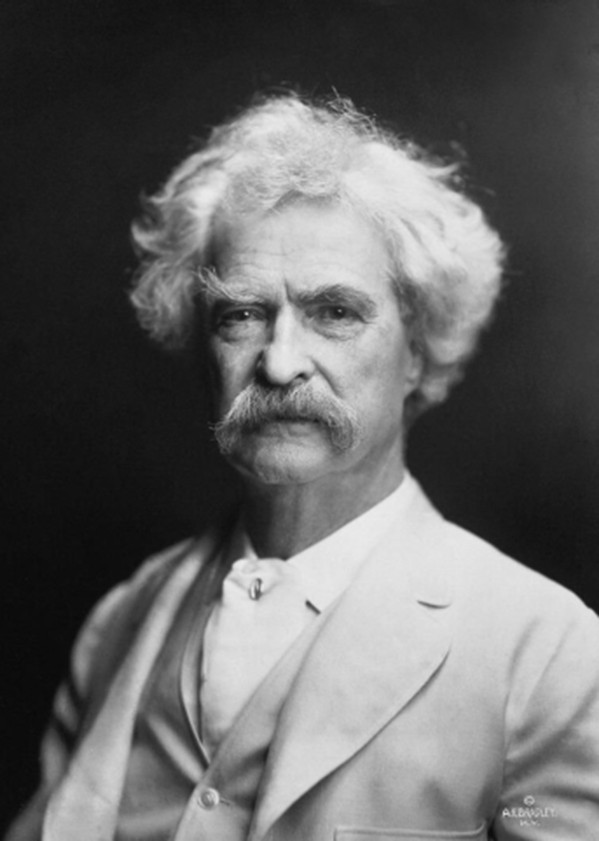
Through no merit of my own, I was born in the U.S., and the hunger in Gaza doesn’t really affect my life. I have plenty of food, more than enough, in the world’s richest country, which, sadly, has the highest rate of obesity among all the wealthy countries. Do I have to worry about hungry people in a country thousands of miles away, especially since I don’t see what I can do to help? Sometimes I want to sink back in my big green overstuffed loveseat and quote the wisdom of Mark Twain: “Good friends, good books and a sleepy conscience: this is the ideal life.”
Sounds very tempting…but no! My faith impels me, first to LOOK, even when what I see is devastatingly hard to bear. I need to see the reality of suffering, even when it’s far beyond my circle of life. Second, I need to do SOMETHING. So, okay, I write my elected officials. I participate in a weekly neighborhood food give-away. I donate to St. Vincent de Paul and Doctors Without Borders and Rotary International and the University Food Bank.
Robert and I work at staying attentive to the poor and abandoned in our own backyard. We’ve gotten to know a few people who live in the park near our home. For one older man, Robert brings him hot coffee and an egg sandwich once a week. He probably would like the breakfast delivery every day, but it’s too much of a commitment for us right now. We both speak to him when we see him in the park. We’ve encouraged him to consider help at a shelter, but he resists that. So we do what we can. We SEE him and treat him with dignity, and he is kind and responsive to us too. I still believe if we each do our little part, God’s goodness will grow and spread and overcome the darkness with the light of the Holy Spirit. It is we, after all, who are now the hands and feet, voice and heart of Jesus.
Not as a last resort, by any means, but I’ve really stepped up my prayers. I pray for friends and family and then stretch my prayers tp embrace further and further afield to include our neighborhood, community, country, and Mother Earth, our common home, as Pope Francis reminded us. Lately, I’ve also been praying for God to raise up leaders who are compassionate and wise, and who, if granted the power of government office, will strive with all their might for the common good. And I join my prayer with others; there is power and hope in shared prayer.
When a good book and a sleepy conscience beckon to my weary soul, I turn again to the words of Jesus: “Whatever you did for one of these least sisters or brothers of mine, you did for me.” [Matt 25:40] I raise my eyes to a more eternal view of life, and I can say with Julian of Norwich, “All shall be well; and all shall be well; and all manner of thing shall be well.”
_______________________________________________________________
SAVE THE DATE: Oct 18 (Sat) for the CLM Fall Retreat – Jubilee of Hope with Fr. Dennis Berry, ST! Assumption Church, Seattle (9:30 – 5 pm). Registration coming soon.
The daily news, chocolate, and trusting in Jesus
by Robert Fontana

“Jesus, I trust in you.” This is one of my favorite mantras. I have said it so often that now these are the first words on my lips as I wake. It’s a prayer that brings me peace and calm, that is until I step out of bed, turn on the radio, and listen to the morning news. “Trust in Jesus” recedes into the background and “God, help us!” takes over.
“MORE KILLINGS AND FAMINE IN GAZA!” “LOCAL HOSPITAL AT RISK OF CLOSING!” “JUVENILE CRIME UP!” “LARGEST RUSSIAN DRONE ATTACK ON UKRAINE SINCE THE BEGINNING OF THE WAR!” “ICE AGENTS BREAKING INTO CARS TO ARREST SUSPECTED UNDOCUMENTED MIGRANTS!”
And the one headline that really hits home:
“HERSHEY IS HIKING ITS CHOCLATE PRICES DUE TO INCREASE OF COST OF COCOA.” (That’s because Ghana and the Ivory Coast, countries which produce almost 60% of the world’s cocoa, have been hit by poor harvests due to weather, exacerbated by climate change.)

Really, the one thing that consistently helps me cope with the evils of the world, in addition to Jesus, of course, is Hershey’s dark chocolate with almonds. And now the price is going up. Dear God!
Lori and I allow ourselves one dark chocolate Hershey Nugget a day. On a bad news day, we might allow ourselves two. Yes, we try to eat healthy – that Mediterranean Diet – but sometimes chocolate is the only comfort food that can counteract the daily dose of bad news.
Lori and I are news followers. Long ago, in a land faraway, when we were young Catholics participating in the Newman Center at LSU, some wise priest made the comment that a good preacher always had the Bible in one hand and the newspaper in the other. That’s when we learned what the Baltimore Catechism meant with the third question put to the faithful:
Why did God make you? God made me to know Him, to love Him, and to serve Him in this world, and to be happy with Him forever in heaven.
The priests and campus ministers at LSU helped us to see that if we want to serve God in this world, we must pay attention to what is going on in the world, the good, the bad, and the ugly. The daily news (along with National Geographic) is an excellent source for the happenings in the “world.” And probably like you, we quickly learned that most good news in the paper is saved for Section B or perhaps even Section C. Front page, headline news is generally BAD, SCANDALOUS, and UGH! Bad news sells papers and attracts radio, podcast, and online-streaming listeners.
Lori and I were new at applying our faith to the real issues we learned about from our news sources. In those days the issues were: hunger in Ethiopia; corruption in government following the Nixon presidency; the CIA’s role in overthrowing the Shah of Iran; the aftermath of Vietnam; women’s fight for equality; racial tensions and poverty in our college town of Baton Rouge; the Supreme Court’s decision legalizing abortion; and even some conflict between our campus ministers and the local bishop.
Two pieces of wisdom gave us direction. The first was: Chocolate comes from cacao which is a small tree. That makes it a plant. Chocolate is salad.
No, wait…that wasn’t the wisdom I was thinking of.
The first piece of real wisdom came from a book title: “Faith must do justice.” That really captured our imaginations, but what does it concretely mean? We discussed this thoroughly while eating, what else, brownies my mother made. Somehow this “cocoa salad” helped us to think deeply about the topic. Then we took the issue to our spiritual director, Fr. Dennis Berry, who gave us our second piece of wisdom.
He said, “The key is to keep asking yourself the question even if you are uncertain of an answer. The search for how to live a faith that is just and the courage to continue to ask what that looks like for this issue or that problem…this is what is really important. Keep asking the questions!”
About this time, with the help of our good friend Trish Richardson (now Mann), we began to examine the lives of St. Francis and St. Clare and their radical lifestyle of simplicity, care for the poor, love of nature, and trust in Jesus to provide. Here was a way to live a faith that is just. We can serve the poor by living a lifestyle that consumes according to our needs, that focuses on relationships rather than things, that welcomes women and men who are poor as our neighbors and friends, and that cares for the earth.
That was 48 years ago. Six children later; several moves across the country from Louisiana to Maryland to Washington; various ministry jobs; the beginning of CLM; becoming part of the Missionary Cenacle Family; lots of continuing education; adult children marrying; grandchildren; and the pressing question we are still asking ourselves is how to live a faith that is just in the midst of the issues that confront us today. I don’t have to list them. You read the papers and listen to the news. Stepping into these issues with a faith that strives for justice can only be done with trust that Jesus is with us and helping us to be a power for good. Jesus, I trust in you!
Oh, here’s one more plug for “cocoa salad” as spoken by a client of mine: “Chocolate has never let me down!” Chocolate may be a momentary distraction from the problems of life, but it has never given me a hangover, caused me to be thrown out of a bar at 2 a.m., or contributed to huge credit card debt. Enjoy it regularly, in moderation, and without guilt.
Aunt Dodie’s Chocolate Cake Recipe (a Fontana family favorite)
1 box of yellow pudding cake mix 1 cup oil
1 small box chocolate fudge instant pudding 3 eggs
1 cup sour cream 1 (6 ounces) package chocolate chips (dark)
Mix all ingredients except chips. Grease and lightly flour a bundt cake pan and put 6 heaping tablespoons of batter on bottom. Sprinkle ½ of the chocolate chips on top of this. Add rest of batter and then other ½ of chips. Bake at 350 degrees for 50 minutes. May look wet when it comes out of the oven. Let cool and turn onto serving plate.
(from Cheryl Ottinger in Tell Me More, a Cookbook Spiced with Cajun Traditions & Food Memories)

PLEASE CONSIDER SUPPORTING CATHOLIC LIFE MINISTRIES
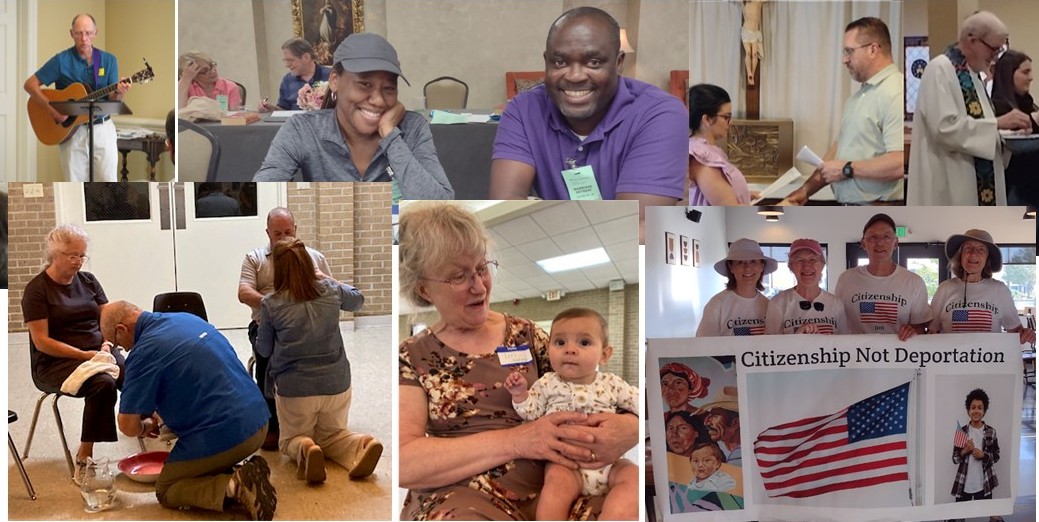
Dear Friends, once a year we ask you to discern if God is calling you to join in the work that we do. It is work that you believe in, and we do a pretty good job. Just yesterday we received letters from couples who attended a retreat we gave in Louisiana. Here’s some of what they wrote:
“We enjoyed the retreat so much. We learned so much, new things about each other, as well as getting to know the other couples that attended a little more…it was our first marriage retreat but definitely won’t be our last…renewing our vows was beautiful closure to the weekend…your wisdom, vulnerability and grace created a space where we could connect as a couple (I didn’t expect to enjoy myself, but I DID!).“
Through Catholic Life Ministries we do the following:
Þ Counseling couples, individuals, and families in a non-profit clinical practice that offers a sliding scale to make our services available to people of all income levels;
Þ Spiritual and faith formation for adults through retreats and Cenacle faith communities;
Þ Marriage enrichment and marriage preparation workshops;
Þ Advocacy for persons, the vulnerable and those living on the margins: migrants and asylum seekers, the unborn, and, following Pope Francis’ encyclical Laudato Si, our planet;
Þ Essays on living the Christian life within the complexity of the 21st century (“thinking with the Church and helping the Church think”).
To support Catholic Life Ministries:
1. Make a donation online at https://www.catholiclifeministries.org/donate/
2. Make a check payable to CLM. Mail to CLM, 1827 NE 58th St, #B, Seattle, WA 98105.
3. Commit to praying for the Fontanas and CLM. Let us know you’ll pray for us! Email us at Robert@catholiclifeministries.org. Send us your prayer requests which we remember every Thursday. Our special prayer for each of you is below:
“O loving God, Father, Son, and Holy Spirit, we commend to you this day our love and service. We pray also, that in the providence of our every day life, we may be mindful of the poor and spiritually abandoned, those who do not know your love or the love of their neighbor. Be with and bless the community and mission of Catholic Life Ministries. Make CLM an instrument for drawing the busy and the bored, those in and out of church, into the love and communion of the Trinity. We ask this in the name of Jesus and through the intercession of St. Mary and St. Joseph and all the saints. Amen!”
Homespun Homily: Prayer for Peace in Our Troubled World

By Lori Fontana
We are living in an age wracked with conflict and desperately in need of peace and justice. Though for many of us daily life may seem unaffected, the turmoil elsewhere does and will affect our lives in ways subtle and not-so-subtle. More and more, we are all interconnected. If we look at our world with eyes of faith, we must see that “whatsoever we do to the least of our sisters and brothers,” whether we treat them poorly or simply neglect or ignore them, this is how we are treating Jesus.
What can we do? Here’s a saintly example to inspire and encourage us: St Clare of Assisi. As Clare lay in her sickbed in San Damiano, a monastery on the outskirts of Assisi, an army approached the city. Soldiers began to scale the monastery walls, terrorizing the nuns inside. Frightened, the sisters surrounded Clare, beseeching her help.
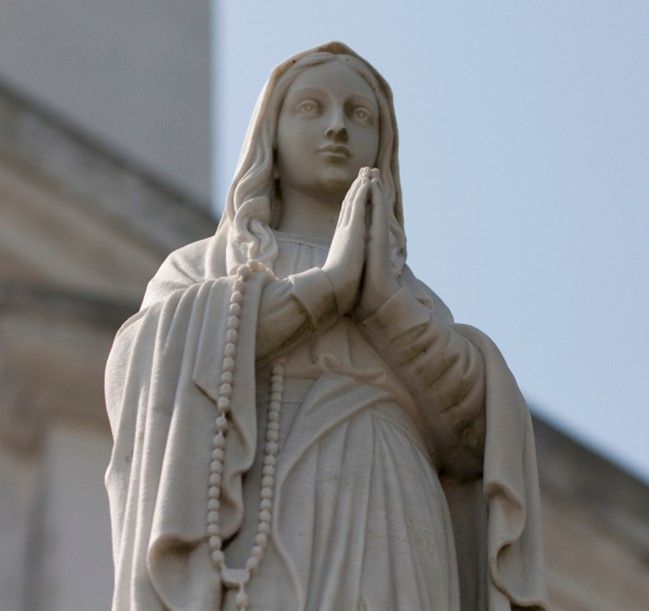
Clare, who had an unshakeable belief in the power of prayer and the Eucharistic presence of Jesus, rose from her bed. Retrieving the ciborium from the chapel which adjoined her cell, she faced the soldiers through an open window against which they had already positioned a ladder. She raised the Blessed Sacrament into the air. At this, the soldiers nearest to her fell backward as if stunned. Other soldiers advancing toward the monastery walls turned and fled. Then St Clare knelt and prayed to God for the protection of the entire city. The army did not try to enter the city at another spot. They left and did not return.
Another time, the imperial army approached Assisi, hoping to claim the city. When Clare heard this, she instructed her community of sisters to stop all activity and kneel in prayer to God, praying that the city be spared invasion. Immediately, the army was thrown into confusion and disarray. They dispersed; and Assisi was left in peace.
We can take heart from St Clare’s example. Here she was, a woman in the 13th century, and a frail, sickly woman at that. Yet her devotion to prayer and the Eucharist “moved mountains.” She prayed with unwavering faith. She also put her faith into action as she stood to confront the invading soldiers. She did what she could do: she prayed, and she acted.
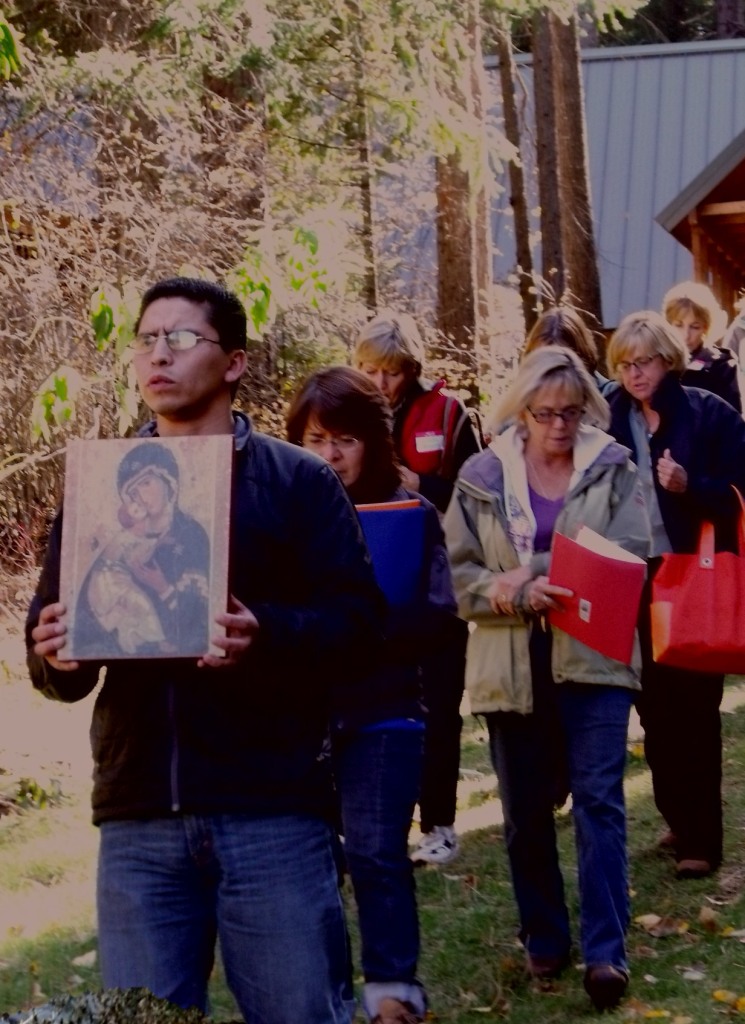
I believe God is calling all people of faith to do what we can do at this moment in history. First, we pray, and in prayer the Holy Spirit will fortify us and guide us. Then we must act. As St Paul exhorts us, “Faith without works is dead.” How is God calling me, calling you to stand up and live the Good News in this time?
Here’s an invitation to pray for peace and justice over the next weeks. You can use the prayer below (an excerpt from Pope Francis’ Prayer for Peace) or your own favorite peace prayer. St Francis wrote a good one! Let’s pray in the spirit of St Clare and through the intercession of Mary, Queen of Peace. At Mass, as we receive the Eucharist, and also every Thursday, our CLM day of intercessory prayer – these can be special times of intercession. From now, through the feast day of St Clare (August 11), and until the great Marian feast of the Assumption (August 15), may we especially join our hearts and prayers for God’s peace and justice for all people and all of God’s precious creation.
“Now, Lord, come to our aid! Grant us peace, teach us peace; guide our steps in the way of peace. Open our eyes and our hearts, and give us the courage to say: “Never again war!”; “With war everything is lost”. Instill in our hearts the courage to take concrete steps to achieve peace.
Keep alive within us the flame of hope, so that with patience and perseverance we may opt for dialogue and reconciliation. In this way may peace triumph at last, and may the words “division,” “hatred,” and “war” be banished from the heart of every man and woman. Lord, defuse the violence of our tongues and our hands.
Renew our hearts and minds, so that the word which always brings us together will be “sister” or “brother,” and our way of life will always be that of: Shalom, Peace, Salaam! Amen.” ~Pope Francis