Suppose two people break into your house
By Robert Fontana
Bear with me here. It’s 2 o’clock in the morning, and you hear something that sounds like a window breaking in your downstairs living room. Incredibly, you hear more breaking glass that sounds like it is coming from your kitchen on the opposite side of the house.

YOU’RE TERRIFIED: INTRUDERS!
You call the police as you lock the door to your bedroom. You’re in luck. A patrol car is in the neighborhood and arrives within minutes. The intruders are apprehended. You come down the stairs to see who broke into your home and why.
One officer has Intruder 1. You learn from this officer that Intruder 1 was hoping to steal electronics and perhaps jewelry to sell it on the illicit market.
The other officer has Intruder 2. From this officer you learn that Intruder 2 was fleeing her boyfriend who was in a drunken rage and threatening to kill her.
The officers ask you if you want to press charges for each intruder.
What each person did was illegal. What do you do?
As many of you know, Lori and I have been advocates for the rights of migrants and refugees who are seeking a new life in the U.S. Many of these people have been here for years. They are working in agriculture, fruit-packing plants, slaughterhouses, and as cleaners and caregivers for the elderly. Some of my Catholic friends will concede that not all migrants are “murderers, rapists, and criminals” as they have been described by some politicians. But, these same friends say emphatically:
THEY ARE HERE ILLEGALLY!
You know where this is going. In the story above, two people broke into the house, but only one of the intruders is really doing criminal activity.
Men, women, and children who cross into the U.S. seeking relief and safety from intense poverty, violence, and sex-trafficking have a moral right to do so. They may be in the U.S. illegally, but like the 2nd intruder in the story, they are not criminals. According to Scripture and Catholic social teaching, they have a moral right to flee their unlivable conditions to seek a better life elsewhere (as the Holy Family did when they fled Bethlehem to go to Egypt).
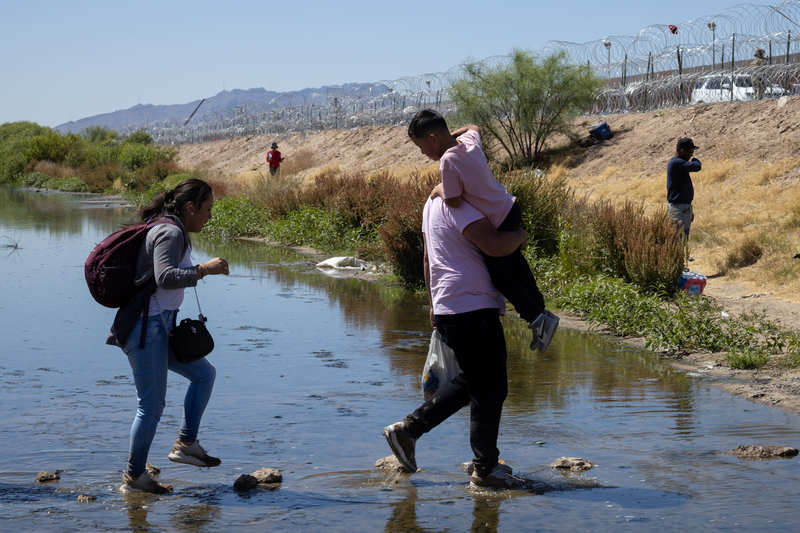
Migrants and refugees seeking a better life need our compassion, not judgment and bullying. This is true whether they have been here for years and are established as good citizens in whatever capacity; or they are recent arrivals who, compliant with U.S. law, have applied for asylum and have been granted an asylum hearing date.
That’s the case of the family that we are supporting who made the dangerous and difficult four-month journey, mostly on foot, from Columbia, through the jungles of Panama, across Nicaragua, Guatemala, and Mexico to El Paso, Texas. The mother, with her 17-year-old daughter and 5-year-old son, made the trip in desperation to prevent gangs from kidnapping the 17-year-old for trafficking.
When the Pharisees noticed the disciples of Jesus picking grains of wheat and eating them while it was the sabbath, they said:
“See, your disciples are doing what is unlawful to do on the sabbath.” He said to them, “Have you not read what David did when he and his companions were hungry, how he went into the house of God and ate the bread of offering, which neither he nor his companions but only the priests could lawfully eat? Or have you not read in the law that on the sabbath the priests serving in the temple violate the sabbath and are innocent? I say to you, something greater than the temple is here. If you knew what this meant, ‘I desire mercy, not sacrifice, you would not have condemned these innocent men. For the Son of Man is Lord of the sabbath.” Matthew 12:1-8
Can we not show mercy and justice to these good people who are actually, by and large, very much contributing to the common good of their local communities?
Here’s what Cardinal Robert McElroy had to say about the treatment of migrants at the Mass for the 111th World Day of Migrants:
“…this year we are confronting – both as a nation and as a Church – an unprecedented assault upon millions of immigrant men and women and families in our midst.
Our first obligation as a Church is to embrace in a sustained, unwavering, prophetic and compassionate way the immigrants who are suffering so deeply because of the oppression they are facing…
We are witnessing a comprehensive governmental assault designed to produce fear and terror among millions of men and women who have through their presence in our nation been nurturing precisely the religious, cultural, communitarian and familial bonds that are most frayed and most valuable at this moment in our country’s history…
Catholic social teaching states that every nation has the right to effectively control its own borders and provide security. Thus, efforts to secure our borders and deport those undocumented immigrants convicted of serious crimes constitute legitimate national goals. At times, our government asserts that these goals constitute the essence and scope of its immigration enforcement efforts, and if that were true, Catholic teaching would raise no objection.
But the reality we are facing here in the Archdiocese of Washington and across our country is far different. For our government is engaged in — by its own admission and by the tumultuous enforcement actions it has launched – a comprehensive campaign to uproot millions of families and hard-working men and women who have come to our country seeking a better life that includes contributing to building up the best elements of our culture and society.
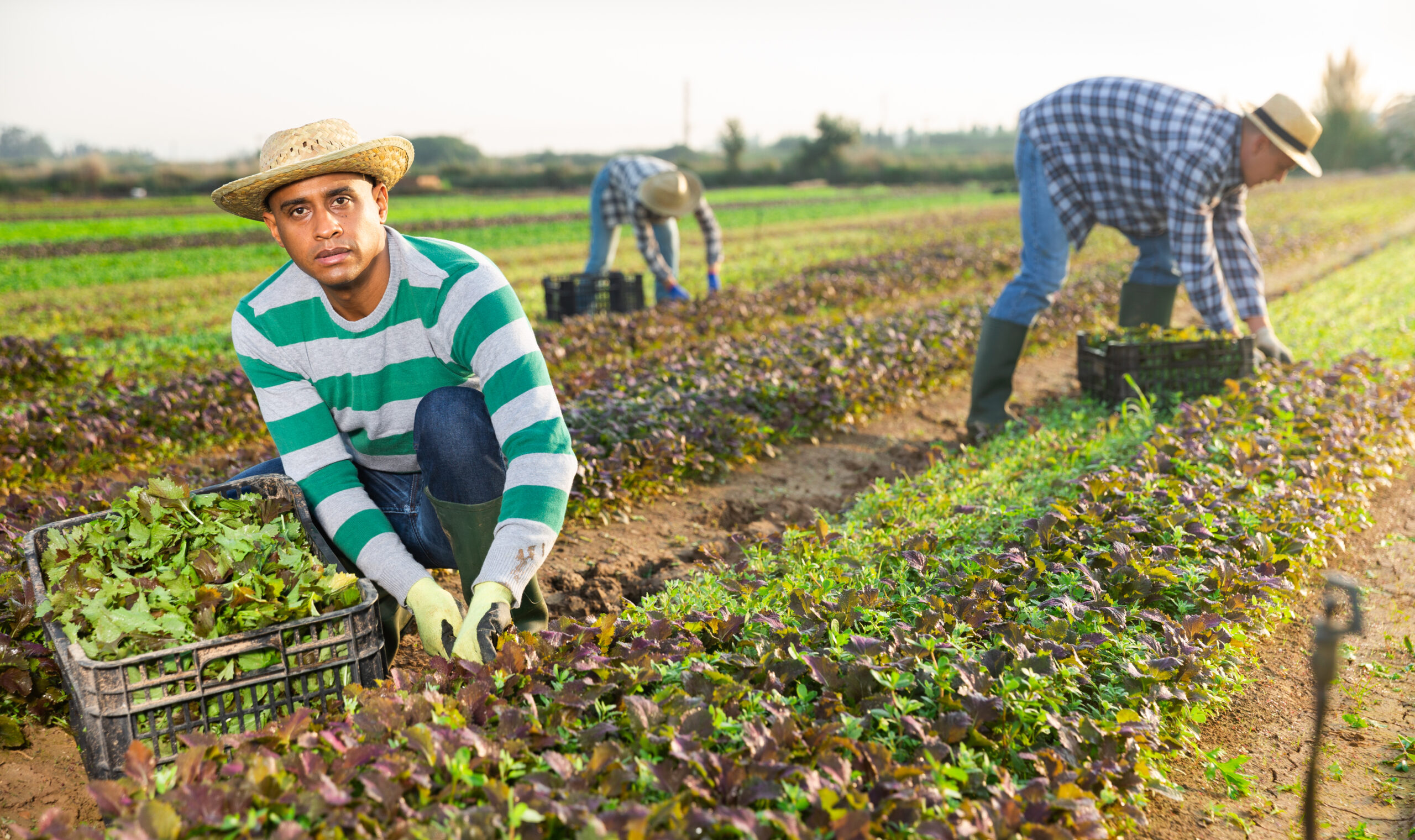
Deportation is not the answer. What is needed is a simple and manageable pathway towards legal residency, with employment privileges, and with an option for citizenship.
