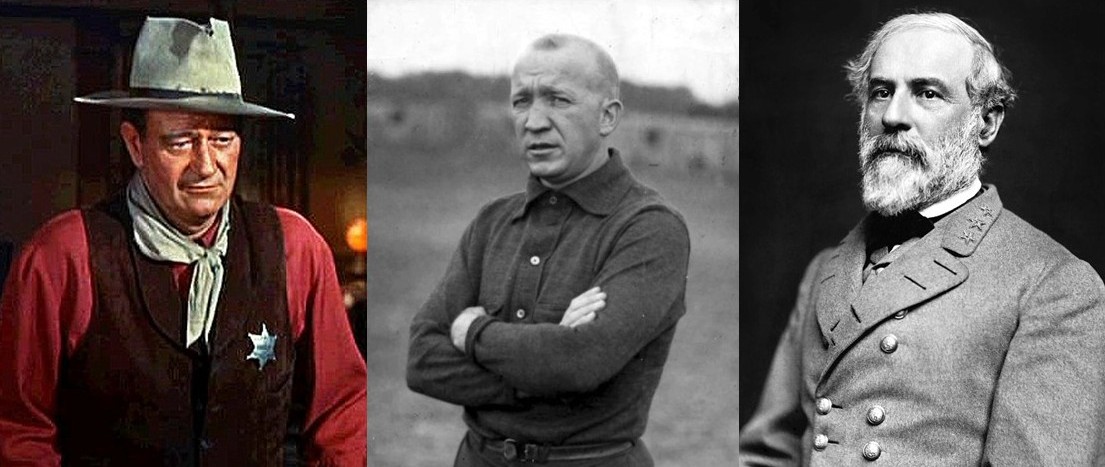
John Wayne, Knute Rockne, Robert E. Lee, Jesus, and Dad
By Robert Fontana
I know, strange title for an article. Those were my childhood heroes and in that order. My mother could hardly bear John Wayne movies. “He can’t act,” she would say. I wouldn’t listen. I was thrilled with seeing him in his old movies, The Quiet Man and The Sands of Iwo Jima and his new releases (in the 6o’s) The Sons of Katie Elder and True Grit.
Contrary to what my kids think, I did read during my childhood. Two of my favorite books were the biographies of Knute Rockne and Rober E. Lee, two “great Americans.” I became a devotee of Notre Dame football and the Confederate States of America.
Lori is astounded when I talk to people my age who also love Notre Dame, and ask them, “Remember when Ara Parseghian went for the tie in the 1966 game against Michigan State?” I put up framed photos of Notre Dame players on my wall that I cut out of Sports Illustrated magazines. And I sobbed when I learned that my uncle was one ticket short for the Notre Dame – LSU game, and I was the one who had to stay home and watch it on TV.

But it was Robert E. Lee who really caught my attention. He was the best that America had to offer, a Christian gentleman, man of principle, and master on the battlefield. Through him I was introduced to all the important men of the Confederacy, studied their battles, and suffered with them on that fateful July 3rd day when Pickett’s charge failed at Gettysburg. Of course, I was glad slavery was defeated, and that the U.S. remained an intact nation. Truly, I never paid attention to the politics that led to the “War of Southern Independence” as Southerners preferred to call it.
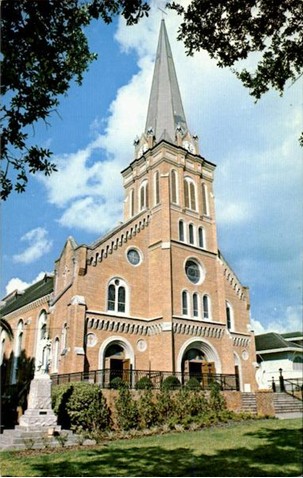
All this was happening to me as I attended Catholic Church and school, made my First Confession and Communion, went to Mass on Sundays and every day during Lent, prayed the rosary, and learned the Catechism of the Catholic Church. I was exposed to sacred music through our school choral program and learned to sing Mass in Latin. Our family often had priests over to our house for Sunday dinner, and I sometimes spent the night at the rectory to keep a priest company who was there alone (nothing bad happened to me).
I was raised within two cultures, one dominated by television, sports, and the southern Confederate identity, and the other by Catholic institutions – the parish, school, neighborhood, and family. These, of course, easily overlapped. My Catholic faith gave me a confidence in God, a love for the institutional Church and its history of saints, and a community of friends for my family. We were held together by the same worldview of “loving and serving God in this life so as to be happy with him in the next.”
But my Catholic community in South Louisiana, at least as I experienced it, did not critique the dominant culture that was shaping me. I was raised on the White side of segregation. Through my teen-aged years, I thought Robert E. Lee and the Confederacy were great and eventually flew a Confederate flag. I looked to John Wayne, hard-fighting, hard-drinking, and a lady’s man, as a model of masculinity. I was enamored with the military, and gave so much of my energy to sports.
I was unconsciously sucked into what St. Paul describes as “this age” from which he challenged Christians in Rome to avoid conforming to:
“Do not conform yourself to this age, but be transformed by the renewal of your mind, that you may discern the will of God…” Romans 12:2
I needed some shaking up, and Jesus was the very person to do it. It wasn’t dramatic. It wasn’t all at once. But once I had an experience of Jesus as a person who loves me and is with me at every moment, my unhealthy attachment to all my secular heroes and identification began to be challenged. The Catholic rituals and culture in which I participated opened for me a life-giving relationship with God.
As a senior in high school, John Wayne didn’t inspire me to visit the elderly in a nursing home or the inmates in the county jail, but the Legion of Mary, which I joined with a friend, did. The “Duke” also didn’t encourage me to treat girls with respect, to be a Christian athlete, and seek God’s will for my life, but my parents, their prayer group, and my high school friends active in the diocesan retreat movement did.
I had no capacity to see the harm of white supremacy’s hiding behind segregation and the cult of the confederacy that I so embraced until I met an African American seminarian from New Orleans who took me by the hand to show me what racism was. At first, as I encountered Black culture in its Catholic form, I thought that only he and other African Americans were harmed by racism. It took a while but one day it dawned on me that, “No, I was also a casualty of racism!” I was deprived of the beauty of African American culture and the friendships that it offered. And I was unknowingly perpetuating racism by my Confederate leanings.
The Confederate flag came down permanently after an encounter with an old family friend in my hometown of Abbeville who participated in Civil War battle re-enactments dressed as a Confederate general. As we discussed the 1863 battle at Port Hudson, Louisiana, where “colored troops” for the first time fought for the Union, this man’s friendly demeanor turned to hate as he said, “We kicked the N_ _ _ _ _ s then, and we’ll kick ‘em again.” I finally had to admit that all those monuments and symbols to the Confederacy were about a war to create a country based on the enslavement of African Americans, whose purpose was to prop up white power today.
Wow. I was duped by “this age” in its southern form.
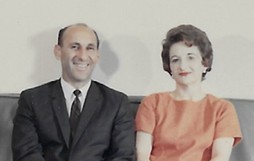
As I matured and began separating myself from my childhood heroes, grew in faith, married, had children, and focused on a career in ministry, a new person emerged as someone I needed to imitate. It was my dad. Yes, of course it was Jesus, and the saints, and some new favorite people from history like U.S. Grant (I switched sides and became a Union man), but mostly it was my father. My dad, Anthony Fontana, became the person I most wanted to imitate. He had awakened faith in Jesus for me back in high school by sharing his faith with me. He (and mom) brought music to my life, both sacred and secular. Most importantly he showed me how to be a patient, faithful, playful, and loving husband, father, and grandfather.