Marriage Vows: Challenge and Gift
By Robert Fontana
The subject of marriage often gets negative jokes and one-liners:
¨ I asked my wife to embrace her mistakes. She gave me a hug.
¨ A retired husband is often a wife’s full-time job.
¨ My son asked me what it’s like to be married so I told him to leave me alone and when he did, I asked him why he was ignoring me.

Yes, these one-liners are funny because they contain some truth. And that truth is, MARRIAGE IS HARD! And the evidence suggests that it’s so hard, many couples give up on it during their first try.
According to Forbes: 43% of first marriages end in divorce (as do 60% of second marriages, and 73% of third marriages). What’s behind these statistics? Why do couples divorce? The most common reason given is “lack of commitment” to the marriage. 72 % of divorcees state that they clearly did not understand, prior to “tying the knot,” how demanding marriage would be on their time, talent, and treasure. When marriage is difficult and does not meet one’s expectations, it is easy to look elsewhere for the fun and intimacy that might be missing in one’s marriage. A whopping 60% of divorced couples reported that it was a spouse’s infidelity that led to divorce.
Low income or poverty isn’t good for marriages either. People who live at, just above or just below, the poverty line often choose not to marry at all. Those who do marry find that the stress of earning a low income takes a toll on marital love. One study showed that 46% of married couples living below the poverty line divorced, whereas couples with higher incomes have lower divorce rates.
Adding to the mix of what makes succeeding in marriage so challenging is addiction – alcohol, drugs, gambling, sex, pornography, or shopping. An active addiction makes it almost impossible to build trust and intimacy because addiction demands absolute loyalty from the addict, and that undermines any good intentions to change behavior.
That’s the bad news.
The good news is that MANY COUPLES DO SUCCEED IN MARRIAGE (straight and gay)!
What’s the key to succeeding in marriage? From my research, my personal experience of 47 years of married life, and my work as a therapist, I’ve come to see that couples who treat marriage vows with the utmost seriousness succeed in marriage. This is crucial, because it is the vows that provide boundaries to marital relationships. The marriage vows of “fidelity, love, and honor” in “good times and in bad, in sickness and in health” are extremely important and should be considered a “social good” as are freedom of religion or the right to assemble.
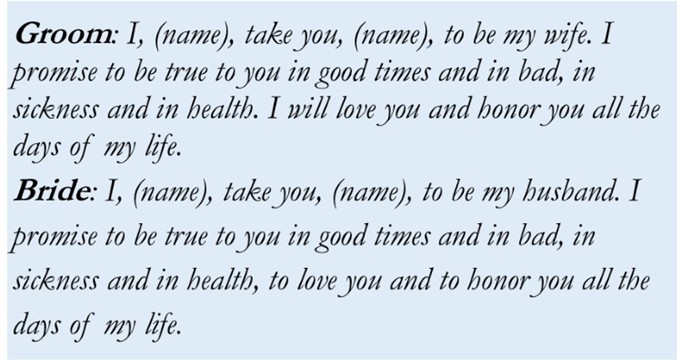
Though everyone wins when couples succeed in marriage, these vows have been undervalued and even ridiculed in modern culture. Vows give couples the framework for learning to direct their relational and sexual energy to each other and to mature and grow as individuals and as a couple, even when their emotions might lead them in another direction. This was certainly true for my parents who, after 20 years of marriage, could agree on only three things: we’re married; we have seven sons; and divorce is not an option. Commitment to their vows held them together. Through hard work, and with the help of Marriage Encounter and lots of prayer, they repaired their marriage and thrived as a couple for the next 19 years until my father’s death.
Vows also provide guardrails for managing relationships outside the marriage, especially at work and in the marketplace. This was true for me. I got married the summer before my senior year in college. I worked part-time but was mainly supported by Lori who worked as a hospital clerk. My student schedule allowed me to attend daily Mass, and it was there that I met many other college students, including a very nice young woman with whom I often exchanged the sign of peace and chatted after Mass. I remember thinking to myself, “we ought to have lunch and visit,” and then caught myself. “Nope, can’t do that anymore.” Faithful to my vows, I needed to protect my marriage by creating appropriate boundaries with women other than my wife.
When marriages succeed, EVERYONE WINS! That’s not simply my opinion; it is backed up by research data. In successful marriages, children thrive; spouses are more effective employees; couples manage their finances for long-term wealth building; spouses get involved in the community to create safer neighborhoods and schools. Wives and husbands enjoy greater sexual intimacy, friendship, and trust, and lay a strong foundation for their life together and care for one another long after the children have left home.
And the biggest winner when marriage succeeds is…men! In fact, the social evidence is clear. Most men need a healthy marriage to strive. When a man directs his sexual and emotional energy to his spouse, and it is received with love and respect, he grows into his best self. Married men live longer, have greater psycho-spiritual health, are more involved in their families and communities, and are more effective at work than their single counterparts. Again, the data backs this up.
As I wrote above, most couples who divorce claim they were not prepared for the challenges of marriage. No surprise there because most couples, even those who succeed in marriage, also report that they were not fully prepared for what married life would bring them. Couples who come to marriage prepared to embrace and live out the vows of “fidelity, love, and honor” truly have the best chance of success. Marriage vows are a gift to the couple and to society.

(Next topic: Sadly, we teach our youth to discipline themselves for success in sports, the arts, academics, and trade skills. But we do not teach them to discipline their sexual and emotional energies to succeed in marriage.)
1. See https://www.forbes.com/advisor/legal/divorce/divorce-statistics/
2. See The Case for Marriage: Why Married People Are Happier, Healthier and Better Off Financially by Linda Waite (University of Chicago) and Maggie Gallagher (National Organization for Marriage) and Get Married by Brad Wilcox (Institute for Family Studies).
